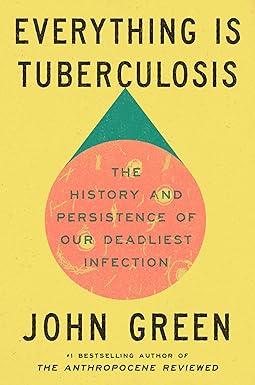
Everything Is Tuberculosis: Confronting Humanity’s Deadliest Infection Again
A Disease of Choice, Not Just Biology
Tuberculosis (TB) is not merely an infectious disease. It is not simply an illness caused by bacterial infection, but a collective tragedy born of structural failures and policy neglect. The fact that TB disproportionately affects certain countries and social classes, despite being an airborne disease, indicates a profound systemic flaw.
"TB is a disease we made."
The way we address TB reveals not a medical issue, but a matter of power. It is not the pathogen itself that kills people, but the lack of systems to manage it, the inequality in accessing medication, and the discrimination in information and treatment. Today, TB still claims 1.3 million lives annually?more than AIDS.
"TB continues not due to lack of technology but lack of political will."
Shadows of TB in History and Culture
TB was once called a "romantic death." In 19th-century Europe, pale faces, frail wrists, and silent coughing were consumed as symbols of artistic suffering. Writers, poets, and musicians contracted TB, and their deaths became legends.
"Tuberculosis became not a disease, but an aesthetic."
This cultural distortion had real public health consequences. Colorado Springs in the U.S. rose as a TB sanatorium town?thousands migrated for clean air, reshaping the city’s structure and economy. Concepts of hygiene, fashion, and even furniture design evolved with TB in mind. TB became a cultural code embedded in daily life, not just a disease treated in hospitals.
Henry’s Story and a Personal Confession
Henry, a boy from Sierra Leone, transforms TB statistics into lived reality. Though infected, he faces endless barriers to diagnosis and medication. His story is not a case study but a reflection of the everyday struggles of ordinary people within global structures.
"Henry’s pain was not just his country’s problem?it was mine, too."
Illness affects not only the body but identity and relationships. A society’s perception of illness directly impacts the patient’s self-worth and quality of life.
"Henry and I were different, but we shared the same vulnerability in the face of illness."
Narratives Beyond Science
TB has existed for thousands of years. Yet the real question is why it still persists. Alongside the bacterium’s pathology, the limitations of how modern medicine addresses TB remain problematic.
"We diagnose TB in minutes in wealthy countries, but in poorer ones, people still use microscopes."
Despite new drugs like bedaquiline, multidrug-resistant TB spreads due to treatment failures, poor adherence, and corporate monopolies. The ongoing pandemic of TB is not a failure of science, but of global public health systems.
Confronting Corporate and Institutional Barriers
The main adversary in the fight against TB may not be bacteria, but monopolistic corporate power. Johnson & Johnson has used legal maneuvers to extend the patent on bedaquiline.
"The drug exists, but we cannot give it."
This drug is essential for treating drug-resistant TB, but patent protection raises prices and limits access in developing countries. Cepheid’s diagnostic cartridges, although critical for millions, remain unaffordable.
"Millions still go undiagnosed even though diagnosis is possible."
Yet civil campaigns have gone beyond pointing out problems to enact meaningful changes in pricing and accessibility. This demonstrates that change is possible when knowledge connects to action.
Disease Is Ultimately a Human Story
Statistics are numbers, but disease is about people. Numbers anonymize; illness forces individuals to endure stigma and exclusion.
"TB renders the invisible even more invisible."
A girl who quits school young, a youth hiding in a room fearing to infect family, a mother who dies waiting for medicine?these are not merely infection cases, but human stories lost within the disease. TB arrives in the form of isolation, fear, and shame. To confront illness is to confront people.
Facing and Acting
TB is not a disease of the past?it is a disease of the present. It remains a continuing epidemic, despite existing technologies. Facing this truth demands more than awareness. Beyond data and knowledge, we must consider how we act.
"TB is a disease we can end?if we choose to."
Technology is already available. What’s missing is social and political will. Practical methods of addressing TB?diagnostic supply campaigns, petitions for patient rights, demands for price reductions?are not symbolic gestures, but real pathways to change. Knowledge must become the starting point for ethical action.
TB is not a problem isolated from our world. It exists within our societies, structures, and systems. To transform it, we must ask ourselves: what choices will we make? TB does not suddenly emerge. It grows in the silence and neglect we allow.
"TB is a disease we can end?if we choose to."
It is not technology we lack, but resolve. From support campaigns to diagnostic accessibility efforts, various paths exist for contributing to TB elimination. Knowledge should ignite real change.
We Can Solve This
TB continues to take more than 3,500 lives every day. But it is not an inevitable tragedy.
"TB can be ended. It is not a natural disaster, but a human choice."
TB is the result of structural decisions, institutional indifference, and moral neglect. We already have the technology and knowledge. What remains is the imagination and courage to turn them into reality. If we can remember suffering not as numbers but by name, if we can turn silence into action, then we can end TB.
Everything Is Tuberculosis is not merely about the disease?it is a deep record of how societies create and ignore illness, and how we might choose to finally confront it.

.jpg)
.jpg)
.jpg)