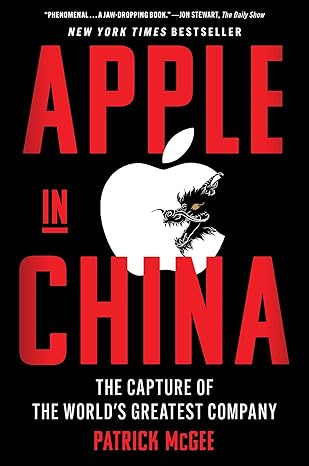
Prisoner of the Tech Empire: How Apple Was Captured by China
Tied to the Heart of the Tech Empire, China
The greatest technology company in the global economy has rooted itself deeply in a single nation in the name of efficiency. That nation is China. Apple conquered the global market by relying on China's labor force, manufacturing infrastructure, and government-led industrial policy. Smartphones designed in California are born in factories in Zhengzhou, with millions of assembly workers moving in perfect synchrony like parts of a massive clockwork machine.
"Apple could not have become the world’s most valuable company without China’s vast labor force and manufacturing infrastructure."
The word "efficiency" often carries a positive connotation, but it's easy to overlook the political dependence and ethical compromise that underlie it. Centralizing all assembly processes in China for productivity shows how a global leader voluntarily confined itself within the industrial system of a single nation. At that point, it wasn’t the smartphone that became dangerous?but the structure itself.
Faustian Bargain: The Temptation of Speed and Profit
Thousands of iPhones assembled per hour, parts delivered in days, and workers mobilized even at midnight?such a system borders on obedience, not autonomy. Tech capital outsourced production but also surrendered control. Efficiency replaced freedom, and corporate ethics were buried under state demands.
"Apple didn’t negotiate with the Chinese government. It complied."
When censorship requests arrive, apps are deleted. User data is stored on local servers. On politically sensitive issues, silence is maintained. This was a trade for market access, but also the loss of autonomy. Tech companies are no longer politically independent actors?they’re increasingly coerced into becoming extensions of authoritarian systems. Within this structure, corporate self-determination and consumer rights are both reduced to mere bargaining chips.
The Faces Behind the Supply Chain: Efficiency Without Humanity
Workers on the assembly line are not individuals but statistics. More than ten hours of shift work, continuous production, dormitory-style living. When production targets rise, workers are immediately added?but fatigue and burnout are never quantified. A system designed for efficiency treats humans as configurable elements.
"The real innovation wasn’t the design of the iPhone, but the brutal efficiency of the system that built it."
Worker suicides, deaths from overwork, and collective depression inside factories are not addressed in corporate reports. The surface of technology is sleek, but inside are weary hands and silent voices. Efficiency without ethics is unsustainable. The more a company stays silent, the higher the price consumers must eventually pay.
A Civilian Hostage Between U.S. and China
As political tensions rise, Apple finds it increasingly difficult to maintain economic neutrality. China can halt domestic production or restrict access to the App Store at any time. The U.S. demands that Apple return manufacturing stateside and protect user data. The company walks a tightrope between the two powers.
"Apple wasn’t an autonomous actor?it was a high-value hostage caught between two powers."
In an era where technology and geopolitics intertwine, Apple can no longer function as a “global company.” The politics of production hubs, the sovereignty of user data, and the demand for brand neutrality all begin to fracture its identity. Globalization is no longer a value-neutral term. Companies must ultimately choose a side.
Consumers and the Reconstruction of Ethics
In one hand is a smartphone; in the other, the burden of choice. As we consume technology, we rarely question the conditions under which it is made. But problems persist until we start asking. The ethics of a product do not rest solely with the manufacturer. The silence of consumers also perpetuates the system.
"When you buy an iPhone, you’re not just buying a product?you’re endorsing the conditions under which it was made."
If we demand efficiency while also expecting humane labor, those two desires will inevitably clash. For the world created by technology to become a better one, more consumers must be willing to question its structure. The moment we see what lies behind the shine of innovation, the path to responsible choice begins.

.jpg)
.jpg)
.jpg)