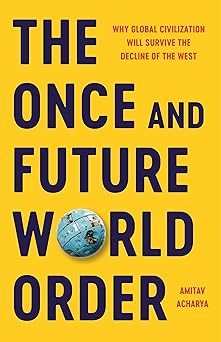
A Shaking World Order, the Return of Multipolarity
From Western-Centered Hegemony to a Complex Multipolar Order
Until the late 20th century, the world order was structured around the West, especially the United States. The end of the Cold War gave the U.S. an opportunity to consolidate its unipolar hegemony, and free trade, democracy, and international organizations all reflected the expansion of an American-led order. However, with the advent of the 21st century, the global landscape has shifted. The rapid rise of China, Russia’s regional assertiveness, the European Union’s normative independence, and the collective movements of the Global South all signal the transition from a “single center” to “multiple centers.”
“The world order no longer has a single center.”
This awareness indicates not only a redistribution of power but also the growing pluralization of norms and institutions in international affairs.
The Cracks in Unipolar Hegemony
After the Cold War, the United States enjoyed an absolute position in military power, finance, technology, and culture. The overwhelming military dominance displayed in the Gulf War, dollar hegemony in global finance, Silicon Valley’s innovations, and Hollywood’s cultural influence were emblematic of this era. However, after the terrorist attacks of September 11, 2001, the prolonged Middle Eastern wars, the 2008 global financial crisis, and the COVID-19 pandemic, U.S. leadership began to face mounting challenges.
China moved beyond being “the world’s factory,” investing heavily in advanced technology and space exploration to catch up with America’s scientific and industrial edge. Russia openly challenged the Western order through the war in Ukraine. Europe cooperated with the U.S. while simultaneously emphasizing independent standards in areas such as defense, environment, and human rights. Furthermore, countries in the Global South, such as Brazil, South Africa, and Indonesia, began to assert themselves more strongly in economic and diplomatic arenas.
The Dynamics of Multipolarity
Multipolarity does not simply mean that there are multiple great powers. It represents a complex structure where institutional, cultural, and regional diversities coexist. The European Union presents distinct standards from the U.S. in areas such as environmental regulation and data protection. ASEAN emphasizes neutral diplomacy and multilateral dialogue. The African Union has also been expanding its own frameworks for security and economic cooperation.
“Multipolarity is not just about power distribution, but about normative diversity.”
As this statement suggests, the 21st-century international order is no longer a structure where a single set of rules dominates but resembles a “multiplex theater” where diverse regional, cultural, and value-based norms operate simultaneously.
The Limits of U.S. Hegemony and Its Response
The United States still possesses unmatched military, economic, and alliance networks. However, today its power can only be exercised through “coordination and cooperation.” U.S.-led support for the war in Ukraine cannot be sustained without European and NATO consensus. Likewise, the Indo-Pacific strategy loses effectiveness without the participation of allies such as Japan, Australia, and India.
Acharya calls this shift a “recalibration of hegemony.” The United States is no longer a unilateral dominator but an “actor” that must negotiate and bargain with other centers of power.
“America can lead the world, but it can no longer dominate it.”
The Rise of China and Emerging Powers
China has emerged as a central pillar of multipolarity, not only as the world’s economic powerhouse but also as a competitor in cutting-edge fields such as artificial intelligence, quantum computing, and space technology. The Belt and Road Initiative is a massive strategy linking Eurasia and Africa, functioning not only as economic cooperation but also as a tool of geopolitical influence.
Other emerging powers are also taking part in reshaping world order. India has made advances in the digital economy and space development. Brazil strengthens its international voice through Amazon protection and resource diplomacy. Turkey positions itself as a balancer among the Middle East, Europe, and Russia. The expansion of BRICS and the growing solidarity of the Global South all signify attempts to construct an alternative order to the Western-dominated system.
“The 21st century order is not a Hollywood blockbuster, but a multiplex of local films playing at the same time.”
Korea’s Choices and Strategies
The multipolar order presents South Korea with both challenges and opportunities. The alliance with the United States remains the core of its security, but China is its largest trading partner. Energy and resource supply chains are becoming increasingly dependent on the Middle East and Africa, while ASEAN and India are rising as key partners in technology, labor, and investment.
Korea’s strategic choice must not be to rely solely on one side but to construct multilayered diplomatic networks. For example, it should strengthen its semiconductor and military alliances with the U.S. while maintaining supply chain cooperation and climate response with China. At the same time, Korea must expand multilateral cooperation with ASEAN, India, and African countries in areas such as digital technology, renewable energy, and public health.
“Korea’s diplomacy gains strength not from a single alliance, but from multilayered networks.”
The Future of World Order
Acharya emphasizes that the future of world order cannot be predetermined. The return of unipolarity, the consolidation of a U.S.-China bipolar system, or the expansion of multipolarity are all possible. However, one certainty remains: “the era of a single center dominating everything is over.”
“The future order is not one, but many.”
In this multipolar reality, middle powers such as Korea gain greater autonomy than in the past. At the same time, the uncertainty of order increases strategic confusion. Thus, Korea’s competitiveness in the 21st century depends on its ability to maintain balance, carve out autonomous space, and contribute to the formation of new international norms within a multipolar world.

.jpg)
.jpg)
.jpg)