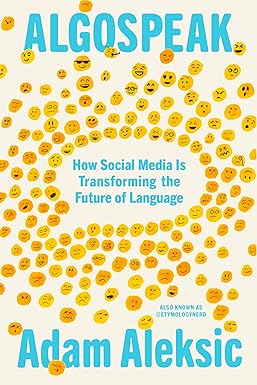
Algospeak, A New Battlefield of Language
- How Social Media Algorithms Are Transforming Words and Power
A New Stage of the Language War
Language has always been intertwined with power. In ancient times, the language of empires swallowed those of colonies; in the modern era, state censorship dictated the boundaries of expression. But in the 21st century, language has fallen under the grip of a new authority: social media algorithms.
Linguist Adam Aleksic, better known online as @etymologynerd, calls this phenomenon “algospeak.” Algospeak refers to the altered vocabulary users invent to evade automatic censorship and algorithmic demotion. More than just wordplay or slang, it reshapes the very rules of social interaction and culture.
“Language is now being written not by dictionaries, but by algorithms.”
Memes and Neologisms, A New Laboratory for Language
The ecosystem of algospeak is the world of social media. On TikTok, Instagram, and YouTube, words are born overnight, go viral, and disappear just as quickly.
* “brainrot”: A new word describing the mental paralysis caused by excessive internet use.
* “incel slang”: Vocabulary invented within involuntary celibate communities spreads rapidly, shaping gender and sexuality discourses.
* “-core aesthetics”: Influencer cultures attach “-core” to define new identities?*cottagecore*, *goblincore*?turning aesthetic preferences into linguistic categories.
Aleksic describes this as “language evolving at the speed of internet memes.” New terms create generational linguistic identities while simultaneously deepening the divide between generations.
Algorithmic Censorship and the Birth of Algospeak
The direct cause of algospeak is platform censorship. TikTok or Instagram reduces exposure of posts containing “inappropriate words.” Thus “death” becomes *unalive*, “suicide” becomes *s-word*. In Spanish, some even use *desvivirse* instead of “to die.”
This is not mere wordplay. Users risk exclusion from the conversation if they fail to evade the algorithm’s gaze. Algospeak is therefore a collective invention for survival within the invisible rules imposed by platforms.
“We are no longer tricking governments, we are tricking algorithms.”
A New Phase of Language Evolution
In *Algospeak*, Aleksic argues that language evolution is no longer natural or spontaneous. In the past, social needs, generational change, and cultural exchange drove linguistic shifts. Today, it is algorithms that dictate the direction of language.
* YouTube erases certain accents while spreading standardized ones.
* TikTok memes mutate grammar rules and create new ones.
* Instagram suppresses the frequency of specific words, reorganizing semantic networks.
Algorithms do more than display or hide information; they exert power over linguistic structures themselves.
Creativity and the Power of Collective Intelligence
Yet algospeak is not merely a symptom of oppression; it is also proof of language’s creativity.
First, users demonstrate endless innovation within restricted rules. Words like *seggs*, *unalive*, and *glizzy* are the products of this digital linguistic laboratory.
Second, the speed of collective intelligence is astonishing. A single user may coin a term, but communities spread and stabilize it as a new rule. Here, language is no longer defined by academics or institutions, but by the masses themselves, designing language in real time.
Third, algospeak functions as cultural belonging. To understand and use it is to reveal one’s identity as part of the same generation or community.
The Shadows of Algospeak: Freedom and Inequality
But *Algospeak* also highlights the darker sides of this phenomenon.
* Internalized Self-Censorship: Users think of algorithms before they speak. This narrows freedom of expression and constrains thought itself.
* Information Inequality: Younger generations naturally understand algospeak, while those with weaker digital literacy are excluded. The language divide is no longer natural but manufactured by platform power.
* Concentration of Power: Corporations monopolize the authority to decide which words are banned. This shrinks democratic discourse and deletes entire areas of conversation.
“A single banned word can erase a generation’s conversation.”
The Korean Context
In Korea, too, algospeak is rapidly taking root. Online communities and youth culture produce countless variations. Politically sensitive terms are turned into acronyms or nicknames. Discussions of school violence or self-harm are hidden in slang or euphemisms.
This is not mere play?it is a tightrope between regulation and freedom. With both government regulations and platform censorship in effect, algospeak evolves even faster in Korea. The result: widening generational language gaps and intensifying linguistic inequality under algorithmic power.
The Future Outlook: The Algorithmization of Language Wars
The future of language will not be fought in dictionaries or classrooms, but on the battlefield of algorithms. Aleksic stresses that internet language has become more than a trend: it is a new terrain of power.
“The wars of the future will be fought not in dictionaries, but over algorithms.”
This could reshape democratic discourse, social movements, and even the structures of collective thought. Countries like Korea must not dismiss this as mere internet meme culture. Algospeak is the frontline where language, power, and technology intersect.
**
What 'Algospeak' makes clear is this: language can no longer be explained solely as a natural evolution. It is being reprogrammed by algorithms, shaped by censorship and creativity, inequality and solidarity.
Algospeak is not a passing fad but the opening act of a 21st-century language war. To preserve freedom of expression and linguistic diversity, we must now confront not just *how* we use language, but who controls language itself.
Algospeak warns us: the war over language in the 21st century has already begun, unfolding quietly in the shadows of algorithms.

.jpg)
.jpg)
.jpg)