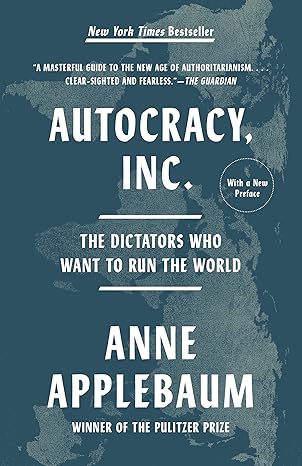
The New Face of Dictatorship: The Networked Power of the 21st Century
The world became rapidly connected, but the end of that connection was not freedom?it was control. Technology has shifted from serving humanity to calculating it. Democracy fractures under the weight of its own fatigue, and cynicism becomes the new language of power. Now humanity must ask: in an age of efficiency, do we still have the will to choose freedom?
Authoritarianism in the 21st century
Authoritarianism in the 21st century no longer confines itself within national borders. It has evolved into a transnational power network built upon capital, technology, diplomacy, and information. When Russia’s energy policy destabilizes European security, China’s digital infrastructure dominates communications in Africa and Latin America, and Middle Eastern oil wealth flows into Western financial markets, the world silently reorganizes itself under a new authoritarian order.
The defining feature of this system is 'collaborative autocracy'. These regimes may speak different languages and claim different ideologies, yet their methods of control are strikingly similar: monopolizing information, subordinating the judiciary, weakening the press, and uniting the population through fear of external enemies. If democracy thrives on deliberation and slowness, authoritarianism thrives on speed and efficiency. This is not merely a difference in governance?it is a crossroads for human civilization.
The globalization of autocracy is not a political alliance but an unintended consequence of globalization itself. The same open markets and digital tools that once symbolized freedom have empowered those who seek to dismantle it. Power now flows across borders, and dictatorship has learned to speak the diplomatic language of legitimacy.
Empires Built on the Rivers of Corruption
Modern authoritarianism cannot exist without corruption. Corruption is not a symptom of decay?it is the circulatory system that keeps these regimes alive. Power is bought with loyalty, loyalty is secured with money, and that money is hidden in the shadows of the global financial system. Tax havens, shell companies, and the labyrinth of offshore law firms provide sanctuary for illicit wealth.
This network of corruption serves both as a tool of internal control and a shield of external legitimacy. Domestically, it binds elites through shared complicity; internationally, it launders dirty money through the very mechanisms of liberal capitalism. The dictator’s fortune moves invisibly through Western banks and real estate markets, gaining the protection of the same system that once promised transparency.
Corruption, therefore, is not personal immorality but a structural mechanism of power. Money defines the direction of authority, and authority in turn protects the flow of money. As long as this circulation continues, no moral rhetoric can dismantle autocracy. The global economy’s silence sustains the empire of corruption.
The Digital Age of Control: Data as the New Weapon
The age when dictators ruled with guns and prisons is over. Today’s authoritarian regimes rule with data as their weapon. Surveillance is no longer visible; it is coded into algorithms. Artificial intelligence identifies faces and voices, interprets behavior, and classifies dissent. The rhythms of a city?its traffic, communications, and commerce?are integrated into an invisible architecture of control.
This system does more than suppress opposition. It predicts discontent before it erupts and absorbs it quietly. Citizens are not coerced; they are persuaded. Surveillance arrives disguised as convenience. Technology promises efficiency while eroding the boundaries of privacy and autonomy.
The reach of this digital control extends beyond national borders. Authoritarian states weaponize social media to distort elections, manipulate discourse, and amplify falsehoods. Lies travel faster than facts, and democracies crumble not by coups but by confusion. Progress in technology has not brought freedom closer?it has only perfected the machinery of domination.
Democracy Collapses from Fatigue and Cynicism
The enemy of democracy has always been internal. Free societies collapse not from invasion but from exhaustion. Citizens grow weary of politics, skeptical of institutions, and impatient with process. The debates that once signified vitality now feel like burdens. Slowness, the essence of democracy, is mistaken for dysfunction.
As civic fatigue deepens, the temptation of “efficient governance” grows. People begin to prefer outcomes over deliberation, uniformity over diversity. When a society values speed and order above participation, freedom dies quietly from within.
Authoritarianism does not invade; it enters through indifference.
Cynicism is more dangerous than tyranny. It destroys responsibility. When citizens distrust power but also abandon oversight, the vacuum is filled by control. Democracy ceases to function the moment participation fades. The cooling of civic passion is the soil in which despotism grows.
The Openness of Freedom Becomes the Infrastructure of Control
Globalization expanded freedom but also built the infrastructure of control. Free trade opened the movement of capital, yet the same networks allowed autocrats to accumulate foreign reserves and influence. The open internet promised liberation of information, yet its very architecture became the ideal laboratory for surveillance and manipulation.
Democratic societies assumed that openness was inherently good. But openness without accountability becomes another form of control. The unregulated pursuit of efficiency and profit turned the tools of democracy into weapons of authoritarianism. Autocrats exploited the markets, technologies, and communication systems that the free world had built.
Freedom without responsibility is fragile. Regulation, ethics, and transparency must accompany openness; otherwise, liberty turns inward and devours itself. The very system designed to protect freedom now threatens it. Freedom must learn once again to discipline its own excesses.
When Truth Collapses, Lies Become the Language of Power
Modern autocrats no longer hide their lies. They flood the public sphere with so much information that truth itself dissolves. In the age of information overload, clarity dies not from censorship but from noise. People lose the ability to distinguish fact from fabrication?and in confusion, authority thrives.
This is not chaos by accident; it is strategy. Authoritarian regimes weaponize the fatigue of truth. When every narrative seems suspect, citizens surrender to simple stories?stories that promise strength, certainty, and revenge. Disinformation does not persuade; it overwhelms. In its shadow, trust evaporates.
When truth collapses, democracy loses its compass. The success of falsehood is not technological but psychological?it grows from our own apathy and mistrust. Without transparency and a free press, societies internalize the logic of control. They cease to question, and silence replaces understanding.
Trust: The Last Line of Defense for Democracy
If autocracies survive through unity, democracies survive through trust. Trust is not sentimental; it is the invisible architecture that keeps institutions alive. Laws are only as strong as the belief that they will be upheld.
When trust erodes, laws become tools of vengeance, and the press becomes an echo chamber. Restoring trust requires more than policy?it demands the reconstruction of civic ethics. To respect disagreement, to tolerate slowness, to value process over immediacy?these are not inefficiencies but the rhythms of freedom itself.
Democracy’s strength lies not in perfection but in its capacity for self-correction. When citizens reconnect across divisions and cooperate across borders, the free world regains its balance. Trust moves slower than algorithms, but it endures longer than power. Its pace is the heartbeat of democracy.
At the Edge of Freedom, Humanity Must Choose Again
Efficiency has become the new faith of the modern age. Data has replaced judgment, and speed has replaced justice. Yet efficiency always requires the sacrifice of human complexity. Democracy dies most quietly when freedom is seen as too costly, too inconvenient, too slow.
Freedom is never comfortable. It is noisy, chaotic, and perpetually unfinished. But within that imperfection resides human dignity. Authoritarianism promises clarity and order, but its perfection is sterile?it demands silence in exchange for peace.
The essence of democracy is not law or constitution but the human capacity to trust one another. Trust is a moral decision to honor the freedom of others, even when their beliefs oppose our own. The crisis of our age is not technological or economic?it is the loss of that moral courage to trust.
When suspicion becomes the default and cynicism turns into virtue, democracy implodes from within. Authoritarianism enters not as conquest but as remedy?a cure for the discomfort of freedom. But it is a cure that kills.
Humanity now stands before a choice: to chase the speed of machines or to preserve the slowness of human understanding. Speed offers convenience; trust requires time. And once time is abandoned, community dissolves.
Freedom is not a condition but a continuous act of choice. As long as that choice endures, the efficiency of tyranny can never replace the dignity of the human will.
Between the fear of losing freedom and the faith that it can still be preserved, democracy breathes again. The true defense of liberty is not in its institutions?but in humanity’s ability to believe in one another.

.jpg)
.jpg)
.jpg)