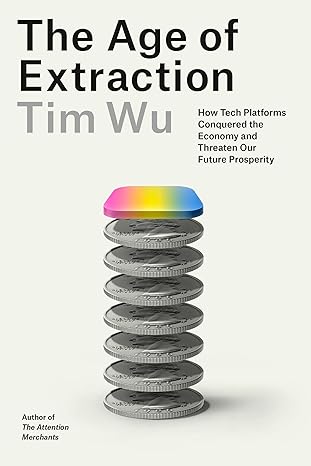
The Age of Extraction: The Economic Order of a World Dominated by Tech Platforms
A New Empire of Platforms
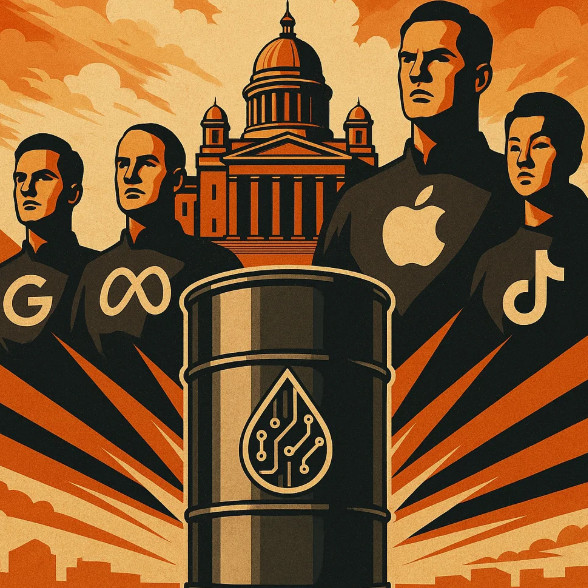
The economy of the 21st century runs on data and algorithms. What oil once was to the industrial age, data has become to the digital age?and those who control the flow of data are none other than the technology platforms. They function not merely as tools, but as 'a new imperial system that permeates the entire economy.' The rulers of this system?giants like Google, Amazon, Meta, Apple, and TikTok?wield powers that surpass both states and markets.
These platforms monopolize the circulation of information and precisely capture individual consumption patterns and psychological data. Every click, pause, or swipe extracts new data, which in turn refines the algorithm further. Humanity becomes both consumer and resource at once. It is the moment when '“attention,” not labor, becomes the core unit of the economy.'
Extractive Capitalism ? The Structure of Invisible Exploitation
Traditional capitalism functioned through the relationship between labor and production. Today’s platform economy, however, operates on a new mechanism?'extraction.' Extraction here means not merely obtaining resources, but absorbing intangible elements such as user data, time, and emotion to generate value.
Platforms appear to provide free services, yet they collect the true payment in the form of user data. The “like” button on social media, the autoplay on videos, and the recommendation algorithms on shopping sites?all are tools of extraction. Under the guise of “convenience” and “personalization,” they subtly reduce users’ decision-making power and steer consumption toward the directions the platform desires. As a result, users believe they are in control, when in fact they are the ones being controlled.
In this process, economic value accumulates only upward. Platforms, even without owning production facilities, absorb the results of global labor. Delivery workers, content creators, and app developers all become 'data laborers' within this system. Extractive capitalism deepens inequality and paralyzes the mechanisms that once allowed society’s wealth to be fairly redistributed.
The Collapse of the Market ? The Economics of Monopoly Without Competition
The core strategies of platform power lie in 'network effects' and 'economies of scale.' The more users a platform has, the greater its value becomes, drawing new participants toward the largest platform almost automatically. This creates a massive self-reinforcing loop that renders competition meaningless. Eventually, a handful of platforms come to dominate entire industries, monopolizing the intermediary space between consumers and producers.
Monopoly is not merely an issue of pricing?it transforms the very structure of the economy. Small and medium-sized businesses can collapse overnight depending on platform policies; the media industry, deprived of ad revenue, becomes subservient to algorithmic logic. Even the public sphere operates within this monopolistic framework. Election campaigns and political communications now depend on the 'exposure rules' determined by the platforms.
The result is a direct threat to the foundations of democracy?diversity of information and fairness in decision-making. Once symbols of freedom and innovation, platforms have evolved into new instruments of surveillance and control. It is the 'transformation of the technology of freedom into the technology of control.'
The Fatigued Society ? Shadows of the Attention Economy
Modern humans live inside platforms twenty-four hours a day. Smartphone notifications, autoplaying videos, and endless recommendation feeds eat away at our attention. Attention has become a new kind of resource, and the companies that seize the most of it become the richest. In this 'attention economy', lack of concentration is not an individual failing but a structural outcome.
Algorithms prioritize emotionally charged content?anger, fear, and sensational news travel fastest. Political polarization, conspiracy theories, and disinformation are the byproducts of this economic logic. Society grows ever more stimulated, yet ever more exhausted. While platforms accumulate wealth, users experience psychological depletion.
Breaking this structure requires more than digital detox or personal restraint. The very 'business model that monetizes attention must be redesigned.' That is the first step toward addressing the fundamental problems of the platform economy.
Conditions for a Sustainable Platform Economy
Platforms are not the root of all evil. They remain the engines of innovation, expanding access to information and improving efficiency. The problem lies in the magnitude of their power and the imbalance in how their benefits are distributed. Building a sustainable platform economy requires several essential shifts:
'First', the ownership of data must be redefined. Users should be guaranteed both control over and compensation for the data they generate so that platforms cannot extract it unilaterally.
'Second', the framework ensuring fair competition must be strengthened. Antitrust and merger regulations must be updated to reflect technological realities.
'Third', transparency within platforms must be secured. The mechanisms of algorithms and data usage policies should be made public, enabling users to exercise genuine choice.
Ultimately, platforms must be reimagined as 'public infrastructure' rather than tools of private gain. Only then can technological progress bring prosperity that is not confined to a privileged few.
The Power That Will Rule the Future ? The Boundary Between Technology and Democracy
Platforms have become powers that transcend nations. They control the flow of data in the global economy, determine the hierarchy of information, and even shape collective emotions and public opinion. This power is invisible yet capable of shaking the very foundations of modern democracy.
Democracy depends on equal access to information and the autonomy of citizens’ judgment. When platforms monopolize both, autonomy becomes merely formal. It is no longer about 'what' we choose, but 'what choices we are allowed to see'?a reality defined by the platform itself. This is the ultimate danger of extractive economics: the shift from 'economic exploitation to political control.'
Yet humanity has always invented resistance to the excesses of power. The labor movements of industrial capitalism did so in the past; in the information age, data sovereignty and digital democracy movements carry that torch. If technology has conquered the economy, then human values must now redefine technology.
Toward the Next Age of Prosperity
The age of extraction has not ended. The fusion of AI and platforms enables ever more sophisticated forms of data exploitation, foreshadowing new types of inequality. Yet within that crisis lies opportunity. If technology can be redirected toward the public good, platforms may transform from tools of exploitation into tools of cooperation.
“Technological progress is never neutral; it depends on whom it serves and how it operates.”
This single line summarizes the task given to every citizen living in the platform age.
Technology is inevitable, but exploitation is a choice. When we redesign that choice, only then will platform civilization enter a true era of shared prosperity.

.jpg)
.jpg)
.jpg)