The Future of the Constitution Begins in the Streets
The Constitution is not a document but a way for humankind to define itself. What endures longer than the clauses engraved on paper is the will of those who choose to uphold them. Each time a society trembles, the Constitution is reread and reinterpreted. It is not the blueprint of a nation but the language through which people remember themselves. The phrase “We the People” is not a declaration of the past but a civilization’s unfinished sentence.
The Birth of the Constitution and Its Imperfect Beginning
Born out of the Philadelphia Convention in 1787, the U.S. Constitution was humanity’s first modern experiment in self-governance. Yet its beginning was far from complete. It cried for liberty while slavery remained intact; it promised equality while women, Indigenous peoples, and immigrants stood outside the walls of citizenship. The preamble declared the “rights of the people,” but the definition of that “people” was tightly confined.
“On July 23, 1788, citizens gathered in the streets of New York to celebrate the ratification of the Constitution… (On July 23, 1788, the people of New York spilled out onto the streets of the city…).”
Even so, that procession was not merely a festival. It was the moment when law descended from paper into reality?when humanity called itself into being as the subject of the state. The law may be written upon a desk, but it comes to life only when citizens move their bodies in the streets.
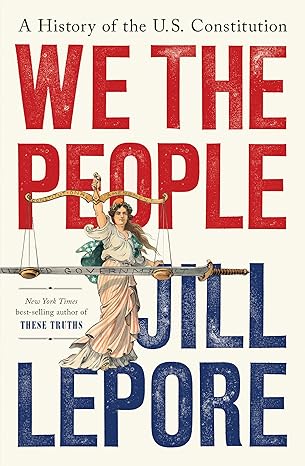
Jill Lepore reads this scene as the symbolic birth of the Constitution. It was not a command delivered from the powerful but an aspiration that rose from below. Yet within that great beginning, contradiction already existed. The language of liberty was present, but those who could live it were few. The Constitution did not promise perfection; rather, it institutionalized imperfection.
Lepore argues that the greatness of the Constitution lies not in its completeness but in 'its ability to recognize and amend its own limits'. Only a society that admits its imperfections can sustain democracy. The American Constitution survived precisely because it was incomplete. Freedom grows not from completion but from fracture. The abolition of slavery, women’s suffrage, and the civil rights movement?all of these were born from the Constitution’s imperfections. It was not perfection but flaw that became the muscle of democracy.
Amendment and Interpretation ? The Evolution of a Living Document
The true power of the Constitution lies not in its preamble but in its amendments. An amendment is a confession that a nation makes to itself, a way in which civilization redesigns its moral architecture. The abolition of slavery (13th Amendment), the guarantee of citizenship (14th), women’s suffrage (19th), and equal protection (14th §1)?all were moments when 'law caught up with humanity'.
Lepore declares that “a perfect constitution does not exist.” True democracy can only thrive within a constitution that possesses 'a structure capable of amendment'. Only a system that can acknowledge failure endures. When law is able to correct itself, society does not lose its moral vitality. The ability of the Constitution to evolve is, ultimately, the courage of a society to reflect upon itself.
Yet America today is losing that courage. The amendment process has become so rigid that even as society changes, the Constitution remains still.
“The amendment process itself has become the greatest obstacle to democracy’s evolution.”
Lepore’s point is simple: if the Constitution does not move, democracy stops. Where amendment ends, revolution begins.
The Constitution also survives only through interpretation. As the times change, so too must the language of law be translated anew. The absolutism of originalism?which worships the founders’ intent?turns the Constitution into a taxidermied text.
Law is not religion but dialogue, and democracy is the collective will to continue that dialogue. To say that the Constitution is alive means that the questions never end.
Invisible Power and the New Battlefield of the Constitution
Today, power no longer resides within the boundaries of the state. It infiltrates human life in the form of data and algorithm. The Constitution was written to restrain kings and governments, yet now power hides within code. Platforms design personal choices; algorithms calculate emotions and predict human behavior. We believe we choose freely, but in truth we move only within the frames the platforms have built.
Lepore calls this phenomenon '“the constitution outside the Constitution.”' It is the birth of powers that law no longer governs. Once, authority revealed itself through armies or taxation; now it appears through data. The crisis of democracy does not arise from corrupt politics but from unseen structures of control that grow quietly within.
Lepore argues that in the age of technological capitalism, the Constitution must return to the language of humanity. If law cannot govern data, then data will come to govern law.
Now the Constitution faces a new battlefield. The judgments of artificial intelligence, the monopolies of platforms, cryptocurrencies, and surveillance societies?all show that the old Constitution can no longer remain confined to paper. As human dignity expands into the digital realm, so too must the language of law. This is what Lepore calls '“the constitutional imagination of the twenty-first century.”'
Civic Ethics and the Future of ‘We the People'
The life of the Constitution comes not from institutions but from attitude. Democracy is not law but habit; trust precedes law. Civic ethics are the fuel of the Constitution. Voting, debate, responsibility, and cooperation?all these are its continuation.
Words of respect, the desire to verify truth, and the choice to prioritize the public good?all of these matter. The Constitution is never confined to paper; it exists as an invisible order that operates within human life.
Lepore reminds us: the Constitution is not the command of the state but the habit of citizens, and the true power of democracy lies not in law but in trust. When people worship law as religion, democracy stops. But when people live the law as part of daily life, the Constitution is reborn.
“We the People” is not a completed sentence. It is one that every generation must write anew. As society changes, the sentence gains new meaning, and humanity expands itself. The purpose of law is not to preserve order but to open possibility. The Constitution does not exist to protect the past; it exists to experiment with the future. When humanity surpasses the limits of its institutions, democracy begins to grow again.

.jpg)
.jpg)
.jpg)