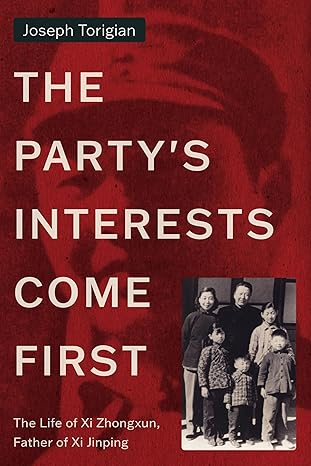
The Genetic Code of Power, the Lineage of Loyalty- The Inner Workings of Chinese Politics through Xi Zhongxun and Xi Jinping
The revolution is over, yet its language still beats within the heart of the system. The father believed in ideals; the son believed in order. 'The Party’s Interests Come First' traces the intertwined lives of a father and son to dissect the psychological and institutional continuity of Chinese power?and to show how loyalty transformed from a political duty into a human ethic.
From Revolutionary Idealism to the Logic of the System
Xi Zhongxun symbolized a generation that carried the ideals of revolution. Born into poverty, he fought for the liberation of the people but lived to see that the language of liberation had turned into the language of control. The revolution that once made him a hero soon branded him a traitor, and through purges and rehabilitation, he came to understand the cold machinery of the system.
Even after his reinstatement, he could not speak of freedom without restraint. As a pioneer of reform and opening, his words were confined within the walls of “the Party’s interests.” Freedom existed only within boundaries the Party allowed, and every act of change he pursued ultimately reinforced the system’s stability.
Xi Zhongxun never stepped outside the system. He had the will to transform ideals into reality, but reality always reshaped those ideals. He became the portrait of a generation that began in the language of faith and ended in the language of obedience.
His son Xi Jinping witnessed that contradiction through a child’s eyes. Experiencing both his father’s purge and rehabilitation, he learned the mechanisms of power more deeply than the meaning of belief. The techniques of survival replaced conviction, and loyalty became the new measure of human virtue.
Power, Memory, and the Inheritance of Loyalty
Torigian reads power as a 'politics of memory'. Power endures not through violence but through the control of recollection. Xi Zhongxun’s suffering was not left as a stain on the regime; it was rewritten as proof of the Party’s moral legitimacy.
The control of memory is not an act of erasure but an act of editing. Uncomfortable truths do not vanish?they are moved into new contexts and given new meanings. Purges are reframed as lessons; reinstatement becomes a testament to the Party’s mercy.
Through this process of reconfiguration, the father and son’s lives merge into one narrative. The father’s hardship becomes the nation’s trial, and the son’s success becomes the nation’s redemption. When the family story is absorbed into the state’s history, power acquires an even deeper and more seamless legitimacy.
Xi Jinping took this memory as his model. To avoid repeating his father’s failure, he internalized the logic of the system as his own language. For him, loyalty was not emotion but technology?the operational code that kept the order intact and rendered obedience indistinguishable from virtue.
The Reconstructed Narrative, Xi Jinping’s Revolution
Xi Jinping learned from his father’s revolution, yet chose to rewrite it. He changed not the word but the meaning. By weaving together Mao’s idealism, Deng’s pragmatism, and the technocracy of Jiang and Hu, he placed himself as the “final assembler” of the revolutionary lineage.
The revolution he speaks of no longer means transformation. It is a controlled cycle designed to preserve and stabilize the system. Change is managed, and managed change is called order.
Torigian defines this process as a “self-replication of political myth.” Revolution no longer challenges power?it embellishes it. The system converts past failures into future missions and builds the illusion of historical consistency around authority.
Xi Jinping’s revolution rests on this illusion of continuity. He favors endurance over speed, harmony over conflict. His regime moves not by the passion of loyalty but by the structure of loyalty, and revolution has become another name for conformity.
Family, State, and the Ethics of Obedience
At the root of Chinese politics lies the metaphor of family. The state is the father; the people are the children. Obedience is recast as morality, and control as protection.
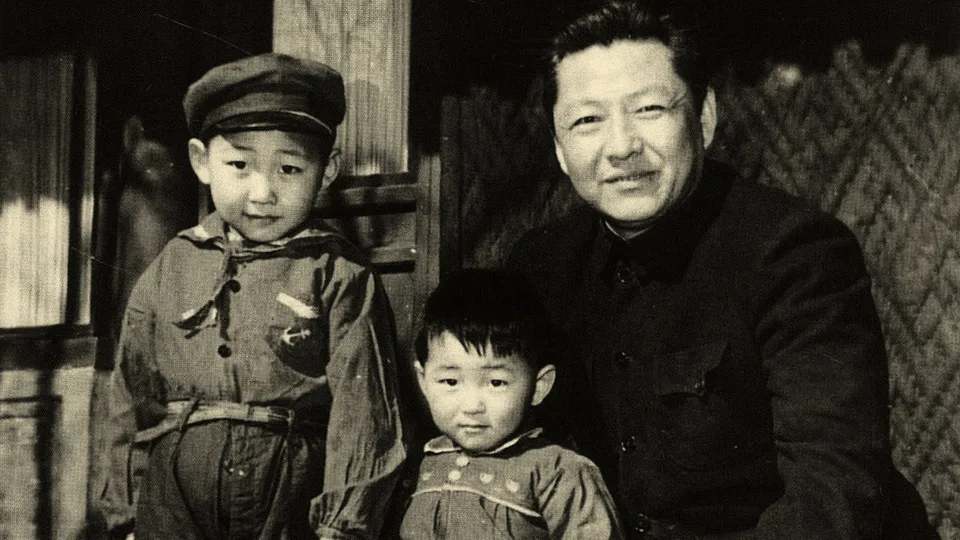
The relationship between Xi Zhongxun and Xi Jinping embodies this metaphor. The father’s loyalty was an act of belief; the son’s loyalty, a language of institutions. Their bond became a national symbol that justifies the relationship between ruler and ruled.
Torigian calls this “the political reincarnation of Confucian authoritarianism.” When the state takes the form of a family, dissent becomes disorder, and obedience is dressed as virtue. The leader becomes the moral patriarch, and the people, in exchange for protection, choose silence.
Within this structure, power appears as order rather than oppression; surveillance feels like management rather than mistrust. The endurance of Chinese authoritarianism springs from this sensory inversion. Feelings outlast coercion, and relationships outlast fear.
The Age of Loyalty and the Shadow of Freedom
'The Party’s Interests Come First' is not merely a study of Chinese power. It asks what humanity must choose in an age that worships efficiency and order. Xi Zhongxun’s ideals collapsed, but the question he left behind endures.
Xi Jinping’s regime offers a cold answer to that question. Freedom is uncomfortable; efficiency is comforting. People choose comfort, and the more often they do, the more perfect the system becomes. Beneath that perfection lie surveillance and self-censorship?yet citizens accept this unease as part of daily convenience.
Torigian sees in this the “refined face of modern authoritarianism.” It speaks not through violence but through trust; citizens sign their own obedience as a social contract. Technology becomes the instrument of oversight, and convenience the mediator of control.
The book asks: “In a world where the Party’s interests come first, where does human dignity stand?” Freedom is always inefficient, and democracy always exhausting. Yet only within that slowness and fatigue can human worth endure.
Xi Zhongxun sought to remain human within the system; Xi Jinping sought to perfect the system in the name of humanity. One wrote history through ideals, the other through order?but the line connecting them is memory itself.
Memory is the mirror of power. As long as it is not distorted, no system can be complete. Torigian’s ultimate insight is quiet yet piercing: power may be inherited, but so is dignity. As long as memory lives, what comes before the Party’s interests will always be humanity.

.jpg)
.jpg)
.jpg)