Behind the Giant Platform, Power That Has Lost Care- What Can Be Read from an Insider’s Account Illuminating the Big Tech Era
A World Built by “Careless People”
Platforms began with a promise to connect people. There was an expectation that a new public sphere would open up, in which friends could communicate across borders, minority voices could expand, and citizens could produce information on their own. But the history of the last decade shows that this promise has only been half-kept. In reality, the technology of connection has been mobilized for hatred, incitement, manipulation, and surveillance, while democracy and human rights have been pushed behind algorithms and advertising revenue.
In this process, one scene in particular comes into sharp focus. Inside the giant platform, countless warnings and concerns are raised again and again, yet actual decisions are repeatedly pushed to the back of the line behind two words: “growth” and “market.” Within this structure where technology, capital, and political power are entangled, the rights and lives of individual people are pressed beneath numbers and charts and become hard to see.
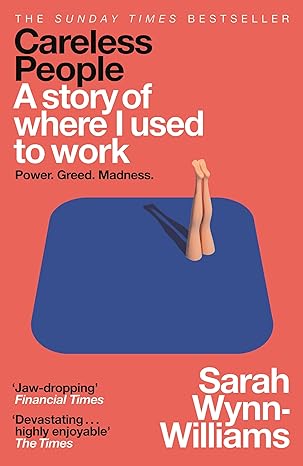
Sarah Wynn-Williams’s memoir *Careless People* is one of the closest-range voices to record that landscape. Following the incidents experienced while working as a global public policy lead, one begins to see how a giant technology company gradually loses the sense of “care,” and how routine and systematic that process really is. The phrase “careless people” is not so much a label for a few bad individuals as it is a name for the condition created by the entire structure and culture.
The Spot Entered by Idealists, the Structure from Which Responsibility Disappears
People with backgrounds like national diplomats who joined global platforms generally carried similar expectations. There was a belief that technology companies moving faster than governments could inject positive energy into human rights and democracy, and a conviction that “connection” would naturally translate into “openness and freedom.” The everyday life of young, smart people gathering under a free dress code and horizontal culture, sitting in on meetings with world leaders, was clearly an attractive environment.
But once inside, different scenery quickly came into view. The company slogans might say things like “bring the world closer together,” but the actual decision-making structure was designed to avoid attributing responsibility to any particular individual. Even when a wrong choice shook elections in some country or threatened the safety of a specific community, the words that came back from the conference room were expressions like “system limitations,” “algorithmic outcomes,” and “constraints inherent in global standards.”
This scene reveals a structure of technological power today that goes beyond any single company. As the number of stakeholders becomes too many and the scale of services too large, responsibility is increasingly abstracted. The impact of mistakes grows larger and larger, yet the weight of responsibility grows strangely lighter. Even if idealists decide to go inside a system to “change it from within,” at some point they themselves are absorbed as part of the “careless people.”
Myanmar, the Rohingya, Content Moderation: The Violence of Neglect
One of the most brutal cases in which the platform’s carelessness emerged was the violence against the Rohingya in Myanmar. At that time, social media became a channel for the spread of hate and incitement, and was criticized for being tightly linked to actual massacres and human rights abuses. Years later, external investigations and UN reports assessed the platform’s role in Myanmar as something close to a “catalyst for mass violence.”
Following the internal descriptions in the memoir, the root of the problem goes beyond the simple level of “there weren’t enough people.” There were extremely few content moderators who understood Burmese, and even the translation of community guidelines was pushed back in priorities for a long time. As hate and incitement posts poured in, there was a shortage of staff who understood the local context, and human-rights-related warnings repeatedly lost speed as they passed through several layers of approval.
It is not that there was no awareness of the problem inside. There were employees who detected danger signals and escalated warnings. But every time such warnings came up, they were pushed aside for reasons like “political risk,” “concerns about slowing growth,” or “lower priority compared to other regions.” Human-rights risks, unlike financial statements, are not immediately visible.
What emerges here is a form of violence that is much more common and powerful than malicious intent: neglect. Even without a desire to actively harm, the very state of not considering others’ lives and rights seriously enough becomes the soil for violence. The platform’s “carelessness” targets precisely this point. Knowing about the problem yet continuously pushing it down the priority list?this indifference, which ultimately leads to real deaths and injuries, was tragically proven in the Myanmar case.
China and Censorship, the Price of Entering a Market
Another central axis is the strategy around China. For a global platform, entering a country with such a large population and market was almost a predetermined mission. At the same time, it was also the most sensitive deal in that it required negotiations premised on strong censorship and state control.
Piecing together the scenes in the memoir, one sees that a variety of options to satisfy the Chinese government were seriously considered internally. For example, systems that could delegate the filtering of posts from Chinese users, including those in Hong Kong, to selected partners, or internal scenarios that discussed how far the company might go in complying if the Chinese government demanded access to data on its citizens.
In public messaging, “freedom of expression” and “the value of connection” are always emphasized, but at the actual negotiation table, the agenda is dominated by calculations about “how far to concede.” Refusing censorship means exclusion from the market; accepting censorship means losing brand value and user trust. In between, companies often lean on the phrase “technological neutrality” to blur their political responsibility.
Yet this tightrope between freedom of expression and censorship ultimately returns as a question about the platform’s own identity. Can something act as an infrastructure for democracy while at the same time serving as part of an authoritarian state’s information-control system? If both are pursued at once, public trust will eventually collapse in ways that are hard to reverse.
Gender, Sexual Harassment, and the Shadow of “Lean In”
Even companies that proudly project the most progressive image externally are not free from familiar power imbalances and gender issues on the inside. The memoir includes multiple episodes of inappropriate behavior by senior executives, subtle sexual pressure at business dinners and on trips, and the delicate disadvantages and stigmas that follow when someone tries to raise these problems.
What is particularly ironic is that these scenes overlap with the era when figures symbolizing “women’s leadership” and “lean in” were most prominently active. Slides emphasizing diversity, inclusion, and equality might be everywhere, yet those who actually shoulder childcare, care work, late-night meetings, and business trips are still concentrated in particular genders and classes.
The message that individual effort can overcome this structure is attractive. But in a workplace culture where meetings and long-distance travel are the default, in a social structure that places almost all care work on the home, and in an environment where people who raise sexual-harassment issues are viewed as “troublemakers,” the call to “lean in more boldly” hits its limits.
The memoir shows that gender and power problems are also deeply entwined with “carelessness.” Treating voices that raise issues of harassment and discrimination as “personal conflicts” or “risks that must be handled quietly,” rather than as problems of the entire organization, is a representative scene of how the absence of care consumes people.
Politics, Algorithms, and Structural Bias
The influence of platforms on elections and political processes has become almost common sense as a topic. But looking closely at how this problem was perceived internally and how it was handled reveals a picture that goes beyond surface-level disputes.
In principle, algorithms follow the goal of “prioritizing content that keeps users on the platform longer.” Human psychology, on the other hand, tends to react more quickly to strong emotional stimuli such as anger, fear, and hatred. When these two combine, extreme and inflammatory content becomes structurally advantaged. If particular political forces use this aggressively, platforms can, while claiming neutrality, actually produce effects that amplify certain types of political behavior.
Inside, this structural bias was pointed out repeatedly. Various proposals were made, such as reducing exposure to content that stokes rage, strengthening fact-checking and contextual information, and adjusting algorithmic weights. But whenever such proposals approached implementation, the same question followed: “What happens to the growth curve if we do that?”
Balancing growth and safety, engagement and a healthy public sphere is never easy. However, in a situation where quarterly performance, stock price, and advertising revenue are set up as a kind of “supreme line,” the direction in which internal debates will tilt is almost predetermined.
This is precisely the power of structure. It is not that a specific individual is evil; rather, the incentive system itself continually makes responsible choices difficult. That is why it is hard to attribute political polarization and the spread of fake news solely to users or politicians. The design of the platform and the structure of the algorithm already carry a built-in direction.
Attempts to Block the Expose and the Backfire
Also intriguing is the scene in which attempts to control internal voices pointing out negligence and irresponsibility actually trigger bigger waves. Before and after the memoir came out, there were moves to restrict the author’s speech by invoking non-disparagement clauses, and emergency arbitration measures seeking to limit promotion of the book and the repetition of criticisms were pursued.
Yet the more information control was attempted, the wider the impact grew. The media framed the story as a “memoir whose publication was suppressed,” and as a result, this account reached the hands of far more readers. Considering the ripple effects that led to parliamentary hearings and further investigations, the effort to quietly cover things up ended up summoning a gigantic magnifying glass instead.
This entire process symbolizes what happens when power tries to control information. Large organizations tend to prefer “handling things quietly,” but the information ecosystem in the digital age is becoming increasingly uncooperative with such strategies. Attempts to silence a voice become news in themselves, and exposes expand from individual incidents into public debates that question the structure as a whole.
The Power and Risks of a Memoir
An insider’s record becomes powerful testimony, while inevitably carrying inherent limits. The landscape seen by a person who worked in a particular period, on a particular team, in a particular role cannot represent the entire map of the organization. Because the narrative is infused with personal experience, interpretation, and emotion, some parts may be exaggerated, while others may be minimized or omitted.
Even so, there is a reason to pay attention to such accounts: they portray structures and cultures in the form of “scenes.” News articles and reports organize numbers and policies, but only a personal narrative can contain things like the atmosphere in a meeting room, the hesitation embedded in a single email line, and the emptiness felt in a hotel room after a business trip. Structures are abstract; experiences are concrete. When these two meet, readers finally come to feel “what the system leaves as a sensation on the human being.”
Another important point is the layer of self-reflection. Some insider accounts focus only on accusation directed outward, but the more persuasive testimonies do not hide the fact that the writer also functioned as part of the structure. When a narrative reveals the embarrassment of someone who once explained growth targets, kept silent in meetings, and did not quit sooner, it evokes a sense of shared responsibility rather than moral superiority.
At this point, readers begin to broaden the question. Perhaps the issue is not confined to “that company” alone, but is linked to the wider capitalist system that treats growth and efficiency as the highest values. Big tech firms might merely appear to be the most extreme examples; similar incentive structures may already be widespread in other industries and organizations as well.
Questions Reflected onto Korean Society
The story around giant platforms also throws direct questions at Korea. First, there is the matter of how to design regulation and oversight. Korea has had its own experience of elections, fake news, and hate speech spreading through social media. So far, responses have largely remained at the levels of ex-post regulation, deleting individual posts, and sanctioning specific users.
However, without access to internal structures and incentives, it is difficult to bring about fundamental change while only dealing with visible outcomes. There is a need for institutional frameworks that grant external experts the authority to audit how algorithms work, give governments and civil society prior information and influence over key policy changes and experiments, and require platforms to continuously assess and publish their human-rights risks.
Second, there is the question of growth-centered organizational culture. The familiar landscape of long working hours, constant on-call availability, relentless performance pressure, and the implicit demand to “devote yourself to the company” is common in Korean conglomerates and startups as well.
Whose time and care work are being sacrificed?
What options does the organization offer to those who juggle childcare and caregiving while maintaining a career?
Which voices are missing from meeting rooms, stratified by gender, generation, and class?
These questions are not unique to overseas big tech stories; they invite reflection on Korea’s overall labor and care structures.
Third, issues of individual life strategies come along as well. Where is the boundary between fighting inside a system to change it and deciding that it has become impossible to endure and stepping outside to speak? The narrative in the memoir shows the conflicts and exhaustion experienced when idealists collide with real power structures. These conflicts recur in various forms in Korean public institutions, companies, and political organizations too.
Things That Became Too Big to Care For
Relationships between people ultimately return to the language of “care.” The quality of a relationship is determined by how seriously one considers the safety and dignity of the other, and how responsibly one looks at the consequences of one’s actions. The relationship between platforms and users is no different.
Today’s giant platforms have grown so large that it has become almost impossible to “truly care for” each individual user’s life. The problem is not scale itself but the attitude of relinquishing responsibility for care by citing scale. The statement “there are too many users to look after everyone” easily devolves into a declaration that “basic safety and human rights will not be considered either.”
The record left by Sarah Wynn-Williams is a late-coming confession and structural testimony from someone who passed through a particular period in a giant technology company. Through this account, one sees more than the rise and fall of a specific firm.
What happens to responsibility and care when growth and efficiency become supreme values
What kinds of tragedies occur when irresponsibility and carelessness become the result of structure rather than personal choice
What dilemmas and exhaustion are experienced by those who recognize these problems internally, and in what ways they eventually speak out
These questions do not end with the history of one company. They apply just as well to the new platforms and technologies that will emerge over the next decade?generative AI, the metaverse, ultra-large-scale data infrastructures, and more.
Technology cannot be eliminated. What can be done instead is to redesign the structures and incentives around technology, and the structures of responsibility. When the world built by “careless people” is no longer accepted as a given, alternative options begin to come into view. And those options should not be crafted only in the meeting rooms of giant corporations, but should be the product of a public sphere in which users, citizens, regulators, and workers all participate together.
The portrait of power that has lost care has already been shown enough. What is needed now is the imagination and practice to envision and push toward technological, political, and economic structures in which care is restored.

.jpg)
.jpg)
.jpg)