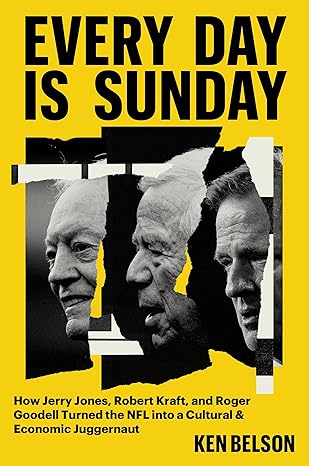
Empire That Bought Sundays, NFL
At first, it was sport. Then at some point it became the weekend timetable, and then at another point it became the calendar of a vast industry. When people talk about the NFL, they think of wins and losses and stars, but behind it there is a much more finely laid route along which money flows. It does not sell a single game, it buys viewing habits, and it does not simply grow a team, it creates a cultural ritual. In that process, what moved the league was not only the talent of the players, but the power that designs rules, the technique that circulates money, and the defensive instinct that protects trust. From here, let us follow where that force begins, where it flows, and what kind of structure it hardens into. The process by which sport grows is often explained as a story of emotion, but the NFL’s expansion is also a story of how emotion becomes a system.
Not a Stadium, but a Platform
The center of the NFL is not the turf, but access. The ability to make fans, wherever they are, watch the same scene on Sundays and have the same conversation, and the repetition of that, becomes the league’s strongest asset. If soccer or baseball grows by riding the flow of a season, the NFL grew by dominating the promise of a particular day of the week. Here, the game becomes content, the schedule becomes a programming grid, and the team becomes a brand. The larger the platform grows, the more the league’s value multiplies in the distribution structure rather than in pure playing strength.
Becoming a platform also means being able to predict the behavior of fans. The moment you know when people gather, which scenes make them erupt, and which stories split them and then bring them back together, the league sells something bigger than advertising. It sells cultural habit. The fun of a game can change from week to week, but a habit must repeat in a similar way every week. That is why the NFL is good at laying a certain rhythm on top of uncertain game outcomes. It designs a situation in which people gather at a certain time on Sunday, and it makes every platform talk about the same story at that time.
What the league sells at this point is not only the game. It is attention. In today’s media environment, the rarest resource is people’s one hour or two hours of sustained attention. The NFL has secured that attention collectively. The more collective that attention is, the higher the price of ads, the greater the bargaining power of broadcasting, and the stronger the platform becomes. And then the next question follows naturally. What is the thickest pipeline that turns this collective attention into money.
An Empire of Television
That pipeline is broadcast. The NFL is huge not because it has many games, but because it made a single game difficult for people to miss. Television moved the stadium into the living room, and the league turned that screen into the central event of the week. The important point is not simply that media rights fees increased, but that the money designs the league’s decisions in reverse. Time slots that cameras like, rhythms that advertisers like, and scenes that are easy to spread as highlights all influence rules and schedules. If the league existed only for fairness, rules might have evolved in a different way. But from the moment the league became a vast industry, rules became mechanisms constantly adjusted between fairness and commercial appeal, between safety and speed.
This flow becomes even stronger as it moves into streaming and mobile. Fans can consume the league without going to the stadium, and the league makes sure fans do not stop consuming no matter where they are. As formats that compress excitement like RedZone, devices that turn watching into participation like fantasy sports, and structures that allow highlight clips to be shared in seconds stack up, the NFL evolves toward slicing the time of a game into multiple pieces and selling them. One viewing of a game is not the end, but a chain that continues through previews and analysis, betting, highlights, and player interviews. In that way, the NFL becomes closer to a large event industry that repeats every week than to sport alone.
Now the size of the money changes. When money grows, the difficulty of negotiation grows too. Media rights contracts are not simply deals with broadcasters, but agreements about what rhythm the league will exist in. The larger those agreements become, the league does not run only on players and fans. People who create and maintain gigantic contracts, the designers with power, step to the front.
The Politics of Owners
The bigger the league gets, the more a presence stronger than the players appears. The owners. The NFL looks like an association of teams, but in reality it has moved with a central axis held by a handful of powerful owners and the commissioner. Someone like Jerry Jones functions not merely as a team owner, but as a businessperson who instinctively knows where the league must go to make money. Here the team becomes an organization that runs games, but also a real estate project for the region, a media studio, and a massive sponsorship machine. A stadium is not simply a place where spectators sit, but an industrial device that bundles and sells premium seating, corporate hospitality, and brand experiences. Designing a stadium is a way of designing the flow of money as much as the flow of the game.
Someone like Robert Kraft exercises power in a different way. When a team’s performance hardens into a dynasty, that team becomes not a championship machine but a myth factory for the league. Myths bring money, and money strengthens myths again. When a particular team grows strong, people who hate that team also emerge, but even that hatred becomes fuel that expands the league’s attention. Rivalries, the narrative of a villain, the return of a hero, all translate into ratings and advertising in the end.
Owners become people who manage the emotions of fans, and at the same time politicians who negotiate the league’s policies and balance. And this politics is difficult because the league moves like a single company, yet each team has interests like an independent business. Some teams have big markets, others have small ones. Some teams have stars, others do not, but have strong regional loyalty. For these different interests to converge in one direction, someone has to coordinate. That coordination is often packaged in the language of rationality, but in reality it operates in the language of power and deals. But the league does not run by negotiation alone. The bigger the league becomes, the more scandals and conflicts repeat, and those conflicts begin to shake the brand. So the next stage of power moves to the shield of operations, the face of crisis management.
The Face of the Shield
The commissioner is not a referee, but a shield. For a commissioner like Roger Goodell, the most important mission is not only the fairness of the game, but preventing the collapse of the league’s trust. The NFL often faces scandals. Player violence, drugs, controversies about competitive integrity, and above all, issues like concussions and health that shake the moral foundation of the league repeat. In those moments, the commissioner is not a judge in court, but a crisis manager who calms public opinion, sponsors, and broadcasters at the same time. Fans do not only watch games, they also watch the league’s attitude toward problems. A brand is protected not on the scoreboard, but in the way it responds.
Here the league’s strange logic appears. The league tries to show order through strong discipline, but at the same time, if too much truth is exposed, the brand is damaged. So discipline can easily become both a tool of justice and a tool of public relations. Some decisions look like they are for fairness, but in reality they are also defensive strategies to ensure that media rights holders and advertisers do not become anxious. Fans get angry and still watch again. That repetition makes the league bigger, but it also increases the ethical debt the league must carry. Safety issues do not remain only as traditional risks of sport, but grow into questions of industrial responsibility. Especially player health issues connect directly to the way the league makes money. If faster and harder collisions created bigger commercial success, then that success eventually becomes a success that carries costs and responsibility.
When trust shakes, money shakes too. Sponsors flinch, broadcasters change terms, politics applies pressure, and fandom splits. So the next question that follows naturally is this. To grow money without losing trust, what rules must the league embed into the flow of money.
Rules of Money
The NFL’s revenue structure is not simple popularity, but designed distribution. The league knows very well that it must maintain a certain level of competitive balance. If only the strongest teams keep winning, regional markets cool, fans of weaker teams leave, and in the long term overall value shakes. That is why revenue sharing and the salary cap are devices for fairness and, at the same time, insurance that maintains the league’s overall market. Strong teams want more freedom, weak teams want protection. In that tug of war, the league maintains a stable narrative. Every season, everyone must be able to buy hope. People must be able to buy hope for broadcasts to sell, and broadcasts must sell for the platform to endure.
This structure becomes clearer when translated into the language of corporate management. If internal competition is completely liberalized, short term performance can explode but the ecosystem can collapse. If distribution is strengthened too much, innovation and differentiation die. The NFL has mixed an appropriate degree of inequality and an appropriate degree of equality. Even if there is a reality in which certain teams stay strong, the system provides weaker teams with ladders for rebound. The draft, schedule design, and total payroll limits are components of that ladder.
What this mix created is predictability. Predictability brings capital, and capital makes the system bigger again. Broadcasters can expect stable ratings, advertisers can design weekly repeat consumption, and the league can sign larger contracts on top of those expectations. But predictability does not mean only numerical stability. It is also a form of trust, the belief that the league will not collapse. If the floor of this trust breaks, money shakes quickly no matter how sophisticated the system is. That is why, the bigger the system becomes, the more one thing matters. The hearts of the people who support the system, namely fandom. If distribution and institutions are the skeleton of the market, fandom is the way flesh is attached to that skeleton.
A Factory of Fandom
The NFL’s product is not only the game. It is identity. When the memories of region, family, school, and generations combine with team colors, fans turn from simple consumers into people who protect a sense of belonging. At that point, Sunday becomes not a day off but a ritual. The more a ritual repeats, the stronger it becomes, and the stronger it becomes, the higher the price rises. Not only tickets and merchandise, but also media rights fees, sponsorships, data, and platform partnerships rise together. Fandom looks like an emotional issue, but in reality it is a device that stabilizes the league’s cash flow in the long term.
But fandom is a double edged sword. The stronger fandom is, the bigger controversies spread. Player safety issues, social conflicts, and stadium issues where local taxes are invested are questions that appear the moment the league is treated like a public good. Should local governments contribute money to building stadiums, who benefits from that money, and how does development around stadiums change local life. A stadium can be a city’s pride, but also an instrument of political controversy. The larger these debates become, the harder it is for the league to remain merely a sports company. When a cultural industry grows, public interest and private profit always collide. That collision does not put a brake on growth, but increases the kinds of responsibility the league must bear.
Another change surrounding fandom is the fragmentation of viewing. In the past, watching a game from start to finish was the default, but now more fans watch only highlights, follow only certain players, or enjoy the game through data. This fragmentation is an opportunity and a challenge for the league. It can create more points of contact, but it also risks weakening the communal experience of fandom. So the NFL moves in the direction of strengthening ritual to maintain the communal experience. Events that look like national ceremonies, moments that everyone shares at the same time, and staging that repeats like rites become more important. In the end, the NFL’s growth story converges into a story about money, and at the same time a story about managing trust and community. Now finally, let us tie this structure together once more in the language of business rather than sport.
Sports Read as Business
The expansion of this league shows that the sports industry is not simple popularity, but a combination of media, rules, and crisis management. Content becomes habit, habit becomes a market, and the market demands rules. And when those rules build trust, money grows bigger, and when trust shakes, the growth of money stops. That is why the NFL is a league of competition and at the same time a league of contracts, a stage for stars and at the same time an institution of shields.
The reason Sunday became every day cannot be explained only by playing strength. There was the technology of scheduling that reshaped daily life, the power that designed gigantic contracts, the shield that protected the brand by managing scandals, the distribution rules that maintained competition, and the repetition of fandom that fed all of it. Sport begins with emotion, but continuation is decided by structure. And the choices that designed that structure made the NFL not only a big league, but a gigantic device in which culture and economics operate at the same time. That is also why this book is interesting. Not because one loves the NFL, but because if one wants to know how modern giant platforms are built and sustained, the NFL becomes, in itself, a model.

.jpg)
.jpg)
.jpg)