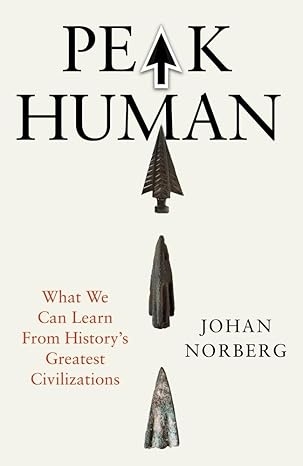
The Conditions of a Golden Age Understood Through 3,000 Years of Civilization- Civilizations decline when they close, and reach their peak when they open.
A golden age does not arrive by accident. When channels open, the unfamiliar comes in, and trust accumulates, prosperity gains speed. The moment a civilization collapses always begins not with a great defeat, but with a quiet closing.
A golden age is not a genius’s gift, but a technology of openness
At first, there is an illusion created by the word “golden age.” If an era shone, it feels as though great figures happened to gather for a time, as though luck was on their side, and as though it was an accident that could never be reproduced. But when the cases of 3,000 years are laid out at length and overlaid, what explains a golden age is not individuals but environment, not mystery but structure. In periods when prosperity explodes, channels that accept the outside are always opened, different technologies and customs collide, and a sense that “we can try” becomes the standard across society as a whole.
Such a golden age does not simply mean a period of economic growth. It is a state in which culture rapidly grows richer, science and technology change ways of life, and competition in art and ideas transforms the air of a city. That state is usually described in terms of openness, curiosity, tolerance, and the speed of exchange. At the same time, golden ages were always finite, and it repeatedly appears that the decisive factor that brought them to an end was internal fear as much as external invasion.
What makes a golden age is not people, but channels
It is easy to call the point at which prosperity begins “innovation,” but innovation does not come out of thin air. New combinations become possible only when there is dense exchange in which people, goods, and information move and compensate for one another’s deficiencies. When ports and markets, roads and ships, commercial practices and contracts, translation and education all move at once, a city becomes a machine that converts external stimuli into internal achievement.
As such channels grow, a society becomes more diverse. A more diverse society also brings more conflict, but it also learns early that there is not just one right answer. What emerges as a result are tolerance and institutions. The moment a “mechanism that makes it run even when different people live together” is put in place, the cost of distrust falls and the scale of cooperation grows.
The common rhythm shown by seven peaks
If one strings together ancient Athens, the Roman Republic, Abbasid Baghdad, Song China, Renaissance Italy, the Dutch Republic, and the Anglosphere after the modern era, a similar rhythm appears even though they are different civilizations. Knowledge and goods from outside flow in, competition and experimentation become vigorous inside, achievements accumulate, and trust and capital follow. In that process, culture becomes not a “result” but “fuel.” Poetry and philosophy, religious debate and mathematics, art and engineering push one another upward, raising the speed of an era.
Athens is often mentioned as a city where commerce and ideas mixed in a world connected by the sea, and where experiments in political participation combined with intellectual production to create an explosive cultural density. The Roman Republic is read as having produced “rule-based expansion,” as the ways it extended law and institutions, citizenship and alliances increased the scale of trade and administration. Baghdad is often summarized as a case in which it absorbed diverse languages and traditions, expanded networks of translation and scholarship, and thickened the pipelines of knowledge.
Song China is mentioned as a case in which commerce and urbanization, technology and print culture combined to raise living standards and productivity. Renaissance Italy is explained as a structure in which competition among city-states generated patronage for art, finance, and engineering, and that patronage in turn sparked innovations in technology and aesthetics. The Netherlands shows a path by which a small country becomes a hub of the world economy as trade and maritime networks, a relatively tolerant religious environment, and financial innovation interlock. The modern Anglosphere represents a flow in which institutional trust, the scientific revolution, industrialization, and market expansion moved as one bundle, leading into an “explosion of wealth after 1800.”
Why prosperity stops from within
Scenes in which a golden age ends often feature external shocks, but if one explains them only by external shocks, the repeating pattern does not appear. What shows up more often is internal psychological change. The greater the abundance, the more society demands certainty instead of enduring uncertainty; the more it demands certainty, the more control increases; the more control increases, the more experimentation decreases. At that point, “safety” seems like a low-cost choice, but in the long run it blocks the space for new ideas to enter and gradually hardens the machine of growth.
Closure usually does not begin with a grand declaration. Suspicion toward outsiders increases a little, tariffs and regulations grow a little thicker, freedom of expression shrinks a little, and the direction in which words that absolutize “our way” are more welcomed strengthens. And at some point, the friction of diversity that made a golden age possible is treated as “unnecessary noise.” When that happens, innovation declines not because of a lack of individual talent, but because of a deficiency of environment.
Openness is not romance, but risk management
When one speaks of openness, it often sounds like idealism, but in reality it is closer to a technology of crisis response. A society with active trade and movement can detect external shocks faster and assemble more diverse solutions more quickly. By contrast, a society whose channels are blocked must solve problems only with what it has “inside,” so even small shocks rapidly shrink its set of options. Thus openness is not a luxury of peaceful times but a device that raises the probability of survival in uncertain times.
However, openness does not sustain itself automatically. When conflict increases, change accelerates, and identity feels shaken, people want to choose closure again. That is why institutional supports such as tolerance and the rule of law, the trust of contracts, and the autonomy of scholarship and the press become important. If openness is a condition of prosperity, institutions are the technology that makes that condition “everyday life.”
The core product of a golden age is not growth rates, but trust
The economic performance of a golden age appears as numbers, but the floor that supports those numbers is trust. The more trust accumulates?belief that it is possible to trade with strangers, expectation that laws will not change arbitrarily, and a sense that one can try again even after failure?the more the volume of experimentation increases. When experimentation increases, it is not that the probability of success rises, but that the total “quantity” of success rises. That is because it is not a single genius invention but countless small improvements overlapping that raise a society’s productivity.
The moment trust wavers, innovation becomes not a problem of technology but a problem of politics and culture. When laws and regulations become unpredictable, connection with the outside is treated like a crime, and difference is regarded as danger, people become more skilled at “avoidance” than at “challenge.” In that state, capital and talent also move in search of safer channels. The disappearance of a golden age appears mainly not in battlefields but in the forms of paperwork and rules, public opinion and censorship.
What becomes necessary for today’s abundance to last
Today’s world is more connected than at any time in the past, and that connection becomes the fuel of prosperity. At the same time, the temptation of closure has grown stronger as digital environments, geopolitical conflict, and economic anxiety overlap. So the key going forward shifts from “Can we grow bigger?” to “Can we maintain openness?” Choices surrounding trade and movement, expression and research, technological exchange and immigration, and the diversity of cities will determine the speed of long-term growth.
A golden age is not a state of completion reached by an “ideal human.” It is the result of social mechanisms that enable imperfect humans to endure conflict while not cutting off exchange. While that mechanism functions, a golden age continues; when it begins to break down under fear, the golden age quietly fades. What 3,000 years of cases repeatedly say is simple. A golden age is not luck but choice, and the name of that choice is openness.

.jpg)
.jpg)
.jpg)