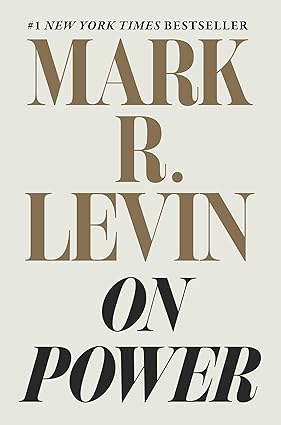
The Age of Power, the Craft of Liberty
For a while, politics looked like a competition over who could offer better policies. But at some point, politics began to read more like a struggle over how power itself operates. Power has always existed, but now it has returned to the foreground and is changing even the sentences of everyday life.
Power lasts longer not by who holds it, but by how it grows
Power does not end with the phrase “great force.” Power is an everyday structure made by small elements combined: institutions, customs, language, exception clauses, the skipping of procedures. That is why the most realistic way to be wary of power is not to expect heroes, but to design mechanisms that make power move more slowly the more it expands. Power can look competent when it works fast, but society can also be damaged by that very speed. Speed is efficiency, but it is also a technique that steals time for verification and accountability.
Negative power, the way of lowering the cost of control
Negative power does not begin with overt violence. More often, it appears as “power that lowers the cost of control.” A structure forms in which people caution themselves, silence themselves, and comply on their own, without needing to be pressed down by force every time. The key here is not an excess of fear, but a reduction of options. When options shrink, people adapt rather than resist. When adaptation accumulates, power enters more deeply in a way that makes it seem as if it is needed less.
This process is not a declaration, but an accumulation. Rarely does anyone say, “Starting today, we will reduce freedom.” Instead, “just this once” is repeated, repeated “just this once” becomes custom, and custom becomes rule?until dissent becomes a cost. Bluntly put, negative power does not so much oppress society as make society “tired.” A tired society demands control, and as control increases, society becomes tired again. That is how the vicious cycle is completed.
Positive power, not weak power but limited power
Being wary of power does not lead to the conclusion that power is unnecessary. A community cannot be sustained without some degree of power. But what matters more is not “what that power can do,” but “what it is bound not to do.” Positive power is not weak power; it is limited power. It is designed on the premise that power can turn bad, moves only within collision and oversight, and is forced to pay the cost of procedure.
From here, liberty becomes not a feeling but an operation. Saying you love liberty and having a structure in which liberty functions are different things. Only when the structure exists does liberty become everyday life. Mechanisms that look old-fashioned?checks and balances, the dispersion of authority, predictable law, adherence to procedure?return as the most modern safety devices. The faster power becomes, the more society needs slow mechanisms. Slowness is not inefficiency; it is a brake.
Language creates power, and power changes language
Power does not run only on laws and police batons. What operates first is who draws the boundary lines of normal and abnormal, common sense and extremism, patriotism and betrayal. Once those boundary lines harden, policy shifts from the language of design to the language of war. Debate becomes not persuasion but labeling, and opposition becomes not a different claim but “danger.” At that point, power reduces the cost of persuasion. It is cheaper to “classify” than to “explain.”
In an environment where short sentences and strong emotions are the standard for diffusion, this accelerates further. Complex structural explanations are slow; anger is fast. The faster anger becomes, the easier it is for power to package control as a “response.” The moment “let’s block it first” is repeated, exceptions increase, and the more exceptions increase, the more the center of the rule is hollowed out. Power grows by feeding on that vacuum.
Not a list of rights, but the conditions under which rights survive
Rights have meaning not when they exist on paper, but when they operate in daily life. Even if freedom of expression is written down, silence increases if the cost of speaking leads to the destruction of one’s livelihood. Even if equality before the law is written down, rights become a luxury if the costs of litigation are unbearable. The substance of rights is not a declaration but conditions. In a society where conditions collapse, rights become powerless even without being abolished. They disappear inside the word “maintained.”
That is why the danger of power grows not at the “moment it is taken away,” but in the “process by which it is eroded.” Exceptions that restrict rights increase little by little, exceptions become routine, and eventually the core of rights becomes empty. Freedom remains on the surface, but in reality only those who can afford the risk enjoy freedom. That is the moment freedom becomes a class.
The expansion of administrative power, the route by which democracy bypasses itself
The pathways by which power grows often appear with an unexpectedly rational face. Words like efficiency, expertise, crisis response, and speed are always attractive. But that attractiveness can often become the temptation to bypass democratic procedures. Rules become more complex, authority becomes more concentrated, and responsibility becomes more dispersed. Decisions become faster, yet who is responsible becomes more blurred. In this structure, it becomes easier for power to manage citizens than for citizens to monitor power.
The question society must ask here is not a simple pro-or-con. It is, “How far is this power designed to be able to go?” That is why design that assumes the malice of power is needed, rather than trust that assumes the benevolence of power. A society that expects benevolence becomes unhappy quickly. A society that assumes malice is uncomfortable, but it endures longer.
Why power is being spoken of now, why structure is being reclaimed
In an age when power comes to the front, politics easily tilts into a moral war. Who is more right turns into who is more dangerous, and design turns into discipline. Then society leans toward punishing people instead of fixing problems. From that moment, power becomes not a tool of solution but a tool of punishment, and the faster punishment becomes, the more divided society becomes. The more divided it becomes, the weaker the ability to solve things together; the weaker that ability becomes, the more people demand stronger control. It is a cycle in which anxiety grows power and power grows anxiety.
What the age of power needs is not greater power, but more precise limits
Power does not disappear. It is necessary, and it is dangerous. So the core is not “let’s eliminate power,” but “let’s limit the direction in which power grows.” Limits are not declarations; they are structures. Checks and balances are slow and frustrating, but the faster power becomes, the more that slowness becomes a safety device. Without mechanisms that slow fast force, society does not become stronger; it only becomes rougher.
In the end, the question that remains is this. Power should be evaluated not by whose hands it is in, but by how far it is able to go. If saying you are wary of power is to be real, you must be able to make rules not to block the other side, but to block yourself. From that point, the argument over power moves beyond factional slogans and returns to a conversation about structure.

.jpg)
.jpg)
.jpg)