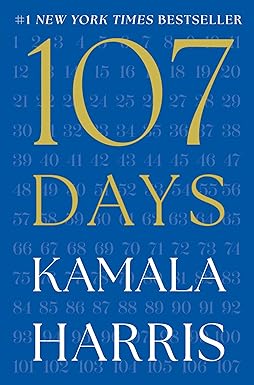
107 Days, Compressed Political Time and the Burden on Democracy
Politics is, by nature, closer to a slow technology. The process of building agreement, persuading opposition, and leaving results through institutions inevitably requires time. Yet in certain phases, politics suddenly changes speed. Events do not proceed in sequence but rush in all at once, interpretation spreads faster than facts, and a period begins in which a single day carries the weight of a month. The unit of time, 107 days, symbolizes precisely such a phase. It is short but not light, fast but not simple. Following this period reveals not only one politician’s schedule, but also what drives contemporary American politics and where it wavers.
In today’s United States, elections and governance are not separate. Even after an election ends, the grammar of campaigning does not disappear, and even after governing begins, message competition does not stop. Policy becomes a frame before it becomes an achievement, explanation is consumed less as persuasion than as defense, and complex institutional problems are compressed into a few emotional words. Topics such as prices, immigration, guns, reproductive rights, student debt, court rulings, and the international order may appear to belong to different domains, but in the actual political arena they are woven into a single emotional battleground. At that point, the difficulty of politics shifts from merely determining what is right to maintaining standards of public judgment even under speed and pressure.
The compressed time of 107 days makes this structure even clearer. When time is sufficient, mistakes can be patched, messages can be refined, and strategy can be revised. But when time shortens, the sense of priority, the stamina of the organization, and the consistency of judgment are exposed as they are. What is abandoned and what is held onto to the end, who is seen as a target of persuasion and who as a target of mobilization, which language is used as a sentence of integration and which as a sentence of defense?all of this is quickly laid bare. Short time is an unfavorable condition for politicians, but for citizens it can also become a condition that shows the reality of politics more transparently.
The Politics of Speed, the Loss of Context
One of the greatest changes in modern politics is not the quantity of events but the speed of interpretation. Information overflows, but context shrinks; the longer the explanation, the more disadvantaged it becomes; and short sentences and strong emotions become the standard of diffusion. This is also why American politics appears especially more intense. As party competition close to a permanent campaign system combines with a 24-hour news cycle and a clip-centered distribution structure on social media, the complexity of policy is increasingly translated into short emotional signals.
In this structure, a few seconds of footage lasts longer than a well-designed policy document. Law and institutions operate slowly, but public opinion reacts quickly. As a result, politicians are placed under the double task of speaking the language of governance and the language of campaigning at the same time. The language of governance requires explanation and accountability, coordination and procedure, while the language of campaigning demands clarity and speed, distinction and mobilization. In an environment where both languages must be managed at once, politics becomes more easily exhausted, and citizens more often find themselves in a state of feeling that they “know a lot” while “not understanding deeply.”
The key here is not to blame anyone’s lack of ability. The more important problem is that the democratic public sphere itself is being reorganized to fit a structure of rapid consumption. Events increase, reactions accelerate, judgments are rushed. But for democracy to function properly, time is needed to review opposing views, compare policy costs, and distinguish short-term reactions from long-term effects. The more the politics of speed is repeated, the more that time shrinks. In the end, what is lost is not the quantity of information, but the quality of context.
The Essence of Leadership, Standards of Judgment Rather Than Strong Words
Political leadership is often consumed as an impression. Whether someone has charisma, speaks forcefully, is strong in attack, or how intensely they energize their supporters?such elements receive attention first. But in national-level politics, the substance of leadership is far more operational than those surface impressions. The ability to maintain standards of judgment under repeated pressure, the ability to set priorities among conflicting agendas, and the ability to define the range of risk one is willing to bear amid incomplete information are closer to the core of leadership.
Particularly in a large democracy like the United States, leadership does not operate on an individual’s conviction alone. In a society where region, class, generation, race, education level, and cultural identity overlap in complex ways, a single message is read as entirely different signals by different groups. A sentence that sounds like hope to one group may sound like a threat to another, and the prioritization of one agenda may be interpreted as the exclusion of another. Under these conditions, what is needed is not simple toughness but the ability to endure complexity. In other words, leadership is closer to “the power to politically translate conflicting realities” than to “the power to loudly state the right answer.”
Compressed time makes this difference even clearer. When time is long, only results are remembered, but when time is short and the density is high, the texture of process is revealed. It becomes more visible which judgments came from principle, which were responses to circumstance, where compromise ends and retreat begins. This kind of reading is more useful for understanding politics itself than for taking sides on a person. In the end, what matters is not who spoke in the loudest voice, but who transformed a more complex reality into sentences and decisions that could be sustained.
An Era in Which Emotion Moves Faster Than Institutions
To explain American politics today, institutional analysis alone is insufficient. Institutional frameworks such as the Supreme Court, Congress, the executive branch, the party system, and federalism remain important, but a large part of lived politics is first shaped by the speed of emotion. People feel the pressure of living costs before they examine budget items, remember the symbolism of a ruling before the wording of the law, and respond more strongly to immediate signals of threat than to the long-term effects of institutional reform. When this emotional current enters the center of politics, policy competition easily turns into identity competition, and debate comes to resemble the language of survival more than the language of design.
In this situation, the difficulty politics must bear is not simply “making good policy.” It must also deal with gaps in the perception of reality surrounding policy. Looking at the same event, one person reads it as a systemic crisis, another as exaggerated noise. The same policy is interpreted by some as protection and by others as control. In the end, the core of conflict often comes less from differences in positions than from differences in the frames through which the world is interpreted. As these frame collisions intensify, political language comes to prefer classification over explanation. It costs less to label quickly than to persuade.
The problem begins precisely here. The more dominant the language of classification becomes, the faster the public sphere overheats, while its problem-solving capacity weakens instead. Discussion shifts to who is more dangerous rather than who is more right, and to what should be punished rather than what is possible. This is not only a problem of one political camp but a structural problem. The more politics is reorganized to match the speed of emotion, the more often democracy becomes agitated, exhausted, and desperate for extreme solutions. And the accumulation of this fatigue is the real danger that weakens institutions themselves.
The Moment When Domestic Politics and International Order Overlap in a Single Sentence
To understand the present of American politics, domestic issues and international issues cannot be viewed separately. Variables such as international conflict, alliance realignment, supply chain instability, technology regulation, trade conflict, and energy prices immediately stimulate anxiety and expectations in domestic public opinion. Conversely, the sentences and political signals used in domestic elections are read as diplomatic messages by both allies and rival states. It is an era in which a single sentence thrown in Washington spreads simultaneously through markets and diplomacy, security and industrial sites.
In this structure, a politician’s statements and decisions are directed at two or more audiences at once. An expression chosen to persuade domestic voters may become a signal of instability internationally, while strategic continuity needed internationally may appear as ambiguous compromise in domestic politics. In other words, the pressure in American politics is not simply the pressure of internal competition. A multi-audience structure?where voters, parties, and media, as well as allies, markets, rival states, and international public opinion all react at once?intensifies the burden of politics.
These multilayered conditions also change how political records should be read. It is not enough to assess only the pros and cons of a particular decision; one must also examine the overlapping pressures under which that decision emerged. Only then can one understand why politics so often appears contradictory, and why the same message produces opposite effects in different spaces. Given that American politics is a variable that changes the environment of the world, this mode of reading matters not only to those interested in America internally but also to outside observers. The compression of time in American politics is directly connected to the growing uncertainty of international order.
The Stamina of Democracy, the Power to Endure a Fast Age
Democracy is, by nature, a slow institution. It takes time to go through procedure, hear opposing views, leave paths of accountability, and secure the legitimacy of decisions. Yet society increasingly demands faster responses. The more anxiety citizens feel, the more they want decisive decisions; the media prefers short scenes to long explanations; and parties easily choose immediate mobilization effects over complex design. At this point, the question democracy faces is simple. It is not how quickly decisions can be made, but how far procedure and accountability can be maintained even under fast pressure.
The 107-day period can be read precisely as a unit that tests this question. It is not merely a period that determines who was more competent or who was stronger, but one that reveals how much institutions and organizations, public language and political responsibility could endure. Democracy’s weakening usually does not arrive in the form of a declared collapse. Rather, the “power to endure” diminishes first as frictions such as procedural fatigue, loss of context, overheating of the public sphere, and blurring of responsibility accumulate. Institutions may remain on the surface, but in practice the capacity to cope weakens.
What is needed, therefore, is not greater power but more sophisticated braking mechanisms. In an age of fast politics, slow verification mechanisms become more important. Checks and balances, the dispersion of authority, observance of procedure, and predictable rules may seem frustrating, but that very slowness becomes democracy’s safety device. There are many technologies that increase speed, but not many that restore what speed has damaged. The faster politics becomes, the more often society must inspect the brakes.
The Implications Left for Korean Politics, More Sophisticated Braking Mechanisms Rather Than Greater Power
This problem of compressed politics is not unique to the United States. Korean politics, too, has long been under the pressure of speed. As high-intensity mobilization during election periods, strong camp-based confrontation, short-message-centered diffusion structures, and language prioritizing support-base consolidation over inter-party negotiation have been repeated, the slow time of institutional politics and the fast time of opinion politics have frequently collided. The recent reality in which a very high proportion of Korean society recognizes political and ideological polarization as serious shows that the core of the problem is spreading beyond simple differences of opinion into the trust structure of society as a whole.
The more important implication lies in institutional design regarding not “who takes power” but “how far and how fast power can go.” In Korea, when the concentrated power structure of the presidential system combines with a winner-take-all electoral structure, there is a strong tendency for a change of government to be perceived as an all-out system war. That is why discussions on redesigning the electoral system, power structure, and checking mechanisms to ease polarization and restore cooperative governance must be repeated. In the end, the issue is not a politics that relies on individual goodwill, but a politics that builds institutions capable of enduring even when bad faith is assumed.
Three tasks stand out particularly in the Korean reality. First, **to make clearer the control mechanisms over the exercise of authority in emergency situations**. In moments of constitutional crisis, where the exceptional authority of executive power may be allowed and where it must be immediately checked becomes a core question for society as a whole. Second, **to strengthen institutional incentives that enable the National Assembly to function not only as a stage of confrontation but as an institution of coordination**. Third, **to build buffering mechanisms in the public sphere that can resist the speed of political communication**. The weaker the media’s function of providing context, the parties’ responsible explanations, and civil society’s culture of fact-checking and debate become, the more easily politics is pulled along by the speed of emotion.
What Korean politics needs is not repetitive expectations for a stronger leader, but a structure that slows down speed and leaves accountability regardless of who comes to power. Fast decisions are not always bad, but the more fast decisions are repeated, the more robust ex post verification and clearer lines of accountability must follow. Only then can efficiency avoid encroaching on democracy, and crisis response avoid becoming a channel for abuse of power. The strength of democracy comes not only from the ability to make decisions quickly, but from the ability to reverse wrong decisions and hold responsibility to account.
How to Read After 107 Days, A Gaze That Sees Structure Rather Than Scenes
In an age of compressed politics, the way events are read matters more than the events themselves. Events pass too quickly, and the next event covers over the meaning of the previous one. In such an environment, what is needed is the ability to see not who won, but what kind of political method was strengthened, which language was repeated, and what shifted from policy debate into identity warfare. If one only keeps pace with the speed of consuming scenes, politics remains continuously noisy; only by securing the speed to read structure does one begin to see what is changing.
The greatest danger may be not power itself, but insensitivity to the speed of power. When speed increases, it appears competent, decisive, and responsive to crisis. But from the perspective of democracy, speed always carries costs. Fast decisions make accountability harder to trace, short sentences delete complex realities, and strong emotion steals time for comparing alternatives. That is why civil society, the media, and institutions must demand slower verification and longer explanation as politics accelerates. This is not a matter of inefficiency, but of maintaining democratic safety.
In the end, what remains is not the dramatic effect of a number. What matters is the structure that the number reveals. Within the short period of 107 days are contained the time-sense of contemporary American politics, the pressure of power, the speed of the public sphere, and the stamina of democracy. And reading that structure is also connected to reading the future of Korean politics. In an age of fast politics, the force that protects a community does not come from greater power. It comes from the sophistication of the braking mechanism itself?the mechanism that makes power move more slowly as power becomes faster.

.jpg)
.jpg)
.jpg)