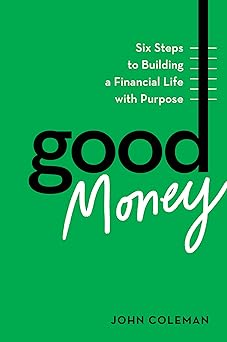
What matters is not how much money you have, but where it is headed
Money is essential to sustaining life, but when it becomes life’s purpose itself, people easily lose their direction. This is also why techniques for earning more and saving more never fully put anxiety to rest. What matters is not the size of one’s money, but what kind of time, choices, and freedom that money makes possible.
***
Money is a reality for everyone. Without it, there is anxiety, and even with it, it can still feel as though it is not enough. That is why people are always searching for more efficient financial strategies, faster asset growth, and more stable retirement preparation. Advice on how to raise income, reduce spending, maximize compound interest, and diversify risk is everywhere. This knowledge is certainly important. And yet, strangely, the more information people have about money, the clearer life does not necessarily become. Some people remain restless even as their assets grow, while others, despite having a stable job and savings, feel they still do not know where their life is going. They have learned how to manage money well, but the standard for why they are living becomes even more blurred.
It is precisely at this point that the problem of money becomes not just a matter of calculation, but a matter of interpretation. The question becomes not only how much to earn, but why to earn it. It becomes not only how much to spend, but where spending will actually improve life. It becomes not only how much to save for retirement, but what kind of freedom one is ultimately preparing for. Money appears as numbers, but in reality it contains time, choices, relationships, and values. The same salary can be, for one person, the price of exhaustion, and for another, a resource of possibility. The same consumption can be, for one person, empty display, and for another, an opportunity for recovery and growth. The same savings can be, for one person, a shield of endless fear, and for another, preparation that makes life transitions possible.
That is why the deeper question in dealing with money is not “How can I have more?” but “Where in my life should I place money?” Should it sit at the center, or should it remain a structure that supports life? Once that position changes, the standards of financial judgment change completely as well. Money placed at the center makes people constantly compare themselves and traps them in the feeling that they never have enough. By contrast, money positioned as a means of supporting life makes choices possible, improves the quality of time, and makes people less shaken. In the end, the essence of money lies not in possession, but in direction. It is not the person who has the most, but the person who knows where money should be headed, who builds the more solid life.
More important than earning a lot is knowing why you work
When thinking about the relationship between money and life, the first thing one encounters is work. For most people, money comes through labor, and labor is not merely a source of income but also something that shapes the rhythm of the day, one’s emotional condition, the density of human relationships, and even the level of self-esteem. That is why a job cannot be explained by the number on a pay statement alone. A job is a question of how one uses time, and of what kind of world one places oneself in. And yet in reality, many people evaluate job choices almost entirely in terms of income. If the salary is high, it is considered a good job. If the title is high, it is considered a successful one. If one can endure it longer, it is seen as a competent life.
But a good job cannot be defined by income alone. There are jobs that pay well yet consume life as a whole, and there are jobs that seem stable on the surface but gradually hollow a person out. On the other hand, there are jobs that may not appear glamorous but allow a person to accumulate ability, preserve relationships, and continue growing over the long term. The problem is that many people are drawn in by numbers before they have even fully considered the meaning of their work. When that happens, money comes in, but one’s sense of life gradually disappears. People live in order to endure most of the week, use the weekend only to recover, and wait for vacation as though it were an escape. If this state continues for a long time, a paradox emerges in which one rises financially while life itself contracts.
Of course, not everyone can choose the ideal job. Livelihood is a reality, and sometimes one must do what is necessary before doing what one loves. But that fact does not erase the importance of direction. Even if one cannot choose the perfect work right away, one still has to distinguish whether the work one is doing is completely exhausting life, or whether it is serving as a foothold toward the next stage. One may be able to endure work that does not fit oneself for a certain period of time. But unless one judges whether that endurance is an accumulation for the future or merely a depletion that is collapsing the present, one eventually earns money while losing oneself.
What is needed here is not some grand sense of calling, but a standard. Why do I work? What am I spending this time for? Does this work consume my life entirely, or does it remain one pillar that supports life? The clearer these questions become, the less income is idolized and the less unstable a career becomes. To say that the amount of money is not everything does not mean money is unimportant. In fact, it means the opposite. Because money matters, one must look more carefully at what form one’s time is taking in the process of turning it into money. Good financial planning is not merely about managing a bank account, but about deciding in what way one’s time will be transformed into money.
In the end, a job is not a machine for earning money, but a device that reveals the direction of one’s life. Work that allows at least some part of what one values to remain alive, work that broadens future options, work that does not demand the total sacrifice of health and relationships, work that leaves behind both growth and dignity, becomes not merely a “good-looking job” but a more sustainable financial foundation. A life that can be endured for a long time is stronger than a life that simply earns a great deal, and a life that can be endured for a long time is usually one in which money and meaning are not completely separated.
Consumption is not spending, but self-interpretation
People often say that consumption is a matter of taste. To some extent, that is true. Everyone wants to spend money on what they like. But consumption goes beyond simple taste. What one buys, when one buys it, and why one buys it all reveal a person’s desire and fear, lack and compensatory psychology, identity and anxiety. That is why reducing consumption is not simply a matter of cutting spending categories, but also a matter of understanding what shakes you and what you are trying to comfort yourself with.
Much consumption happens because of need, but not a small portion of it happens because of emotion. People buy because they want to feel rewarded when tired, because they are anxious about falling behind, because they do not want to look shabby compared to someone else, or because they want to give themselves something for having endured the day. The problem is not that this kind of consumption is always bad. The problem is that the more it repeats, the more spending increases while satisfaction becomes shorter and shorter. A brief sense of release remains, but the direction of life does not improve. Possessions increase, yet confusion remains the same, and even after the payment is complete, the sense of lack remains.
That is why, when rethinking consumption, what matters is not an attitude of unconditional frugality. Cheap consumption is not always good consumption, and not everything expensive is wasteful. There are expenditures that truly change the quality of life. Money spent on restoring the body, tools that save time, learning that broadens one’s horizon, experiences that deepen relationships, and objects that can be used for a long time are not mere consumption but something closer to investments that alter the structure of life. By contrast, displays meant to impress others, purchases made to avoid falling behind in comparison, and repeated payments meant to cover over a momentary emptiness are merely stimuli that quickly disappear and do not change the foundation of life.
In the end, wise consumption is not consumption that spends less, but consumption that aligns with the standards of one’s own life. Does my spending make my time more human? Does the money I spend make me less anxious, or does it merely make me forget for a moment? Does this consumption establish order in my life, or does it make things more scattered? Once these questions arise, consumption becomes not a moral issue but a philosophical one. The clearer one becomes about what one wants and why one wants it, the more spending may decrease, or in certain areas even increase. What matters is that this change comes not from others’ standards, but from one’s own.
Many people try to reduce financial anxiety by first correcting their spending habits. That is not a wrong approach. But managing only the surface of consumption does not last long. For real change, “I should stop buying” must be preceded by “What am I living for?” The more unclear the purpose of life is, the more easily consumption follows the language of comparison. It constantly moves toward what is more expensive, newer, and more socially approved. By contrast, when the direction of life becomes somewhat clearer, consumption gradually becomes simpler. One begins to know what is truly necessary, distinguish what one really wants, and tell the difference between brief stimulation and lasting satisfaction. At that point, money ceases to be a means of buying things and becomes a tool for refining the order of life.
Money becomes emptier when it exists only for me
Talk about money is often narrowed down to a purely personal issue. How much to earn, how much to spend, how much to save. But life is never completed as something purely individual in the first place. People live in relationships, receive help from others, and are affected by the quality of the communities they belong to. That is why money, too, can more easily become empty when it is used only for one’s own safety and convenience. No matter how much one has, if the circle of life closes only around oneself, money easily becomes a tool of defense rather than a force that connects one to the world.
Using money for others often appears to be a choice available only to those with abundance, but that is not necessarily so. What matters here is not the amount, but the direction. Money spent to help someone, money used to sustain family and community, money that enables socially meaningful activity is not just expenditure. It is an act that reveals what kind of world one belongs to and what kind of world one wishes to remain in place. Money is, in the end, the way values move.
This sensibility does not end with giving. It also extends to investing. Investment is often explained only in the language of returns, but in reality it is also a choice about the future. Where capital flows determines which companies grow, which industries gain power, and which kinds of behavior are rewarded. In other words, investing is not merely a technique for increasing money, but also an act of deciding which future to strengthen. Investment that pursues only immediate profit may produce short-term results, but it cannot ask what kind of world the flow of money is ultimately creating.
Of course, not everyone can spend and invest only according to grand ethical standards. Real life includes living expenses, the need for risk management, and many situations in which losses cannot be afforded. But at the very least, it is important to retain a sense that money is not closed entirely around oneself. With that awareness, one can accumulate assets without falling into cynicism, and possess money without losing purpose. One comes to realize that money can be not merely a private shield, but a force that expands relationship and meaning.
In practice, what makes life solid is not absolute quantity of ownership alone. It is often more important how one interprets what one has, where one lets it flow, and in what way one connects it to the world. The more one tries to use money only to make oneself safer, the more anxiety can grow without end. By contrast, the more one uses money to gradually broaden the radius of life, the more finance becomes not merely a survival skill but an attitude toward life itself.
This is an age in which we must prepare not for retirement, but for freedom
For a long time, the ultimate goal of financial planning was considered to be retirement. The model was to work hard when young, save as much as possible, stop working at a certain point, and then live a life of rest afterward. This formula was certainly valid in one era. The boundary between work and rest was relatively clear, and average lifespan and labor structures were different from what they are now. But today, life has become much longer, the form of work has changed, and people no longer desire only a life that comes to a complete stop after a certain point. That is why retirement can no longer be explained simply as an endpoint.
A life in which all work comes to an end is not ideal for everyone. For some, work is at once a means of livelihood, a rhythm, a relationship, an identity, and a channel that connects them to society. If that channel suddenly disappears one day, emptiness may arrive more strongly than liberation. If physical activity decreases, relationships diminish, and a sense of purpose fades, then even if one is financially prepared, satisfaction with life as a whole may actually decline. So the more important question is not when one will be able to stop working completely. The real issue is how flexibly one can choose as life moves through different stages.
At this point, the meaning of savings changes as well. Savings become not simply money set aside for survival in old age, but money that protects one at the transitions of life. Money that allows one to slow down for a while when the body is tired. Money that makes it possible to choose differently for a period when family needs care. Money that allows one to reduce current work and try something more meaningful. Money that allows one to work in a different way rather than stopping completely. In other words, the true goal is not retirement itself, but freedom.
Finance prepared for freedom does not rely on fear alone. A way of saving that simply clutches tightly out of fear of insufficiency makes one feel lacking no matter how much is saved. By contrast, savings prepared in order to broaden one’s options look at both present and future together. They expand the possibility of transition ahead without sacrificing life in the present entirely. This balance is crucial. A future prepared by killing the present completely may feel empty once it is finally reached.
That is why good financial planning cannot be completed with the single question, “At what age will I retire?” It must be closer to the question, “In whatever situation, to what degree can I still adjust the direction of my life myself?” Freedom is not only a life of complete rest. Freedom to work less, freedom to work differently, freedom to pause for a while, freedom to begin again?all of these are forms of freedom too. In that sense, money is not a ticket for purchasing the future, but a device that allows one to regulate the rhythm of life.
Good money is not the same as a lot of money
In the end, the issue of money is not a matter of quantity possessed, but of the role it plays. A great deal of money certainly has power. It reduces risk, broadens options, and cushions uncertainty. But a great deal of money is not always good money. Good money is money that does not destroy the priorities of life. Money gained by eating away one’s health, money accumulated by sacrificing all relationships, money grasped at the cost of losing one’s entire time?regardless of the amount, such money leaves a question behind. Did it really expand life, or did it simply trade away other parts of life as the price?
Good money does not replace life. It supports life. It does not completely clash with the meaning of work, it aligns with the direction of consumption, it does not sever connection with others, and it broadens the options of the future. Money like that does not turn a person into a slave to numbers. Rather, it gradually helps one reclaim leadership over life through numbers. Earning well enough, spending well enough, sharing well enough, investing well enough, preparing well enough. That is the way to return money to its place as a tool of life.
That is also what real financial education should address. Compound interest, diversification, budgeting, and tax-saving are not enough on their own. Such knowledge is necessary, but if one does not know what it is being used for, a person can manage money while still losing direction. By contrast, when the standards of life become somewhat clear, even without becoming perfectly wealthy, one can make far more consistent choices. One stops blindly following standards of success defined by others and instead places at the center the time, relationships, and freedom that truly matter to oneself.
Money reveals a human being. What one fears, what one desires, what one cannot give up, what one endures for?all of it can be seen in the flow of money. That is why to look at money again ultimately means to look at life again. Before asking how much to accumulate, one must ask where one is headed. Rather than asking how quickly to get ahead, one must think about what not to lose. The moment that question arises, money is transformed from a mere object of accumulation into a tool for designing a life with purpose.
A good life cannot be made without money, but neither can it be made with money alone. That is why what is needed is not just more information, but clearer standards. When every act of earning, spending, sharing, investing, and preparing flows in a single direction, finance finally becomes not the management of numbers, but the design of life. And at that point, money ceases to be something that shakes us and becomes instead a quiet force that we handle in order to build life more solidly.

.jpg)
.jpg)
.jpg)