Who Designs AI Power?
[Key Message]
* The real contest in AI is not about performance, but about the power to design the system. What matters more than building the smartest model is who gets to seize the standards of future knowledge systems and the environment in which judgments are made.
* The story of DeepMind is not the success story of a single genius. Within it is compressed the process by which capital, science, platforms, and national strategy converge in one place to form a new kind of power.
* The true shock of AI lies not in services, but in the way knowledge itself is produced. The deeper transformation is that machines are no longer merely assisting human work, but are beginning to rewrite the very speed and structure of research and discovery.
* The next major battleground will open between the speed of innovation and the control of safety. As pressure to commercialize faster collides with demands to manage risk more strictly, competition in AI becomes a struggle over who gets to set the rules.
* AI dominance is completed not by making people use it more, but by making it harder to live without. Once a society becomes accustomed to a particular tool, standard, and mode of judgment, technological advantage hardens into structural dependence.
***
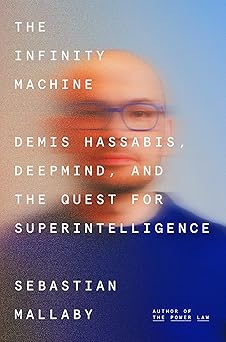
Today’s AI race may look like a speed contest among companies rushing to release better features first, but the real contest is unfolding much deeper down. What matters more than who builds the stronger model is who gets to design the future architecture of knowledge, industrial order, and the environment in which humans make judgments. That is why the story surrounding DeepMind and Demis Hassabis reads not as a tale of technological innovation, but as a record of the reorganization of power and order.
An Era in Which the Arena of Competition Has Changed
For a long time, competition around AI was explained in terms of laboratory achievements and the pace of startup innovation. It seemed that the key question was who had created the more astonishing demo, who had attracted more users, and who had proven superior performance. But AI is no longer merely a single product or service. It is becoming a general-purpose infrastructure that cuts across research and industry, finance and defense, education and healthcare, and the production of content. Once it reaches this stage, the meaning of competition also changes. What becomes more important than who moves ahead first in the market is who gets to redefine the very way society solves problems, makes judgments, and produces knowledge. This is precisely why AI is now discussed not merely as part of the technology industry, but as an issue connected to global power. The phrase “redrawing the map of global power” is not an exaggeration; it comes close to meaning that AI has risen beyond economic efficiency to become a variable capable of shaking the structure of the international order.
This change resembles the way semiconductors or power grids are understood. At first, they appear to be matters of faster chips, more efficient networks, and better machines. But over time, they expand into issues of supply chains, national security, industrial policy, and geopolitics. AI is following the same path. Search, translation, recommendation, automation, research assistance, drug discovery, and scientific computation are only the visible functions on the surface. Beneath them, the real contest is decided by who secures more computing power, who attracts more talent, who embeds AI deeply into everyday life through platforms, and who takes hold of rules and standards first. Companies leading AI are not simply gaining market share. They are reshaping the fundamental rhythm of how people will work, learn, judge, and conduct research.
So the central question is no longer a simple one. It is not who will build the smarter machine. What matters more is who designs the way that machine will be used in society, trusted in society, and regulated in society. The more AI settles into place as an ordinary tool of work, the less its creators remain mere suppliers of technology; they become, in effect, designers of new rules. Which information is seen first, which choices are recommended, and which standards of judgment come to be accepted as efficient all shift together with the technology. In the end, competition in AI is a competition in performance, but also a competition in grammar. It is a question of who standardizes the habits of thought first.
Not the Biography of a Genius, but the History of Platform Power
Many people first remember Demis Hassabis through an individual narrative. The story that he was a chess prodigy in childhood, his experience in game development, his background spanning neuroscience and AI, and his role as a co-founder of DeepMind all add strong impressions to his name. But what matters more is not his individual brilliance in itself. More important is understanding why vast capital, world-class research talent, and the interests of platform companies converged around a particular person and organization. From that point on, AI ceases to be the success story of a single genius and becomes a structural story in which capital and talent, computing resources and scientific legitimacy, corporate power and state strategy are all entangled with one another. The phrase that Hassabis “is recognized as a special case” is meaningful for that reason. He appears not simply as a star founder, but as a figure in whom the many tensions and expectations of the AI age have been condensed. Within that short expression overlap the identities of technologist and entrepreneur, scientist and architect of power.
There was also a symbolic moment behind DeepMind becoming such a decisive name. The shock delivered by AlphaGo was not simply the advancement of a Go-playing program. It was an event that engraved across the world how quickly human intuition, skill, and the sensibilities accumulated through long training could be relativized before computational calculation. That moment changed the way society looked at AI thereafter. AI was no longer just software replacing repetitive tasks. It began to be understood as something capable of entering deeply even into areas once thought to require uniquely human high-level judgment. The AlphaGo matches of 2016 therefore remain not merely a technology demo, but an event that changed the very threshold of how human society imagines AI.
Yet the more important change came afterward. When achievements such as AlphaFold emerged, solving difficult problems in scientific research, AI began to shake the very method of knowledge production beyond the world of games. Problems that human researchers had approached over long periods through hypotheses and repeated experiments were now being approached by AI at an entirely different speed and in an entirely different way. From that point on, AI companies could no longer be seen merely as companies making apps. They began to become companies changing the methods of science, companies rewriting the rhythm of knowledge production. Controlling the speed of discovery is not merely a matter of making money. It is a matter of who will shape the pace of future research, and it is ultimately connected to economic strength, military power, and industrial leadership. That is why the phrase “the forces reshaping technology, industry, and global power” follows so naturally.
Where Commercialization and Safety Collide
What best reveals today’s AI race is not performance improvement itself, but the collision between speed and control. If one is even slightly late, one may lose the market; if one is even slightly reckless, social costs may grow. From the moment these two pressures operate at once, AI companies can no longer remain neutral technology firms. Decisions such as release timing, safety standards, scope of access, level of openness, and internal verification procedures all become rules that affect society as a whole. That is why the question “Can one person really steer the direction of development?” keeps being raised. The issue is not whether one person’s leadership is strong or weak. Behind it lies the larger question of whether a technology with consequences as large as AI should be allowed to move on the basis of internal corporate judgment alone.
The debate over AI safety outwardly appears to be framed in the language of morality, but in reality it is also a language of power. Those who emphasize safety can demand more cautious development and stronger controls. Those who emphasize innovation and openness can argue that excessive regulation blocks progress. Both positions seem plausible, but in reality they are tightly bound up with market position, disparities in resources, and the structure of international competition. Depending on which standard becomes the official norm, the room available for follower firms and nations also changes. In the end, safety is an ethical issue, but also an issue of hegemony. Who defines the norms of the AI age first matters as much as who gains the upper hand in the market. The phrase “ambition colliding with ethics at the frontier of machine intelligence” compresses that tension into a single line.
What is even more interesting is that the conflict between commercialization and safety does not end as an internal debate within companies. AI has already moved deeply into national strategy, regulatory systems, research infrastructure, military technology, education policy, and industrial structure. As a result, how aggressively a company commercializes AI is not simply a matter of consumer-service competition; it becomes a matter of setting the tempo for an entire industry. Once rapid release becomes the default norm, other companies and countries are pressured to match that speed. Conversely, if strong safety standards are institutionalized first, commercialization may proceed more slowly, but the direction of technology itself can change. In this sense, who sets the timetable for AI is ultimately the same as who sets the timetable for order.
The Moment the Story Moves from the Laboratory to Geopolitics
The reason AI has become a technology capable of changing a nation’s future lies not in performance alone, but in the conditions it requires. Vast computing power, stable electricity, advanced semiconductors, cloud infrastructure, elite research talent, accumulated data, institutional permissiveness, and sustained capital investment are all needed together. This means that AI competition is no longer just a fight among a handful of software companies. AI is industrial policy, energy policy, education policy, and at the same time security policy. That is also why organizations such as DeepMind, OpenAI, and Google appear not only as technology companies, but as geopolitical nodes. Looking at them is less like looking at a particular brand and more like looking at points of contact in a new world order.
Seen from this perspective, the value of AI companies cannot be explained solely by service revenue or market valuation. More important is who determines the speed of future research, who commands the points where science and industry converge, and who standardizes the tools by which states and firms make decisions. Those who embed AI first into everyday life do not stop at securing users. They come to influence the structure of social judgment itself. If work automation, research design, financial analysis, public administration, military support systems, and the generation of educational content all rest on the same foundation, then the companies and nations that built that foundation acquire a different kind of influence from any seen in earlier eras. AI power is not a matter of usage volume, but of dependency. The more an entire society grows accustomed to a certain mode of computation and a certain set of tools, the greater the power of those who built that structure becomes.
For a mid-level technology country like South Korea, this issue is even more concrete. We often tend to understand AI only as a competition in semiconductors or services. But more important is the question of what ecosystem we climb into, what standards we accept, and whether we can have a voice in the process by which norms are formed. Dependency in the AI age is not simply a matter of falling behind. It means moving beyond merely using tools made by others, to working, learning, and deciding within an environment of judgment designed by others. What is needed, therefore, is not only rapid adoption. What is needed is a long-term perspective that looks together at infrastructure and talent, electricity and regulation, public strategy and data governance, and international cooperation. AI is no longer the industrial task of a single ministry. It is becoming a subject that tests the governing instincts of the state as a whole.
A More Important Question than Machines That Resemble Humans
When many people think about AI, they first turn to comparisons between human and machine ability. Who uses it better, who solves faster, who is more accurate?these are the kinds of questions they ask. But the more important issue now is not how closely machines resemble humans. Rather, it is how human society is reorganizing itself on the assumption that such machines exist. The real shock of AI does not lie in having created machines that compete with humans. It lies in the fact that human beings have begun to reconstruct the very environment in which they think, learn, and judge so that it fits the machine. This change is not always obvious, but it becomes more powerful the more it accumulates. People are already growing accustomed to the arrangement of search results, conforming to the logic of recommendation systems, and altering their ways of working to fit the convenience of automatic summarization and automatic generation. Society is gradually adjusting its own rhythm to match the way machines operate best.
At this point, what matters is that the standard of what counts as human is also changing. In the past, it seemed that the important distinction lay in humans knowing more, remembering more broadly, and calculating more quickly. But those functions have already moved substantially into the realm of automation. What may matter more in the future is not who has more information, but who can maintain better standards of judgment. The central questions become what should be entrusted to machines and what should remain with humans, what should be seen as a matter of efficiency, and what should be regarded as a matter of human responsibility. In the age of AI, humanity will have to be redefined not in terms of superiority of function, but in terms of responsibility, meaning, context, and value.
In the end, there is one question that will decide the future. It is not who will create the stronger artificial intelligence. More important is who will design the way that artificial intelligence enters society, earns trust, is regulated, and is placed within everyday life and institutions. Power in the age of AI does not lie in the technology itself. It lies in the standards and dependencies, the legitimacy and speed, and the order that form around the technology. That is why the story surrounding DeepMind and Hassabis is too large to be read merely as the growth story of a single company. It is closer to a case that asks where power in the twenty-first century is moving, and what standards human society must preserve as it confronts that movement. The phrase “a defining story for our era” can be read in exactly that sense.

.jpg)
.jpg)
.jpg)