Why India Cannot Be Explained by a Single Growth Model
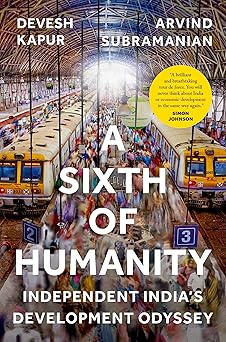
India, home to one-sixth of humanity, has carried out one of the largest development experiments in human history over the past 75 years. Democracy took root early, but state capacity, social reform, and the foundations of manufacturing did not grow at the same pace. India’s trajectory shows that development is not a simple binary of success or failure, but a deeply uneven and complex process.
[Key Message]
* India’s development cannot be divided neatly into success or failure. It is a complex journey in which democracy, economic growth, state capacity, and social change have moved at different speeds.
* India did not choose democracy after becoming economically advanced. It institutionalized democracy while still poor, and that choice became both its greatest strength and its greatest burden.
* India did not follow the East Asian manufacturing-led growth model. Services and digital technology globalized first, opening new possibilities, but the challenge of creating large-scale stable employment remains unresolved.
* India cannot be understood as a single market, a single state, or a single growth model. Multiple Indias exist at once, moving at different speeds across regions, classes, industries, and levels of state capacity.
* For South Korea, India is not merely an emerging market. It is the next strategic arena where supply chain restructuring, the Indo-Pacific order, technology cooperation, and middle-power diplomacy are tested together.
***
The World’s Largest Development Experiment
India is often consumed through two opposing images. One is the image of a future-facing nation defined by the world’s largest population, rapid growth, a vast middle class, information technology talent, space development, and digital innovation. The other is the image of a complex society marked by poverty, crowded cities, religious conflict, class divisions, weak infrastructure, and informal labor. Neither image is wrong. The problem is that neither image alone can explain India. India is both a site of dazzling growth and a collection of unresolved social problems. It is a country that demonstrates the long survival of democracy, while also revealing the tensions and fatigue of democracy every day.
India’s 75 years since independence have unfolded differently from the conventional success stories of developing nations. Many countries grew by following a sequence of strong central government, land reform, expansion of basic education, labor-intensive manufacturing, export-led industrialization, and urbanization. The stories of developmental states in East Asia, including South Korea, Taiwan, Singapore, China, and Vietnam, have largely followed this path. Rural labor moved into urban factories, countries began as low-wage production bases and gradually climbed toward technology-intensive industries, and the state combined industrial policy with education policy to lift society as a whole. India, however, did not follow this familiar sequence. Elections came first, democracy came first, and the political demands of diverse groups entered the institutional arena before economic development strategy could fully take shape.
India’s distinctiveness begins at this point. At the time of independence, India was poor, literacy levels were low, food conditions were unstable, and the industrial base was fragile. Even so, India chose large-scale universal suffrage and parliamentary democracy. This was not merely the adoption of a political system. It was a bold decision to bind an extremely diverse society, divided by language, religion, caste, region, and class, within a single constitutional order. While many newly independent states fell into military dictatorship, one-party rule, civil war, or national fragmentation, India sought to manage conflict through elections, party politics, federalism, and the judiciary. That alone makes India an exceptional case in world political history.
But exceptional choices carry exceptional costs. Democracy served as the glue that held Indian society together, but it also made it difficult for the state to push industrialization forward rapidly and uniformly. Every region and group brought its own demands into politics. Caste groups demanded representation, linguistic communities raised questions of autonomy and recognition, farmers wanted subsidies and price guarantees, and the urban middle class demanded infrastructure and jobs. The state could not speak only of growth. It had to deal with growth, distribution, identity, regional balance, social compensation, and democratic representation all at once. The complexity of India’s development history arises from precisely this simultaneity.
India is not a failed state. Yet it is also difficult to package it as a single formula of success. Highways and slums, global information technology firms and informal labor markets, space exploration and gaps in basic public education, elite education that produces world-class chief executives and sharp regional disparities in literacy all exist within the same country. India is not a country moving in sequence from past to future. It is a country where the past and the future overlap in the same moment. That is why reading India is not merely a matter of interpreting economic growth rates. It is a way of asking what development really means, and at what speed different societies can change.
A Country Where Democracy Came Before the Economy
Development theory has long debated the sequence between economic growth and democracy. A common explanation held that poor countries must first grow, industrialize, raise education levels, and form a middle class before democracy can become stable. From this perspective, India is an exception. India did not introduce democracy after becoming sufficiently wealthy. It institutionalized democracy while still very poor. It held elections even when its economic foundations were weak, and it guaranteed political rights from a time when most voters were poor and had low levels of education.
This choice became a core asset that made India’s long-term survival possible. In a society as diverse as India, it is difficult to maintain unity through coercion alone. Democracy became a channel that drew discontent into the system rather than allowing it to explode outside it. Political parties absorbed the demands of regions and classes, elections became a mechanism for periodically adjusting conflict, and federalism allowed a vast country to breathe through its regions. Indian democracy was never perfect, but it gave the country the strength to endure amid disorder. Conflict did not disappear. It gained a space in which it could speak.
Yet development in which democracy arrives before the economy always carries a heavy burden. When the state tried to pursue long-term industrial strategy, electoral cycles and regional interests intervened. Agricultural subsidies, public employment, price controls, and various protection policies were politically necessary, but they sometimes reduced economic efficiency. Labor market reform and land reform met fierce resistance, while infrastructure construction was tied down by regional politics and administrative delays. Even when a policy was necessary in the long run, it became difficult to implement if groups facing short-term losses strongly opposed it. Democracy kept India from collapsing, but it could not make the pace of development uniform.
This contradiction cannot be viewed only as a weakness of democracy. India did not choose the path of creating rapid growth through authoritarian mobilization while suppressing social resistance. It chose a path of moving forward amid noise, conflict, negotiation, and delay. For that reason, India’s achievements cannot be judged by high growth figures alone. The deeper questions lie elsewhere. How has a society with so many differences remained one country for 75 years? How has a democracy in which such complex demands erupt continued to widen the foundations of growth, however gradually, without completely collapsing? The essence of India’s development lies in this slow and noisy continuity.
Democracy gave India stability and disorder at the same time. Governments changed, policy directions shifted, and social conflicts never ceased. Yet through that very process, citizens came to see the state as their own political space. Even the poor could speak through the vote, regional groups could negotiate through parties, and minorities could demand rights through law and institutions. This is another dimension of development, one that is not easily captured in economic indicators. The state became not merely a device for governing people, but a stage on which people could demand their share.
A State Asked to Do Too Much
From the moment of independence, the Indian state had to do almost everything. It had to heal the wounds of colonial rule, deal with partition and refugees, solve food shortages, build an industrial base, expand education and health care, and bind diverse languages and religions into one nation. At the same time, it had to protect the poor, stabilize agriculture, balance regional development, and maintain democratic institutions. In effect, an excessive number of tasks arrived all at once for a single newly independent state to bear.
Expectations placed on the state were enormous, but actual administrative capacity could not keep up with those expectations. Laws existed, institutions existed, and plans existed, but the ability to make them work evenly on the ground was weak. Policies designed in the capital leaked and slowed as they traveled down to local schools, health centers, courts, police stations, land administration offices, and urban planning systems. The problem of the Indian state was not simple incompetence, but unevenness. In some fields, it was highly capable. In others, it was strikingly fragile.
For example, India has held massive elections with relative stability and achieved major results in fields such as space development, nuclear technology, information technology, pharmaceuticals, and digital identity systems. It has also demonstrated an ability to design administrative and technological systems for a vast population. Yet it has long revealed weaknesses in the quality of basic public education, public health, urban sanitation, the speed of judicial processing, land administration, local infrastructure, and labor market management. The gap between advanced capabilities and basic capabilities is large. This gap is one of the key to understanding India.
The unevenness of state capacity also altered the geography of growth. Certain cities and certain industries advanced rapidly. Bengaluru became a symbol of the information technology industry, Hyderabad drew attention for pharmaceuticals and biotechnology, Chennai for automobiles and manufacturing, Mumbai for finance and entertainment, and Gujarat for a business-friendly manufacturing environment. Yet these achievements did not immediately spread into a national average. India created shining islands, but the bridges connecting those islands were not dense enough. Some regions became linked to the global economy, while others remained tied down by shortages in basic infrastructure and jobs.
This is why India’s development must be seen through distribution rather than averages alone. Even when average growth rates are high, quality of life differs sharply by region. Even when the country as a whole grows, an individual’s life chances vary depending on the state in which they are born, the caste and class to which they belong, the school they attend, and whether they grow up in a city or a village. The state exists in India. But its presence is felt differently by region and by field. For some people, the state is a technological device that enables digital identity and welfare transfers. For others, it remains the face of slow administration and inaccessible public services.
Growth That Did Not Fully Climb the Manufacturing Ladder
At the center of the East Asian development model stood manufacturing. Manufacturing was not simply a matter of building factories. It was a social mechanism that absorbed rural populations into urban jobs, offered wages and skills to low-skilled workers, earned foreign currency through exports, built industrial ecosystems, and thickened the middle class. South Korea’s industrialization followed this path as well. The ladder that ran from textiles and footwear to home appliances and automobiles, then to steel, shipbuilding, semiconductors, and electronics, produced not only economic growth but also changes in social structure.
India did not fully climb this ladder. Manufacturing certainly exists, but its ability to create mass employment relative to the size of the population has been limited. Instead, services became the face of growth first. Information technology, software, global outsourcing, finance, consulting, business services, and English-based professional labor led India’s growth image. English proficiency, engineering talent, mathematics education, the overseas diaspora, and global corporate networks became powerful assets for India’s service sector. India rose less as the factory of the world than as the office of the world, the coding room of the world, and a supplier of professional talent to the world.
This path clearly gave India opportunities. Services could connect to global markets more quickly than capital-intensive manufacturing, and the spread of digital technology opened new possibilities for Indian youth. As Indian talent entered Silicon Valley and the leadership ranks of global companies, the national image also changed. India, once remembered as a poor agricultural country, is now also recognized as a country of mathematics, software, data, platforms, startups, and global talent.
But service-led growth has limits in lifting everyone. High-skilled services create high added value, but they struggle to absorb large numbers of low-skilled workers moving from rural areas to cities. A large youth population is an opportunity, but if young people cannot access stable jobs, it becomes pressure. The number of people becoming software engineers, data analysts, accounting specialists, and global consultants may rise, but hundreds of millions of young people cannot all take that path. When the manufacturing ladder is weak, the range of middle-tier jobs narrows.
As a result, a distinctive dual structure has emerged in Indian society. At the top are global technology talent, entrepreneurs, and a professional middle class. At the bottom are informal workers, small self-employed people, and precarious service workers. The stable and thick manufacturing middle class between them is relatively weak. This gap created by industrial structure affects politics and society as well. The economy grows, but many people do not feel that they are protagonists of that growth. The national numbers improve, but in individual lives the feeling of stable employment and upward mobility may not be strong enough.
This is why India’s growth story is both fascinating and uneasy. India launches spacecraft, builds world-class information technology firms, and produces chief executives of global companies. At the same time, many young people struggle to find stable jobs. Digital payments spread at world-class speed, but the quality of basic education and health care differs by region. India may appear to symbolize the future of the global economy, but it still carries the old tasks of industrialization. India is not a country that has simply pulled the future forward. It is a country that holds the future and unresolved tasks at the same time.
Poverty Has Receded, but Inequality Remains
India’s past 75 years cannot be called a failure. When one recalls the severe poverty, food insecurity, low life expectancy, and fragile industrial base at the time of independence, India has clearly moved forward. Food production stabilized, the Green Revolution reduced the fear of famine, the middle class expanded, and educational opportunities widened. The digital economy grew rapidly, and Indian companies and Indian talent entered global markets deeply. India was once often discussed through the image of development aid and poverty. Now it is called a central axis of global growth.
Yet the fractures are as large as the achievements. Inequality in India is not merely a matter of income gaps. Regional disparities, gender disparities, differences in opportunity by caste and religion, the urban-rural divide, differences in the quality of public education, and unequal access to health care overlap with one another. One child climbs a ladder that leads from private school and English education to global universities and information technology jobs. Another child struggles from the starting line with problems of nutrition, safe schooling, basic literacy, and reliable transportation. A 21st-century digital economy and 20th-century poverty coexist within the same country.
This coexistence is the most important feature of Indian development. On one side, one of the world’s most dynamic startup ecosystems is growing. On the other, young people without access to stable wage labor are increasing. On one side, smartphone payments and digital identity systems are changing everyday life. On the other, access to public services varies greatly by region. On one side, the urban middle class is emerging as a new force in global consumption. On the other, young people from rural areas and smaller cities flow into precarious labor on the margins of cities. Development has taken place, but the question of whom it has reached, and at what speed, remains uneven.
What makes inequality in India more difficult is that it cannot be solved by economic policy alone. Caste and gender, religion and region, language and education are deeply intertwined with economic opportunity. Who goes to which school, who gains access to which networks, who can enter which workplace, who can move to the city, and who receives educational investment within the family are all connected to social structures. Even if growth rates rise, these structures do not automatically disappear. For that reason, India’s development challenge is not only growth itself but the translation of growth. Economic achievements must be translated into social opportunities, industrial growth into individual mobility, and national numbers into citizens’ lives.
This is why India cannot be read through optimism alone, or through pessimism alone. India has clearly grown. But that growth has not changed everyone’s life at the same pace. India has maintained democracy. But within that democracy, identity politics and religious conflict have also grown. The state has become stronger. But state capacity still varies greatly by region and by field. India’s real face is a landscape in which achievement and deficiency appear in the same frame. Without seeing this complex landscape, one ends up either praising India too much or underestimating it too easily.
Not One India, but Many Speeds of India
It is convenient but dangerous to speak of India as a single country. India is one market and, at the same time, dozens of markets. It is one democracy and, at the same time, a union of regional political communities. It may look like one growth state, but in reality each state differs in industrial structure, administrative capacity, education level, labor market, and political culture. India’s averages sometimes conceal its realities. Looking only at average income, average growth rates, and average education indicators makes it easy to miss the extreme differences within India.
India’s federalism is not simply an administrative structure. It is the actual arena of development. The Indian experience changes completely depending on which state one invests in, which city one chooses, and which regional government one works with. Gujarat’s manufacturing environment, Karnataka’s information technology ecosystem, Telangana’s pharmaceutical and biotechnology industries, Tamil Nadu’s automobile and electronics sectors, Kerala’s social development indicators, and Maharashtra’s centrality in finance and commerce all show different Indias. Meanwhile, regions with large populations but lagging social indicators reveal another set of challenges. Even within the same borders, the speed and quality of development differ greatly.
This point matters to every country and company that approaches India. India cannot be approached with a single sentence such as, “The population is large, so the market is big.” Consumer groups are finely divided by region, income, language, and culture. The same product may allow a premium strategy in one region, while price and distribution networks become decisive in another. The same industry may face favorable regulation and infrastructure in one state, while land, labor, and administrative procedures become major barriers in another. India has the appeal of a vast single market, but in practice it is a country where multiple markets must be read one by one.
The same is true politically. The central government’s vision is important, but the implementation capacity of regional governments is often decisive. Infrastructure, land, electricity, labor, vocational training, industrial parks, and urban administration are deeply tied to state governments. To succeed in India, one must understand not only the broad direction from the center, but also how local systems actually work. This makes India difficult, but it also makes India interesting. India is not a country that moves only by centralized command. It moves through countless negotiations and adjustments.
For that reason, India can be compared with China, but it cannot be understood as China. China became the factory of the world through powerful state capacity and manufacturing mobilization. India has followed a different path, carrying democracy, federalism, services, regional diversity, and social complexity. If everything that differs from China is viewed only as failure, India’s strengths are missed. India’s diversity and democracy slow the pace, but in the long run they may also become sources of adaptability and resilience. India is less a country driven by a single fast engine than a country where multiple engines, each running at a different speed, move at the same time.
For South Korea, India Is Not Just a Vast Market, but a Test Bed for the Next Strategic Order
For South Korea, India is no longer the development history of a distant country. In the past, India occupied a relatively secondary place in South Korea’s external strategy compared with China, the United States, Japan, and Southeast Asia. China was both a production base and a consumer market, the United States was the center of security and technology, Japan was a neighbor of competition and cooperation, and Southeast Asia was a space for manufacturing relocation and emerging consumer markets. India was seen as a large but difficult market, a place of great potential but also high entry barriers. As the world order changes, however, India’s meaning is changing fundamentally as well.
For South Korean companies that must reduce dependence on China and diversify supply chains, India has the character of a production base, a consumer market, and a technology cooperation partner at the same time. From smartphones, automobiles, home appliances, batteries, shipbuilding, defense, infrastructure, energy, digital services, and content industries, India is becoming a broad stage of opportunity for South Korea. South Korean companies have already accumulated considerable experience in the Indian market. In automobiles, electronics, home appliances, and mobile devices, South Korean brands have built a strong presence and created an image of quality and trust among Indian consumers. But the India strategy of the future must go beyond simply selling a large volume of goods.
In the future, India is likely to become a space that tests the depth of localization for South Korean companies. Strategies familiar from the Chinese market, such as large-scale production and rapid expansion, will not be enough. In India, price, distribution, service networks, regional consumer cultures, language, regulation, labor markets, and political environments must be read together. Where to build a factory, which local partner to work with, which class to define as the core consumer group, and which technologies to adjust to local demand all matter. India is not attractive merely because it is large. It is a market that offers greater rewards to prepared companies precisely because it is complex.
Politically and diplomatically, India is also entering South Korea’s strategic space more deeply. India’s role is growing in the Indo-Pacific order, supply chain stability, critical minerals and advanced technologies, maritime security, defense cooperation, infrastructure finance, and competition over digital standards. South Korea cannot move only between the United States and China. As the world economy becomes more multipolar, South Korea must widen the scope of its middle-power diplomacy. In that process, India becomes not simply an export market, but a country that tests what kind of partnerships South Korea can design within a multipolar order.
In particular, India cannot be treated by South Korea through the simple phrase “post-China.” India is not a substitute for China. It is not a market where the central government rapidly coordinates infrastructure and industrial policy in the way China does, nor is it a space that can be approached only through the lens of manufacturing relocation, as in parts of Southeast Asia. India is a democracy, a federal state, and a country with significant regional authority and social diversity. Administration can be slow, negotiations can be complex, and policies can work differently from region to region. But precisely for that reason, cooperation with India requires long-term trust and institutional understanding.
For South Korean companies and the South Korean government, understanding India properly does not mean simply paying attention to the fact that its population is large. It means reading how India’s middle class is being formed, what kinds of jobs its young people demand, how digital infrastructure is changing consumption and finance, what industries regional governments are trying to nurture, and what kinds of trust and responsibility Indian society expects from foreign companies. To succeed in the Indian market, what is needed is not rapid entry, but a structure that can endure over time. Distribution networks, service centers, local talent, relationships with regional communities, regulatory response, and brand trust become the core of long-term competitiveness.
India also poses an important question for South Korean diplomacy. South Korea is a trading nation economically, an alliance-based country in security terms, and a technology-manufacturing nation industrially. These three identities can collide with one another as U.S.-China competition intensifies. Cooperation with India widens the space in which South Korea can ease these tensions. Industrial cooperation with a major democracy, maritime security cooperation, advanced technology cooperation, and cultural exchange expand South Korea’s diplomatic options. For South Korea, India is not merely an economic partner, but a counterpart that trains diplomatic balance in an age when the world order is becoming more multipolar.
India is both an opportunity and a training ground for South Korea. South Korea has long used rapid execution and manufacturing capabilities to compete in global markets, but India demands more complex abilities. It requires the ability to read local institutions, build long-term trust, segment diverse consumer groups, and consider political and social sensitivities. Reading India is also a way of reading how South Korea will move in the next global economy. Almost every question, from growth strategy after China and supply chain restructuring to industrial cooperation among democracies, emerging middle-class markets, and competition for technology talent, is connected to India.
The Questions India Poses to the World
India poses uncomfortable questions to existing theories of development. Must development always be created first by a strong state, with democracy following later? Is broad-based prosperity possible without passing through manufacturing? Can services and digital technology replace the social role once played by manufacturing? Can a society with diverse religions, languages, castes, and classes maintain democracy while sustaining high growth? In a country where state capacity is uneven, how can development spread into a national experience?
These questions are not India’s alone. Many developing countries in the 21st century can no longer simply follow the old East Asian model. The global trade environment has changed, manufacturing automation has accelerated, the climate crisis has raised the cost of industrialization, and democratic demands erupt more quickly. In the past, it was possible for a poor country to grow through low-wage manufacturing, create a middle class over time, and then expand welfare and democracy. Today that path has become much narrower. India is testing different development possibilities on this narrowed path.
India’s experiment is not a completed answer. It is closer to an unfinished question. A young population can become a driver of growth, but if there are not enough jobs, it can turn into social pressure. Digital infrastructure can broaden access to public services and finance, but if the foundations of education and health care are weak, it has limits in reducing inequality. Democracy can contain social diversity within institutions, but if identity politics intensifies, it can also become a stage for conflict. Services can create global competitiveness, but if they cannot generate mass employment, the breadth of development remains narrow.
It is precisely because of this incompleteness that India matters even more. Sometimes an unfinished large-scale experiment explains today’s world better than a completed success model. India is a country where the sequence of democracy and development has been reversed, where services globalized before manufacturing, where state capacity is uneven but digital transformation is rapid, and where social diversity is both a source of conflict and a source of vitality. Because India cannot be explained by existing formulas, it is closer to the reality of the 21st-century world.
For South Korean readers, India is no longer a country that will become important someday. It is already important. Almost every major question is connected to India: supply chain restructuring, growth strategy after China, the Indo-Pacific order, competition for technology talent, emerging middle-class markets, and cooperation among democracies. Reading India means not only understanding the growth history of one country, but also understanding the next chapter of the world economy. Beyond that, it means thinking about what markets South Korea should work with, what diplomatic balance it should build, and what industrial strategy it will need in order to survive.
India’s 75 years make one fact clear. Development does not arrive through a single road. Some countries grow rapidly through a strong state and manufacturing. Others move forward slowly amid the noise of democracy. Some countries create a middle class through factories. Others open different possibilities through services and digital technology. What matters is not declaring which path is the correct answer. What matters is examining how each society creates a sustainable force of progress within its own institutions, history, population, culture, and political conditions.
India is not a single model. India is a vast experiment in which many speeds and many contradictions move at the same time. Within it are dazzling technological leaps and the shadow of old poverty. There is the persistent vitality of democracy and deep fractures of social conflict. There is the energy that the world’s largest youth population may create, and the heavy task of providing enough jobs for that population. To read India properly, all of these faces must be seen together. Excessive optimism misses reality, and excessive pessimism misses change.
Ultimately, India is one of the countries that the 21st-century world must read most carefully. The reason is not that India is a perfect success story. On the contrary, it is because success and failure, democracy and disorder, growth and inequality, innovation and deficiency all exist together. The world no longer moves according to one development formula. Supply chains are being reorganized, democracy is being tested, technology is shaking labor markets, and countries are redesigning their survival strategies in their own ways. In such an age, India is not merely a case study, but a vast question. The path taken by one-sixth of humanity shows in advance the problems the rest of the world will face. And for South Korea, that question is no longer a distant story. How to read India, how to cooperate with India, and how to design a shared future with India are becoming important strategic tasks that will shape South Korea’s next 20 years.

.jpg)
.jpg)
.jpg)