Why the Ancient World Still Shakes Us
Ancient Greece and Rome are not merely civilizations of the past but arenas of debate that the modern world has continually invoked and reinterpreted. Classics, where democracy and empire, rights and discrimination, beauty and violence coexist, provide an unfamiliar mirror through which to view contemporary society. The value of classics lies not in offering definitive answers but in enabling us to see the familiar present differently.
[Key Message]
* The value of classics does not lie in delivering answers from the past. It lies in making the familiar present appear strange and compelling us to question our certainties.
* The ancient world is revealed not only through heroes and emperors but also through the bread, graffiti, taverns, and household objects left behind by ordinary people.
* Behind the celebrated legacies of democracy and citizenship stood the uncomfortable realities of slavery, the exclusion of women, warfare, and imperialism.
* Classics belong to no particular class or political camp. They are a shared intellectual inheritance that everyone can examine, reinterpret, and debate through evidence.
* The ancient world unsettles the belief that modern society has reached the final stage of progress. Engaging with classics forces us to reconsider power, discrimination, and the boundaries of community today.
***
Discovering Antiquity in the Traces of Everyday Life
When we think of the ancient world, magnificent temples, marble statues, heroes, and emperors marching across battlefields usually come to mind first. Homer’s epics, Plato’s philosophy, Athenian democracy, and the governing system of the Roman Empire have been established as defining legacies that explain the origins of Western civilization. Yet the lives of ancient people come alive more vividly in the trivial traces left by nameless individuals than in the masterpieces displayed at the center of museums.
What first captivated Mary Beard as a child was neither a great work of art nor a heroic tale. During a visit to the British Museum in London with her mother in 1960, her attention was caught by a piece of Egyptian bread made approximately four thousand years earlier. A museum attendant approached the child, who wanted a closer look at the small, ordinary object inside the display case. He opened the case and brought the ancient bread before her eyes.
The realization that bread kneaded and baked by someone thousands of years ago was right in front of her transformed the past from an abstract chronology into a living reality. The ancient Greeks called a moment in which wonder and curiosity surge together *thauma*. A more powerful sense of wonder often arises when we encounter a completely unexpected trace of the past than when we admire something already recognized as great.
Whether the bread was made for a special king is unimportant. The fact that it was an ordinary food eaten by someone whose name has long disappeared inspires an even deeper imagination. What kind of day did the person who made it have? With whom was it shared, and what worries shaped that person’s life? Grand heroic narratives are not the only things connecting antiquity with the present. The everyday lives of people who ate, drank, worked, and quarreled cross the distance of thousands of years.
A similar sense of wonder can be found in Pompeii, which was buried by the eruption of Mount Vesuvius in AD 79. Volcanic ash destroyed the city but paradoxically preserved its buildings, household objects, and street life. Pots of paint abandoned at a construction site, pictures painted on tavern walls, shop advertisements, and graffiti revive ordinary lives excluded from grand historical narratives. Discarded tools and materials also reveal the production process and the hands of workers that would have remained invisible had only finished works of art survived.
A mural from a Pompeian tavern depicts people drinking, flirting, and playing dice. It also shows a server becoming irritated with customers who cannot remember their orders, men raising their voices during a game, and the proprietor telling them to take their fight outside. These are not imperial commands or the outcomes of wars but scenes that could unfold in a restaurant or bar today. Ancient Rome was likewise an everyday world filled with laughter, profanity, mistakes, and desire.
Emphasizing only this familiarity, however, produces another illusion. The fact that ancient people drank, loved, and worried about money does not make them identical to us. Behind Pompeii’s familiar scenes stood slave labor, rigid social hierarchies, and conceptions of family and sexual morality entirely different from those of today. Ancient people may initially seem like companions with whom we could share a laugh in a neighborhood tavern, but the fundamental distance between their world and ours becomes apparent once we examine how their society operated.
Understanding the past does not mean projecting contemporary emotions directly onto ancient people. It requires distinguishing between what surviving evidence allows us to know and what will forever remain unknown. A single piece of graffiti cannot be assumed to represent the general views of an entire population, just as one luxurious house cannot establish the living standards of all Romans. The voices of those with the power to preserve records and the ability to write can be heard clearly, while those of the poor, women, and enslaved people remain faint. Reading the classics means attending not only to the surviving records but also to the silences behind them.
Ordinary artifacts also prompt us to consider what will remain as the history of our own lives. If people in the distant future were to excavate contemporary civilization, could they understand us through presidential speeches and skyscrapers alone? Food delivery packaging, mobile phone messages, street advertisements, and online comments might reveal the desires and anxieties of our age more honestly. What history considers important is not always what best explains how people actually lived.
The power of a four-thousand-year-old piece of bread begins with precisely that discrepancy. A great civilization is not made solely of monumental buildings and famous individuals. The labor, meals, failures, and jokes of people whose names have vanished accumulate to form an age. Antiquity is not simply a magnificent world far away. Through the traces of ordinary human beings, it suddenly approaches us as an unfamiliar everyday reality.
How the Modern World Has Continually Summoned Antiquity
The ancient world has been remade countless times since its disappearance. Renaissance artists regarded Greece and Rome as starting points for a new culture, while modern revolutionaries used the language of the Roman Republic to explain liberty and citizenship. Imperial powers invoked Roman law, roads, military strength, and administrative organization as models that legitimized their own rule. Dictators borrowed the imagery of emperors, triumphal processions, and monumental architecture to stage their authority.
During a visit to West Berlin in 1963, US President John F. Kennedy explained that the proudest declaration in the ancient world had been “I am a Roman citizen.” He then proclaimed, “I am a Berliner,” expressing solidarity with the residents of West Berlin on the front line of the Cold War. Roman citizenship was presented as a symbol of liberty and legal protection, while the modern Western world was portrayed as the political community that had inherited its spirit.
The ancient context in which the declaration “I am a Roman citizen” appears, however, does not portray the glorious triumph of rights. In Cicero’s prosecution of Verres, the corrupt and tyrannical governor of Sicily, a man named Publius Gavius appears. He invoked his Roman citizenship and demanded protection, but he could not escape a brutal execution. His cry was not evidence that citizenship guaranteed rights. It was a desperate accusation that power had trampled on law and citizenship alike.
Modern politics readily extracts only what it needs from the complexities of antiquity. The majestic language of citizenship remains, while the tragic circumstances in which it proved powerless disappear. The liberty of the Roman Republic is emphasized, while the exclusion of women, enslaved people, and provincial subjects recedes into the background. Athens is celebrated as the birthplace of democracy, while the fact that political participation was restricted to a limited body of male citizens receives far less attention.
Ancient Greece and Rome did not complete modern values in advance. Nevertheless, modern societies have repeatedly sought to claim antiquity as an ancestor that could confer historical depth and authority on their political ideals. The story that contemporary democracy descends directly from Athens and that modern citizenship faithfully inherits the Roman tradition is deeply appealing. The more complicated ruptures and transformations are omitted, the easier history becomes to understand. The actual past disappears, however, leaving behind a myth that legitimizes the present.
Classical architecture has performed a similar function. Colonnades, domes, symmetry, and stone facades became a visual language conveying stability, order, permanence, and authority. It is no coincidence that parliaments, courthouses, banks, and museums adopted forms reminiscent of Greek temples and Roman public buildings. Their columns are more than decoration. They suggest that the institutions housed within inherit an ancient history and a rational order. By borrowing the appearance of antiquity, contemporary authority is made to seem natural and immutable.
The problem is that ancient symbols do not carry one fixed meaning. Roman eagles and laurel wreaths, images of Greek warriors, and Latin mottos have all been used by democrats and imperialists, revolutionaries and dictators. Rome has been invoked by advocates of liberty as well as by those promoting a powerful state and racial superiority. The same symbols have served opposing political purposes, demonstrating that the meaning of classics was not completed in antiquity but continues to be shaped by choices made in the present.
Antiquity is not confined to political speeches and state architecture. Music, film, fashion, and advertising continually transform Greek myths and Roman imagery. Musicians as different in period and genre as Bob Dylan and Beyonce have summoned classical stories and symbols in modern forms. Mythological figures become emblems of new identities and resistance, while the poses and clothing of ancient statues are reworked to express power and beauty in popular culture.
It is therefore not enough simply to identify traces of antiquity in modern culture. We must ask who selected a particular scene, what was removed, and what new meaning was added. A political claim or cultural expression does not acquire universal authority merely because it uses classical imagery. The more the ancient world is employed to confer authority, the more carefully the intentions behind its use should be examined.
The ways in which the modern world summons antiquity ultimately reveal more about the modern world itself. An age that prizes liberty selects the republic and citizenship, while an age that desires strong authority invokes emperors and empire. As the voices of women and minorities grow stronger, ancient myths are interpreted from perspectives previously excluded. Classics are not an immutable inheritance but a surface onto which each era projects its desires and anxieties. Whenever we claim to have discovered something in antiquity, we also reveal what the present has been seeking.
Who Owns the Classics?
Classical learning long symbolized the culture of intellectual and ruling elites. In Britain and other parts of Europe, studying Latin and ancient Greek meant far more than learning two languages. It signaled that someone had been born into a family able to afford an expensive education and had passed through prestigious schools. It functioned almost as a cultural qualification for entering universities, government institutions, and politics. Those who knew the classics were assumed to possess not only intellectual ability but moral refinement.
This tradition turned the ancient world into the property of a minority. Readers who studied texts in translation or took an interest in the everyday lives of ancient people were granted less authority than those who had mastered the original languages and the established canon. Educational institutions and expert communities determined what should be read, how it should be interpreted, and who was entitled to speak about it. Rather than a human past accessible to everyone, classics were treated as the cultural possession of educated male elites.
The claim that ancient Greece and Rome constituted the exclusive origins of Western civilization was also connected to this exclusion. A narrative in which Greek philosophy and democracy and Roman law and administration gave birth to European civilization was used to emphasize the historical superiority of the West. The idea of a “Greek miracle,” in which Greece suddenly produced reason, art, and politics in fully developed forms, also obscures its relationships with surrounding worlds.
The ancient Mediterranean was not an exhibition hall of isolated civilizations. People, commodities, technologies, and myths moved constantly across it. Greece interacted with Egypt, Phoenicia, and Persia, while the Roman Empire connected Europe, North Africa, and Western Asia within a vast territory. Civilizations emerged through translation, imitation, competition, and cultural mixing. The desire to identify a pure origin transforms a complex history of exchange into a simplified lineage.
The use of classical symbols by contemporary far-right nationalism and white supremacy belongs to the same pattern. White marble sculpture is presented as an image of a pure and rational European civilization, even though many Greek and Roman statues were originally painted in various colors. The Roman Empire was not composed of a single homogeneous people or race. Different languages, religions, and regional identities coexisted, while soldiers, merchants, enslaved people, and migrants moved throughout the empire. Projecting modern racial categories onto antiquity to construct a pure origin for Western civilization reflects contemporary political desires more than historical reality.
The answer, however, is not to define classics as the property of conservatism or the far right and then abandon them. Ancient traditions did not originally belong to any one political camp. Liberals and socialists, colonialists and anti-colonialists, feminists and authoritarians have all employed classical language and figures. Classics are not an inheritance that speaks with a single voice but a space where opposing interpretations have collided for centuries.
Opening the doors of classics means more than delivering an already established body of knowledge to a larger audience. It requires changing what counts as significant evidence, which questions are asked, and whose lives are placed at the center of history. The ancient world looks entirely different when attention shifts from the achievements of emperors and generals to the lives of enslaved people, women, merchants, laborers, migrants, and provincial subjects. When graffiti, account books, epitaphs, and household objects are accepted as evidence alongside literary masterpieces, it becomes possible to approach the histories of those who disappeared without names.
Translation also provides an important route for lowering the barriers around classics. The ability to read original texts is necessary for specialist research, but it cannot serve as a qualification for taking an interest in antiquity. Translation enables more people to encounter classical works and raise new questions shaped by different cultural experiences. Classics are not secret documents available only to those who have spent years studying Latin and Greek.
Lowering barriers does not mean simplifying antiquity until it conforms to modern expectations. Giving ancient figures contemporary morality and identities and turning them into familiar heroes creates another form of distortion. An inclusive approach to classics does not eliminate uncomfortable differences. It allows a more diverse range of people to debate those differences. Classics that are open to everyone do not permit anyone to impose any meaning they wish. They allow everyone to examine the evidence, take responsibility for interpretation, and participate in debate.
A Brilliant Civilization and Its Uncomfortable Truths
Ancient Greece and Rome left powerful political and cultural legacies to the modern world. It is difficult to discuss democracy and republicanism, citizenship and law, rhetoric and philosophy without engaging with antiquity. Tragedy, comedy, historical writing, and epic poetry also profoundly influenced later literature and art. Yet listing these achievements does not complete the meaning of classics. Beside their brilliant legacies stood slavery, the exclusion of women, imperialism, warfare, public executions, and brutal spectacles.
Athenian democracy was a significant political experiment in which citizens directly participated in the affairs of their community. Citizens gathered to debate public policy, and some officials were selected by lot. The idea that public authority should not remain permanently in the hands of a small elite, but that citizens should take turns assuming civic responsibility, remains bold even today. Yet membership in this democracy was limited to free adult men. Women, enslaved people, and foreign residents were excluded from political decision-making.
Calling Athens the birthplace of democracy is not incorrect, but it is insufficient. We must also ask for whom it was a democracy. An active political community of citizens coexisted with the exclusion of the majority. Democracy and discrimination did not belong to separate eras but could exist within the same political system. Democratic procedures alone do not guarantee that all members of society possess an equal voice.
Roman citizenship was likewise not a completed form of liberty and equality. It provided legal protection and social standing, but this did not make Roman society egalitarian. Imperial expansion involved conquest, plunder, and enslavement on a massive scale. While Roman roads, aqueducts, laws, and urban culture developed, countless people became victims of warfare and forced labor. The prosperity and violence of empire were not separate phenomena but two aspects of the same system.
Enslaved people were not marginal to the ancient economy. Their labor sustained households, farms, mines, workshops, administration, and education. The fact that some were freed or accumulated property does not diminish the violence of slavery. The very principle that human beings could be bought and sold and that their bodies and labor could be owned was embedded in the social order. A society that produced great thought and art also treated human beings as property, demonstrating that civilizational development does not automatically coincide with moral progress.
Women’s lives must also be reconstructed from limited evidence shaped largely by male perspectives. In literature and political speeches, women often appeared less as subjects of their own lives than as symbols of the order and anxieties of male society. Female speech and desire were portrayed as dangerous, while silence and obedience were demanded of the ideal woman. Epitaphs, letters, legal documents, and household artifacts, however, also reveal women managing family finances, participating in business, and fulfilling religious roles. A gap always existed between official ideology and lived reality.
There are two traps in confronting the violence and discrimination of antiquity. One is to emphasize its great achievements while dismissing uncomfortable truths as mere limitations of the age. The other is to judge all of antiquity worthless because it fails to meet modern standards. The first worships the past, while the second merely puts it on trial. Neither adequately explains why such institutions and customs persisted or how people lived within them.
Understanding historical context and criticizing violence are not opposing tasks. We can examine the logic by which a society operated while asking who benefited from its order and who was silenced. What is needed is an approach that does not judge ancient people solely as if they were our contemporaries, but also refuses to minimize the suffering caused by slavery, conquest, and the exclusion of women.
The true shock of antiquity lies not only in discovering how remarkably similar ancient people were to us. It also lies in the contradictions of societies that developed democracy while maintaining slavery, produced sophisticated philosophy while refusing women political participation, and celebrated law and citizenship while inflicting extreme violence on conquered populations. Civilization and barbarity, reason and violence, have never stood far apart.
These contradictions return directly to challenge contemporary society. Does technological and economic development naturally make a society more just? Do democratic institutions ensure that everyone gains an equal voice? Does declaring rights in law guarantee those rights in actual life? If the failures of antiquity are dismissed as problems of an immature past, it becomes difficult to recognize the exclusions and contradictions of the present. The ancient world unsettles the confidence that modern humanity has already reached the final destination of progress.
Questioning the Present Through the Ancient World
A familiar defense of classics is that history provides lessons for the present. We are told that the rise and fall of the Roman Empire reveal the fate of nations, that Athenian democracy teaches the principles of civic participation, and that ancient philosophy offers standards for a good life. Yet when history becomes a collection of lessons, complicated events are reduced to easily understood moral tales.
It is appealing but inaccurate to attribute Rome’s collapse to a single cause or turn the conduct of ancient heroes into a guide for modern leaders. Antiquity is not an instruction manual for the present. Reproducing Greek and Roman institutions will not solve today’s problems. Ancient democracy and citizenship operated under social conditions very different from our own, while the ethics of ancient philosophers emerged from a world in which slavery and patriarchy were widely taken for granted.
The significance of classics lies less in ready-made answers than in the possibility of comparison. Examining how people under different conditions considered similar problems reveals that contemporary institutions are neither the only possible arrangements nor part of a natural order. When we encounter the Athenian practice of selecting public officials by lot after assuming that elections are the obvious way to choose political representatives, we begin to reconsider the meanings of representation and expertise. When Roman systems of multiple levels of rights and belonging challenge the idea that citizenship is simply identical to nationality, we are compelled to ask who belongs to a political community.
The same is true of family and gender roles. The ways families were organized and the roles expected of men and women have varied greatly across societies and periods. The belief that present norms constitute a natural and permanent order begins to falter when confronted by lives from other ages. The differences between antiquity and modernity may be unsettling, but that very discomfort allows contemporary customs to be examined critically.
Classics can provide an experimental arena for discussing sensitive subjects such as race, sexual violence, power, and citizenship. Because ancient people disappeared long ago, they do not need to be identified directly with any contemporary political party or group. We can examine institutions and structures of power in a world at some distance from us before returning to the present. To describe the past as a safer arena for debate does not mean that anything can be said without responsibility. It means that we can momentarily step outside familiar partisan frameworks and see the structure of a problem more clearly.
Classics cannot, however, become a politically neutral refuge. Contemporary values and power always shape decisions about what should be taught, translated, and displayed. Artifacts do not speak for themselves. Museum labels, university lectures, films, novels, and political speeches all assign meaning to them. The important task is not to claim a perfectly objective interpretation but to reveal and examine the perspectives and interests involved.
The usefulness of the humanities can be found in this process. If classical studies must prove their value solely through employment rates and economic performance, they will inevitably struggle to compete with engineering or business. Education, however, serves more than the technical demands of the labor market. The ability to read evidence in context, compare conflicting interpretations, make judgments from incomplete information, and imagine ways of thinking different from one’s own is also essential to sustaining society.
In an age when artificial intelligence can rapidly organize vast quantities of information and generate persuasive answers, the ability to verify what is true and identify what assumptions have been omitted becomes even more important. Most of the evidence studied by classical scholars is fragmentary and incomplete. Parts of documents have disappeared, the contexts of artifacts have been damaged, and the voices of people unable to leave records are barely audible. Scholars must resist the temptation to fill every gap with imagination and distinguish between what the evidence permits and where inference reaches its limits. Such intellectual restraint is particularly necessary in an age overflowing with information.
Studying classics does not automatically make anyone more moral or wise. History includes classically educated people who defended democracy and others who supported imperialism and dictatorship. The belief that knowledge of Latin and Greek guarantees moral character merely reinforced the elitism of classical education. What classics offer is not perfected wisdom but an opportunity to contemplate complicated problems for longer and question premature certainty.
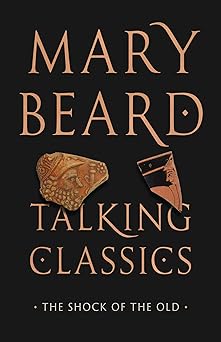
“The shock of the old” does not simply describe the survival of ancient things in the modern world. It refers to the experience of seeing an antiquity that has become overly familiar as something strange again. Marble statues were not originally pure white, Athenian democracy did not include everyone, and Roman citizenship did not always protect its citizens. When familiar assumptions collapse, the past ceases to be dead knowledge and becomes a force capable of moving present thought.
Talking with classics does not mean installing ancient people as teachers and copying down their answers. It means admiring their achievements without ignoring their violence, recognizing similarities with the modern world without erasing differences, and criticizing political misuse without surrendering the entire past to any one faction. Respect and criticism, intimacy and distance, are all necessary. Classics are not a single object to be loved or discarded but a complex inheritance that must continually be questioned and debated.
The power of a four-thousand-year-old piece of bread lies here as well. It shows that ancient people were human beings who made and ate food, while also remaining a fragment of a world that can never be fully reconstructed. The tension between a past that feels close enough to touch and one that can never be completely understood creates historical curiosity. Classics are less like a mirror that faithfully reflects the present than a prism that refracts a single beam of light in different directions.
The ancient world does not exist to confirm the superiority of the present. It reminds us that even a modern society that has advanced democracy, human rights, science, and technology may fail to recognize its own exclusions and violence. The institutions and values accepted as self-evident today may appear strange and contradictory to people in the future. Looking at antiquity is also a way of imagining how the future may look back at us.
No one is obliged to admire ancient Greece and Rome. Yet it is difficult to ignore the fact that people have used classics for thousands of years to legitimize power, organize resistance, and debate the meaning of beauty and humanity. Without knowledge of classics, it is also difficult to understand fully how the modern world has used the past.
The value of classics does not come from the authority of age itself. It comes from encountering a world different from our own and testing the certainties of the present against it. A four-thousand-year-old piece of bread, a Pompeian tavern mural, an Athenian citizens’ assembly, and the failed cry of a Roman citizen pose the same questions in different ways: What kind of communities have human beings created? Whom have they included, and upon whose sacrifice have they built their civilizations?
Those questions remain unresolved. Antiquity is not a dead past left behind the present but an old voice that continues to argue within contemporary society. It need not be worshipped unconditionally or silenced because it makes us uncomfortable. We must approach it closely, examine it carefully, question familiar interpretations, and endure the distance between past and present. At that moment, the ancient world ceases to be an obsolete inheritance and becomes an intellectual shock that enables us to see the present anew.

.jpg)
.jpg)
.jpg)