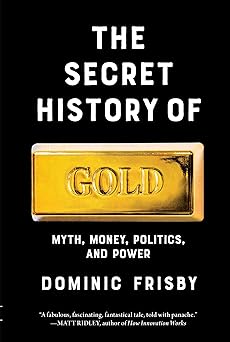
Why Has Gold Ruled the Throne of Money for 6,000 Years?
Gold produces nothing, yet for thousands of years, humanity has crossed continents and waged wars to obtain it. From imperial treasure to the standard of global currency, and later to a strategic asset held by central banks, belief in gold has never disappeared even as its role has changed. Following the history of gold reveals the financial order of civilization in which money and power, the state and trust, have long been intertwined.
[Key Message]
* Gold’s value comes not only from its scarcity, but also from the collective trust accumulated over 6,000 years of human history. Its durability, divisibility, and portability made it useful, while the belief that others would continue to value it made gold the world’s longest-lasting store of wealth.
* Gold was not merely a symbol of imperial wealth; it was also the fuel of conquest, warfare, and political power. States used gold to maintain armies, expand territories, and transform the wealth of conquered societies into resources for further expansion.
* The gold standard imposed discipline and strengthened confidence in money, but it also limited economic flexibility during crises. Gold restrained excessive currency issuance, yet made it more difficult for governments and central banks to expand money and credit during recessions and financial emergencies.
* Modern money gained greater policy flexibility after breaking away from gold, but became more dependent on institutional credibility. The value of fiat money is sustained not by gold reserves, but by central banks, fiscal discipline, legal authority, and the productive capacity of the economy.
* Even in the digital age, gold remains less an asset for maximizing returns than a form of insurance against instability in the financial order. Alongside Bitcoin and national currencies, gold continues to serve as a central bank reserve and an independent store of value against inflation, sanctions, and geopolitical shocks.
***
Why Did Humanity Choose Gold?
The history of gold is older than the history of humankind. Created through violent collisions in the universe before Earth itself was formed, gold remained only in extremely small quantities inside the planet and near its surface. From the moment humans first discovered it, gold was unlike ordinary metals. It did not rust, it resisted corrosion, and it could be melted in fire and shaped into many forms. Even a tiny amount gave off an intense shine, and it did not lose its original luster over time. These qualities transformed gold from a simple material into a special substance symbolizing eternity and immortality.
To ancient people, the color of gold was the color of the sun. The sun governed the seasons and agriculture and sustained life. Gold was regarded as if it were a fragment of the sun that had descended to Earth. In ancient Egypt, gold was associated with the skin of the gods, and the tombs and funerary objects of pharaohs were decorated with it. Because gold did not decay even though a dead king’s body disappeared, it was the most suitable material for expressing the belief that royal authority would continue after death.
Gold was special not merely because of its beauty. It satisfied almost perfectly many of the conditions required of money. Gold was scarce, but not so rare as to be completely unobtainable. It could be transported, divided into smaller units, melted down, and recombined. A given weight of gold was recognized as having a similar value in different regions. It did not rot like grain, die like livestock, or rust like iron. It required little storage space and could transfer wealth across generations.
Yet the value of gold was not determined unilaterally by nature. Its value emerged through the repeated choices and beliefs of humans who regarded it as precious over long periods of time. People were willing to accept gold because they believed others would also want it. As this belief extended across communities, states, and civilizations, gold became the longest-lasting store of value. Gold was one of the earliest forms of collective financial trust created by humanity.
The desire for gold began with admiration for something beautiful, but it soon expanded into a question of possession and power. Those who possessed large quantities of gold could hire more people, organize armies, and purchase goods and supplies. Gold was an offering to the gods and a tool for displaying royal authority, but when necessary, it could also be converted into military and political power. As gold moved from the realms of religion and art into those of economics and authority, humanity’s obsession with it intensified.
Gold Built Empires and Provoked Wars
Throughout history, gold was both the result of empire and the fuel that drove it. Powerful states acquired gold through conquest, then used it to pay soldiers and purchase weapons and food. More gold made larger armies possible, and larger armies brought new territories and more gold. Gold and conquest formed a self-reinforcing cycle.
Ancient kings did not merely store gold deep inside their palaces. They issued gold and silver coins bearing their own faces and symbols. Coins were a means of buying and selling goods, but they were also a medium for communicating the authority of the ruler. When currency stamped with a king’s image circulated throughout an empire, it meant that the king’s power extended into markets and daily life. Money was both an economic instrument and a political declaration.
Precious metals also played an important role in the expansion of Alexander the Great and the Roman Empire. Treasure and mines taken from conquered territories financed warfare and expanded imperial monetary networks. Roman gold coins connected trade across a vast empire, but as financial pressure increased, rulers began reducing the precious metal content of their coins. The name and appearance of the coins remained the same, but the quantity of gold and silver inside them decreased. The state could issue more currency, but trust in that currency weakened.
Reducing the purity of coinage resembled modern monetary expansion. The money remained nominally the same, but its purchasing power declined. In the age of metallic money, people weighed coins or cut into their surfaces to inspect what was inside. A state guarantee alone was not enough. When trust in currency began to collapse, people hid older coins with higher purity and spent the lower-value new coins first. Good money disappeared while bad money filled the market.
The desire for gold took its most dramatic form in Europe’s expansion into the Americas. Behind the stated purposes of exploration, missionary work, and trade lay an intense hunger for precious metals. For Spanish conquerors, the gold and silver of the Americas were resources that could fill the royal treasury and finance wars in Europe. Gold that had served as a symbol of religion and authority in local civilizations was melted down and transformed into transportable bars and coins. Sacred objects from one civilization became military funds for another.
The gold rushes of the nineteenth century created another form of conquest. When news spread that gold had been discovered, vast numbers of people abandoned their homes and moved toward new mining regions. Cities appeared almost overnight, and railways, ports, shops, and banks followed. Some gained great wealth, but most failed to find as much gold as they had expected. In many cases, those who supplied equipment, food, and lodging to miners earned more stable profits than the miners themselves.
Gold offered individuals the dream of upward mobility, but behind that dream lay the displacement of Indigenous peoples, the exploitation of labor, and environmental destruction. When new economies formed around gold mines, existing communities and ways of life were easily dismantled. Gold carried both the promise of prosperity and the memory of violence. The brighter gold shone, the darker the shadows around it became.
How Did Gold Become the Money of the World?
Gold was able to move beyond decoration and treasure and become the money of the world because states and markets standardized its weight and purity. In early trade, metal had to be weighed directly, but once states issued coins guaranteed to contain a fixed weight and purity, transaction costs fell. People could use coins without testing the authenticity of the gold every time because they trusted the mark stamped upon them.
Gold coins, however, were inconvenient for large-scale commerce. Large quantities were difficult to transport and vulnerable to theft. Merchants began depositing gold in secure places and receiving certificates of deposit. These certificates were lighter and easier to transfer than the gold itself. Once people accepted them as equivalent to gold, paper currency developed. The value of paper money did not come from the paper itself but from the promise that it could be exchanged for a fixed amount of gold when necessary.
In this process, banks became increasingly important. Banks stored gold, issued certificates, and lent part of the deposited gold to others. By relying on the fact that not every depositor would demand gold at the same time, banks created more credit than the amount of gold they actually held. Credit stimulated the growth of commerce and industry, but when trust in banks weakened, crises occurred as depositors rushed to demand their gold all at once.
The modern gold standard connected the value of national currencies to fixed quantities of gold. Once each country’s currency established a fixed relationship with gold, exchange rates among currencies also became relatively stable. Merchants and companies engaged in international trade could reduce the risk of sudden exchange-rate fluctuations, and gold became a common standard recognized across borders.
The gold standard also constrained the issuance of money by governments. If a government issued unlimited amounts of currency, people would attempt to exchange their banknotes for gold, reducing the central bank’s reserves. Governments and central banks therefore had to manage the money supply and public finances in accordance with their gold holdings. Gold imposed a physical limit on the promises of rulers. An asset that political power could not create at will effectively disciplined national monetary policy.
This discipline contributed to the long-term stability of currency values, but it did not always produce positive results. Even when the economy grew rapidly, money and credit could remain scarce if the supply of gold did not increase sufficiently. During recessions, central banks could be forced to raise interest rates in order to prevent gold outflows. The more tightly currencies were tied to gold, the narrower the room for policy responses during crises became.
The First World War created a major rupture in the gold standard. Waging war required enormous sums of money, but taxes and gold reserves alone were insufficient. Many countries expanded the issuance of currency and government debt and suspended the convertibility of paper money into gold. Attempts were made after the war to return to the gold standard, but changed price levels, debt burdens, and international imbalances could not easily be fitted back into the old system.
The gold standard was not merely a system that used gold. It was a system of trust based on the belief that governments would honor their promises and that currencies would maintain a stable value. Yet maintaining that trust sometimes required states to prioritize gold reserves and exchange-rate stability over employment and growth. The history of the gold standard shows that the stability created by hard money coexisted with the suffering produced by a lack of flexibility.
What Did Money Become After Breaking Away from Gold?
Most of the money we use today cannot be exchanged for gold. Banknotes and the numbers in bank accounts are not certificates of ownership of gold. Money functions because states and central banks guarantee its value and because citizens use it to pay taxes and conduct transactions. This form of money is known as fiat money or credit money.
Breaking away from gold gave governments and central banks far greater freedom. During recessions, they could expand the money supply and lower interest rates, and during financial crises, they could provide liquidity to banks and markets. Even in emergencies such as wars, disasters, and mass unemployment, they could raise necessary funds without being constrained by gold reserves. It also became possible to expand money and credit in line with the growth of the economy.
But greater freedom brought greater responsibility. Under the gold standard, the scarcity of gold limited the issuance of currency. Under a fiat money system, the judgment of policymakers and the strength of institutions must perform that role. If governments expand fiscal deficits excessively and central banks continue to support them, the value of money can be destabilized. If the amount of money in circulation increases faster than the supply of goods and services available for purchase, prices rise.
Inflation does not affect everyone equally. People who depend on cash and fixed incomes experience an immediate loss of purchasing power. By contrast, those who own assets such as real estate, shares, and businesses may benefit from rising asset prices. Monetary expansion stimulates the economy as a whole, but it can also widen the gap between those who own assets and those who do not.
Those who favor gold criticize precisely this point. In a system where governments and central banks can create money according to need, the value of money may become dependent on political choices. Gold is no one’s liability and does not depend on the promise of a particular government. Even if a debtor goes bankrupt or confidence in a state collapses, gold itself remains. This is why gold repeatedly attracts attention during periods of financial instability and inflation.
That does not mean gold is a perfect solution. Its price also fluctuates significantly according to demand and expectations, and storing and transporting it are costly. Gold pays no interest or dividends, nor is it an asset directly used into economic activity to increase production. Returning to a gold standard would not automatically eliminate financial crises, inequality, speculation, or excessive debt. Historically, banking crises and recessions repeatedly occurred even under gold-based financial systems.
What matters is not making an absolute choice between gold and fiat money. The history of gold shows that money is not merely a technical mechanism but an institution for managing trust. The gold standard sought to secure trust through natural scarcity, while modern money relies on law, central banks, taxation, and economic productivity. Their foundations differ, but both systems depend on the belief that others will continue to accept the money tomorrow.
The success or failure of a monetary system depends less on what money is made from than on how responsibly its issuance and management are controlled. Gold served as an external discipline that restrained human desire and political convenience. In modern finance, independent central banks, sound public finances, transparent policies, and social consensus are expected to take its place. When institutions lose trust, people once again seek stores of value outside the state. Whenever that happens, gold breaks its long silence and returns to the center of the financial order.
Will Gold Survive in the Digital Age?
Even in an age when credit cards, mobile payments, and digital currencies have become part of everyday life, gold has not disappeared. Individuals no longer carry gold coins for daily transactions, but central banks still hold enormous quantities of gold. In an era when international payments and financial markets operate through electronic networks, the fact that gold bars in underground vaults remain national reserve assets appears paradoxical.
Central banks hold gold because it is not the liability of any particular country. Foreign government bonds and deposits depend on the promises of issuing states and financial institutions, while gold has no issuer. When international relations are stable, this distinction may seem unimportant. But when trust between states weakens because of war, sanctions, or diplomatic conflict, the value of an asset that does not fall entirely under anyone’s control becomes more significant.
Gold also has a complex relationship with the dollar-centered financial order. The dollar is the most widely used currency in global trade and finance, and U.S. government bonds function as major reserve assets. Yet the more one country’s currency stands at the center of the world, the more the world becomes exposed to that country’s policies and fiscal condition. Countries seeking to reduce their dependence on dollar assets use gold as a means of diversifying their foreign exchange reserves.
This does not mean gold will immediately replace the dollar. Gold cannot fully provide the speed of payment, liquidity, and credit-creation functions required by modern trade and finance. Rather, gold serves as insurance against excessive reliance on the promises of any single country when the international order becomes unstable. It may appear inefficient in normal times, but its reason for existence becomes clearer as the possibility of crisis grows.
In the digital age, Bitcoin has emerged as a new competitor to gold. Bitcoin is often called digital gold because its supply is limited and no central institution can arbitrarily expand it. It can also be transferred across borders with relative ease and stored without a physical vault. The desire for a store of value beyond the control of governments and financial institutions resembles the long-standing desire for gold.
Yet the two assets have very different histories. Gold accumulated trust over thousands of years through its use in decoration, religion, money, and central bank reserves. Bitcoin is a comparatively new asset based on digital networks and cryptographic technology. Gold physically exists but is difficult to transport, while Bitcoin can move rapidly but depends on electricity, communications networks, and technological security. Gold’s scarcity was created by nature, while Bitcoin’s scarcity is created by code and network consensus.
The future financial order is unlikely to take the form of one asset completely replacing the other. National fiat currencies may remain at the center of taxes, wages, and commercial transactions, while gold continues to function as protection against crises and currency depreciation, and digital assets provide new forms of mobility and autonomy. A multilayered monetary order may emerge in which different kinds of trust support different assets.
Gold has survived for 6,000 years not because it always delivered the highest returns. It survived because it remained after states, dynasties, banks, and monetary systems collapsed. Owning gold was less an investment in future prosperity than a form of preparation for the possibility that the existing order might not last forever. Gold was not so much an asset of optimism as an asset of memory.
Humanity has created many forms of money. Shells, coins, paper currency, bank deposits, credit cards, and crypto assets have all appeared. Throughout this process, gold has never completely left the stage. Gold continually asks humanity what value is and where trust in money comes from. Does it come from state authority, material scarcity, technological consensus, or the collective belief that someone else will still accept it tomorrow?
Looking at the history of gold is not merely reading stories about ancient treasure. It is examining the history of how humans created money, organized power, and managed anxiety about the future. Humanity’s obsession with gold contains not only the desire to become rich but also the fear of losing accumulated value. As long as human desire and anxiety remain, no matter how much the form of money changes, the story of gold will not end.
Gold no longer sits on the official throne of world money. Yet whenever the financial order trembles and the promises of governments are questioned, people look toward gold again. Like an ancient monarch who retains authority even after stepping down from the throne, gold remains at the edge of modern finance, illuminating the limits of money and power. The oldest lesson gold offers is simple. The value of money begins not with the material from which it is made, but with trust that its value can be preserved.

.jpg)
.jpg)
.jpg)