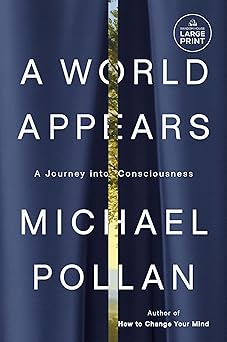
The Moment the World Appears
- A Journey into the Unknown Continent of Consciousness
The moment we open our eyes, the world that had vanished into darkness reveals itself once again. Light and sound, body and memory come together as a single experience, and at its center appears a being called “I.” Even in an age when science can examine the brain with extraordinary precision, how the world becomes a felt experience remains an unsolved mystery.
[Key Message]
* Consciousness goes beyond the brain’s processing of information; it is the phenomenon through which a world actually appears as an experience to someone. Although neural activity and sensory processing can be explained, why they produce subjective feelings such as color, pain, emotion, and memory remains an unresolved mystery.
* The origins of consciousness may lie closer to the sensations and emotions of a living body than to complex thought. Hunger and pain, fear and relief give value and meaning to the world, showing that consciousness may be formed through the relationship among brain, body, and environment.
* Consciousness may not be an exclusively human privilege, and different living beings may experience fundamentally different worlds. The sensory, learning, and adaptive capacities of animals and plants compel us to reconsider the boundaries of consciousness and to avoid dismissing the experiences of other beings without sufficient evidence.
* The self may not be a fixed entity, but a flexible construction that binds sensations, memories, and bodily states into a coherent story. Meditation, dreams, absorption, and psychedelic experiences reveal that the self and the sense of reality we normally regard as absolute can change under different conditions.
* The ability of AI to reproduce language and intelligence does not prove that it actually feels or experiences the world. The central task of the AI age is not to declare machine consciousness prematurely, but to protect human consciousness and attention from being surrendered carelessly to technology and the market.
***
A World Reborn Every Morning
When we open our eyes in the morning, the world returns. The outlines of the room become visible, sounds from outside the window reach us, and the sensation of the body lying on the bed comes alive. Memories of yesterday reconnect with the tasks of today, and the “self” that had faded during sleep reappears. It happens so routinely that it does not seem extraordinary, but the return of consciousness is one of the most mysterious events in nature.
Even during deep sleep or under general anesthesia, the brain and body do not stop functioning. The heart continues to beat, breathing continues, and the nervous system regulates countless physiological processes. During that time, however, the world is not experienced. Light may still reach the eyes and sound may still enter the ears, but the subjective world in which those things are seen and heard does not appear.
Then, when consciousness returns, scattered sensations and memories are bound into a single scene. It is not merely that signals are being processed. The world begins to exist in a particular form and with a particular feeling for someone. Red is not merely information about wavelength but appears as red; music goes beyond vibrations in the air and moves the heart; pain is not merely a neural signal but suffering that one wants to avoid.
The exploration of consciousness begins at precisely this point. Human beings have discovered a great deal about which regions of the brain are involved in vision, memory, language, and emotion. By studying brain injuries, anesthesia, sleep, and hallucinations, researchers are also learning which patterns of neural activity are associated with particular experiences. Yet it remains unclear why the physical activity of the brain is accompanied by feeling.
Between neurons exchanging electrical signals and the actual experience of seeing a red rose lies a gap that is difficult to explain. No matter how precisely we measure the signals inside the brain, those measurements do not automatically reveal why the signals appear as warmth, fear, longing, or other subjective experiences.
Researchers often call this the “hard problem” of consciousness. The way the brain distinguishes information, stores memories, and regulates behavior can be studied as a functional problem. But why those functions are not carried out automatically in darkness, and instead appear as a unified experience to a subject who feels them, is a separate question.
Consciousness is the phenomenon closest to us, yet it is also the most difficult to observe objectively. A person cannot step outside their own consciousness and examine it from the outside. Every observation and judgment, every theory and experiment, takes place within consciousness. We can use a telescope to observe stars and a microscope to examine cells, but the observer studying consciousness always remains part of the object being studied.
For this reason, consciousness resembles an unknown continent. Everyone lives within it, but no one possesses a complete map. Science and philosophy, psychology and art, religion and meditation all enter this continent from different directions. Each field discovers important landscapes, but none can explain the whole.
Many Theories Competing for a Single Answer
Modern consciousness research contains a remarkable number of theories. Some propose that consciousness arises when information is widely shared across the brain. According to this view, when particular information rises onto a kind of mental stage and is simultaneously distributed to systems responsible for memory, language, judgment, and action, it becomes a conscious experience.
Other theories argue that it is not enough for information to move through the brain in a single direction. Conscious perception emerges only when sensory signals travel repeatedly through multiple neural circuits and are processed again and again. A faint image that was initially invisible may, through recurrent processing, become a recognizable object.
Another approach holds that consciousness appears when a system represents the fact that it is in a particular state. Merely processing a pain signal is different from possessing the state “I am now feeling pain.” According to this explanation, consciousness requires a higher-order representation through which a system becomes aware of its own mental condition.
There is also a theory that regards the degree of integrated information as the key to consciousness. If information within a system is richly differentiated yet so tightly combined that it cannot be separated, the system may possess a certain level of consciousness. This view opens the possibility of assessing consciousness not only in human brains but also in animals and machines.
The idea of the brain as a prediction-making organ has also attracted considerable attention. According to this account, the brain is not a device that passively receives the external world. It constantly guesses and predicts the causes of sensory information. People do not simply copy reality as it is; the brain constructs a world by continuously correcting its predictions with incoming sensory signals.
Each of these accounts illuminates an important part of consciousness. They help explain how attention works, when sensory information enters awareness, and how different regions of the brain share information. Yet none fully explains why a physical process gives rise to subjective feeling.
The abundance of theories means that research is active, but it also suggests that the word “consciousness” may be grouping together several different phenomena. Wakefulness and attention, intelligence and self-awareness, pain and emotion, selfhood and language are all mixed together under the same term.
When someone says that a being is conscious, we must distinguish whether this simply means that it responds to external stimuli, that it feels pain or pleasure, or that it recognizes itself as an independent being. Without separating these levels, debates about plants and animals, humans and artificial intelligence can easily collapse into confusion, with different people using the same word in different ways.
What matters in the exploration of consciousness is not choosing one theory too quickly. It is examining what each theory explains and what it fails to explain, while learning to tolerate the fact that there is still no final answer. Consciousness is less a puzzle that will soon be solved than a fundamental question to which human beings must repeatedly return in order to understand themselves and the world.
Feeling Comes Before Thought
Human beings tend to equate consciousness with intelligence or the ability to think. The more fluently a being speaks, calculates, or solves complex problems, the more conscious it is assumed to be. Yet the most basic form of consciousness may be closer to feeling than to thought.
The experiences of hunger and pain, warmth and cold, fear of danger and relief in safety are older than complex language. Consciousness may have first emerged when a living organism began to experience the world not merely as a physical environment but as a place containing things that were good or bad for it.
Feeling assigns value to otherwise neutral information. Light and temperature, sound and smell become opportunities or dangers depending on the state of the organism. To a hungry animal, the smell of food is a signal to approach, while the movement of a predator is a signal to flee. The world gains meaning when it enters into a relationship with the needs of a living being.
From this perspective, consciousness is not a movie produced by an isolated brain. It arises from the activity of the whole organism as it maintains itself and struggles to survive. Heartbeats and breathing, hormones and immune responses, hunger and fatigue are not merely physiological processes located beneath the mind. They are the foundation on which thought, emotion, attention, and judgment are formed.
When people are anxious, they interpret the same situation as more dangerous; when they are tired, minor difficulties become harder to endure. As the state of the body changes, the way the world appears also changes. Consciousness is not a transparent window that faithfully copies external reality, but an experience continually constructed through the relationship among body, brain, and environment.
Emotion, too, should not be dismissed merely as noise that disrupts rational judgment. Emotion is a system of value that tells us what matters and which actions we should choose. Choosing one possibility from among countless alternatives requires more than calculation. It requires the ability to desire and fear, to like and dislike.
The old habit of separating thought from feeling and placing reason above emotion narrows our understanding of human consciousness. Human beings are living organisms before they are thinkers, and thought developed upon the foundation of biological life. To understand consciousness, we must examine not only language and logic but also how living beings maintain their bodies and act within the world.
Many Worlds Discovered Beyond the Human
When consciousness is defined only through human language and thought, other forms of life are naturally pushed outside its boundaries. For a long time, animals were treated as automata moving according to stimuli, while plants were regarded as passive organisms responding mechanically to their surroundings.
As research in animal behavior and neuroscience has advanced, however, the boundary between humans and other living beings has continued to weaken. Mammals and birds, as well as octopuses, crustaceans, and some insects, learn, remember, and alter their behavior according to circumstances. They also display behavior that resembles play, curiosity, avoidance, and anticipation.
The nervous system of an octopus differs greatly from that of a human. Many of its neurons are distributed not only in the brain but throughout its arms, and each arm displays a considerable degree of independent sensation and action. The fact that a creature that followed a completely different evolutionary path can solve complex problems and explore its surroundings raises the question of whether a human-like brain is necessary for consciousness.
Birds have small brains, yet they use tools, prepare for the future, and form complex social relationships. Dogs read their surroundings through layers of scent that humans cannot detect, while bats construct space through echoes. The world may appear to be one place, but the sensory world experienced by each organism is different.
The range of colors humans can see and the spectrum of sounds humans can hear represent only a small portion of reality. Other animals can detect ultraviolet light, magnetic fields, subtle vibrations, and chemical signals. The belief that the human world is the most complete world may result from forgetting the limitations of human sensory organs.
The fact that animals cannot speak does not prove the absence of consciousness. Infants experience pain and comfort before learning language. Nor do we assume that consciousness disappears from people who cannot speak or who have lost linguistic ability. Language is a powerful capacity that expresses and expands consciousness, but it is not identical to the origin of consciousness.
The question becomes more complicated with plants. Plants have no brains or nervous systems, yet they detect light, gravity, touch, water, and chemical signals. They change their direction of growth according to their environment, respond to injury or predation, and exchange signals with other organisms through roots and fungi.
Some plants appear to alter later responses according to earlier stimulation. There have been attempts to interpret such behavior as a form of learning or memory, but complexity of response does not itself prove the presence of feeling. A thermostat also detects its environment and changes its behavior, but we would not say that it experiences heat or cold.
Whether a plant processes information and whether a world appears to that plant with a particular feeling are separate questions. If consciousness is defined too broadly, every complex system may be declared conscious. If it is defined too narrowly, every form of experience unlike the human one may be excluded.
What is certain is that humans cannot fully know the inner lives of other organisms. We have no choice but to infer the consciousness of other beings through the standard of our own experience. Yet it is no more scientific to conclude that consciousness is absent simply because it cannot be known.
Where we draw the boundary of consciousness leads directly to ethical questions. If animals experience pain and pleasure, the ways in which they are raised, experimented upon, and deprived of habitat must change. If consciousness is not the exclusive possession of humans but can appear in different forms across different levels of life, humanity must reconsider its relationship with nature.
The Story That Creates the Self
The most certain feature within consciousness is the sense of “I.” It feels as though a center that thinks, remembers, and acts exists somewhere inside the head. We believe that the self of yesterday and the self of today are the same person, and that an unchanging subject lies behind changing experiences.
Yet no single center that observes every experience and issues every command has been found in the brain. Vision and hearing, memory and emotion, language and movement are processed across different regions and networks. There is no small observer inside the brain watching a single screen and making final decisions.
The self may be less a fixed object than a model that binds sensations, memories, and bodily states together. The brain gives continuity to constantly changing experiences and constructs a story about who one is. This story allows a person to remember the past as their own, plan for the future, and assume social responsibility.
The fact that the self is constructed does not mean that it is false. A map is not the same as the actual land, but it is necessary for finding one’s way. The self is likewise a practical map that makes survival, relationships, and long-term action possible. Problems arise when the map is mistaken for reality itself.
People believe that their thoughts and feelings are identical with themselves. When anxiety appears, they define themselves as anxious people; when anger arises, they feel compelled to act according to it. Yet careful observation reveals that thoughts and emotions continuously appear and disappear, and none remains forever.
Meditation offers a way of observing this process directly. By attending to the breath, bodily sensations, and the movement of thought, a person can see that thoughts arise independently of deliberate intention. One may also realize that it is impossible to decide in advance what the next thought will be.
At such moments, the familiar phrase “I think” may feel less accurate than “a thought appears in consciousness.” There may be no separate commander producing thoughts, but rather a self that retrospectively claims ownership of an ongoing stream of mental activity.
Meditation is not training designed to eliminate the self. It is a practice of understanding that the self is a process and of creating room not to be carried away automatically by every thought and emotion. As the capacity for self-observation grows, anxiety and anger can be experienced without being accepted as permanent identities.
What Altered Consciousness Reveals
People usually treat ordinary waking consciousness as the standard form of awareness. Yet consciousness is not a single fixed state. The way the world appears changes with dreaming and deep sleep, focus and distraction, absorption and meditation, depression and ecstasy.
In dreams, events that would be impossible in waking life are accepted as natural. Time and place become mixed together, and the form of the self may change without seeming strange. Only after waking do we realize that the dream world differed from reality. This suggests that the sense of reality is itself a property constructed by consciousness.
In a state of absorption, thoughts about the self diminish and action merges with experience. Musicians, athletes, and artists sometimes feel fully immersed in the activity itself rather than consciously explaining what they are doing. Time may seem to pass rapidly or to stop altogether.
Meditation trains attention and allows a person to observe the habits of selfhood and thought that usually operate automatically. The world may feel clearer, or the boundary between oneself and one’s surroundings may become less rigid. These changes demonstrate that consciousness is not a fixed window that passively receives external reality.
Psychedelic experience reveals the variability of consciousness even more dramatically. Colors and shapes can change, the flow of time can shift, and the boundary separating self from world can weaken. Some people experience a powerful sense of connection with nature or the universe and report that their attitudes toward life and death have changed.
If such experiences are dismissed merely as hallucinations or errors of the brain, their psychological meaning may be overlooked. Yet it is equally dangerous to accept every insight arising during them as an objective truth about the universe. Altered states of consciousness offer not final answers about reality, but evidence that ordinary consciousness is not the only possible way of experiencing it.
The weakening of the boundary of self during psychedelic experience does not mean that the self disappears completely. The self returns when the experience is remembered and described. Yet such experiences can make people vividly aware that the self they normally regard as absolute may be a flexible construction produced by brain and body.
Studying altered states of consciousness provides an important pathway toward understanding the human mind. Instead of dividing the normal from the abnormal and reality from illusion in a simplistic way, we can examine the conditions under which consciousness changes and the effects those changes have on human life.
The Brain Is Not a Computer
Human beings have used the most advanced technology of each era as a metaphor for the mind. In the age of mechanical clocks, the body and mind were compared to interlocking gears. After the arrival of the steam engine, the mind was explained through pressure and flows of energy. When telegraphs and telephone networks spread, the brain became a communication network exchanging signals.
In the computer age, the explanation that the brain is hardware and the mind is software became widely accepted. Sensation was understood as input, action as output, memory as storage, and thought as computation. This metaphor contributed greatly to the development of cognitive science and artificial intelligence.
A useful metaphor, however, is not the same as reality. The fact that some brain functions can be compared to a computer does not mean that the brain actually is a computer. A computer processes information according to symbols and instructions defined by humans, while the brain was formed together with the body through a long evolutionary struggle for survival.
In a living brain, hardware and software cannot be clearly separated. Neural connections change through learning and experience, while hormones, neurotransmitters, the immune system, and the condition of internal organs influence brain activity. Thought and emotion do not run like programs detached from the body.
Human consciousness is formed within hunger and pain, fatigue and sexual desire, aging and the possibility of death. Possessing a body that must survive determines what people consider important, what they fear, and what relationships they form.
The view of the brain as a computer can easily overlook questions of feeling and value. A computer may process information without necessarily experiencing that information as good or bad for itself. Human thought always arises within a particular bodily condition, desire, memory, and emotion.
This distinction becomes even more important when discussing artificial consciousness. The fact that AI calculates faster than humans and produces natural language does not prove that it experiences the world in the same way. Intelligence and consciousness, information processing and feeling, are not identical concepts.
Speaking AI and Feeling Beings
Generative artificial intelligence answers questions, creates stories, and produces language that appears to understand emotion. It can also generate sentences describing its own thoughts and condition. People naturally attribute a mind to anything that uses language fluently.
In human society, language has long been the most important pathway for inferring the inner lives of others. When another person says they are in pain, we believe they feel pain; when they say they are happy, we assume happiness is present. Yet we cannot conclude that sentences generated by artificial intelligence arise from experiences like those behind human speech.
AI can learn the contexts in which the word “pain” is used and generate an appropriate expression of comfort for someone who is suffering. But processing information about pain skillfully is different from actually feeling pain.
The ability to solve complex problems and detect patterns belongs to intelligence. Consciousness asks whether subjective experience accompanies those processes. High intelligence does not necessarily imply rich consciousness, and complex language does not prove the presence of feeling.
There is also no decisive evidence that completely rules out the possibility of machine consciousness. Whether consciousness can arise only in a biological brain or may also appear in another material system with the appropriate information structure and functions remains unresolved.
Nevertheless, we should be cautious about predicting machine consciousness too easily on the assumption that the human mind is a computer program. It is difficult to speak with confidence about the inner life of a system built on a different structure when human consciousness itself remains unexplained.
The most important question raised by the AI debate is not merely whether machines will soon feel as humans do. It also asks how humans understand their own consciousness. If human beings are defined only as information-processing devices that use language and perform calculations, then the difference between human and machine may seem to disappear as soon as machines perform those functions well.
But if consciousness arises from the body, emotion, and the self-maintaining processes of life, the difference between humans and AI lies deeper than computational ability. AI is less the final destination of consciousness research than a mirror revealing the assumptions humans hold about the mind.
An Age in Which Attention Is Taken Away
Consciousness is a scientific and philosophical mystery, but it is also a resource used in everyday life. The time given to a person becomes a very different experience depending on where consciousness rests. An hour spent in deep conversation and an hour spent mindlessly scrolling through short videos do not remain in memory as the same kind of time.
The modern digital environment has turned the capture of human attention into a vast industry. Notifications, infinite scrolling, short videos, and personalized recommendations are designed to keep users from leaving the screen. Platforms study what people watch for a long time and which stimuli provoke a response, then use that knowledge to attract attention more effectively.
When attention is repeatedly fragmented, the ability to remain with a single thought, tolerate boredom, and observe one’s surroundings carefully may weaken. Moments without stimulation become uncomfortable, and even time alone is filled with new information.
Animals must maintain close attention to their environment in order to survive. Missing a small sound, smell, or movement may mean losing food or falling into danger. Modern humans, living in comparatively safe environments, easily hand their attention over to industrial systems.
Even if we cannot fully explain what consciousness is, we can examine where it is being used. What a person sees, hears, and thinks creates the world of experience. Consciousness is not merely an ability stored inside the head but the content of life continually constructed through attention.
“Consciousness hygiene” is an attitude of managing what enters consciousness and what receives attention. Just as people examine food and sleep for the sake of physical health, they must examine the environment of information, stimulation, screens, and relationships for the sake of mental health.
This does not mean rejecting technology or abandoning every digital tool. It means deciding for oneself when and why technology is used and developing habits that prevent attention from being surrendered automatically. It can involve reducing notifications, noticing the habit of opening a screen without purpose, and recovering experiences that require slow attention, such as reading, conversation, walking, and music.
Meditation can also be understood not as a technique for reaching a special mystical state, but as practice in reclaiming control over attention. By observing thoughts and emotions as they arise, a small interval appears before one reacts immediately to a stimulus. Within that interval lies the possibility of choosing where attention will go.
Wonder Is Needed Before Explanation
The long exploration of consciousness does not end with a clear answer. Scientists and philosophers propose many theories and observe the brain with great precision, yet why the world is experienced by someone remains unexplained.
This conclusion may appear to be a failure. Yet not knowing does not diminish the value of consciousness. Instead, it makes a phenomenon that had become invisible through familiarity appear strange and wondrous again.
Human beings have discovered the age of the universe, the composition of stars, the evolution of life, and the workings of genes. They observe distant galaxies, manipulate atoms, and teach machines to use language. Yet they still cannot completely explain the closest fact of all: that they see red, are moved by music, and feel love and loss.
The fact that consciousness remains unknown does not mean that science should be abandoned. Research must continue, and new experiments and theories will illuminate many aspects of consciousness. Yet we should distance ourselves from the confidence that science will soon solve everything or that a single technological metaphor can explain the entirety of the human mind.
The proper attitude toward consciousness is neither mystical certainty nor mechanical confidence. It is humility that respects evidence while leaving room for what remains unexplained. We should neither assign the unknown too quickly to the supernatural nor reduce what we do not understand as though it were already solved.
The mystery of consciousness is not an argument for placing humanity once again at the center of the universe. Rather, it reminds us that humans are connected to other living beings. If feeling, sensation, survival, and attention form the basis of consciousness, the human mind is not special software detached from nature but a phenomenon formed within the long history of life.
Recognizing the consciousness of other animals does not diminish human value. When the belief that humans alone can feel is released, the possibility opens that the world contains many subjects experiencing it in different ways. Forests, oceans, skies, and land cease to be mere backgrounds for humanity and become worlds appearing differently to many forms of life.
How Should Consciousness Be Lived?
After exploring consciousness, the remaining question is not limited to “What exactly is consciousness?” It extends to how such a precious and difficult-to-understand capacity should be used.
Human life is a sequence of experiences appearing in consciousness. What a person attends to, whom they form relationships with, and what they fear and love create that person’s world. Consciousness is not an object that can be owned, but an ongoing activity of entering into relationship with the world.
The ability to process more information and make faster judgments does not always correspond to a richer life. The ability to look at a single flower for a long time, listen to another person until the end, and open oneself to music and nature is also an important use of consciousness.
This becomes even more important in the age of artificial intelligence. As machines calculate faster and generate language more skillfully, humans may begin to judge themselves by the same standards as machines. Slowness and hesitation, emotion and fatigue may come to seem like defects that must be removed.
Yet human imperfection is a condition arising from participation in the world through a living body. Hunger and love, loss and the possibility of death shape human judgment and meaning. The value of such experiences cannot be measured by efficiency alone.
Whether AI can possess consciousness remains unknown. But it is clear that humans and animals already inhabit worlds of experience. While imagining the unconfirmed inner life of machines, we must not neglect the pain and sensation of living beings that exist now.
Every morning, the world appears again. Light and sound, body and memory, other people and nature unfold within a single experience. It seems ordinary only because it happens so often, but the emergence of consciousness is astonishing each time.
Even without fully solving the mystery of consciousness, there are things we can do. We can look more closely at the world that appears, avoid dismissing the experiences of other beings, and refuse to surrender our attention carelessly.
The journey to understand consciousness does not arrive at a single answer. It arrives at a place where the question is not how much humanity knows, but how carefully it can live before a world it still does not understand.

.jpg)
.jpg)
.jpg)