When Did We Begin to Believe in the “Stranger Within”?
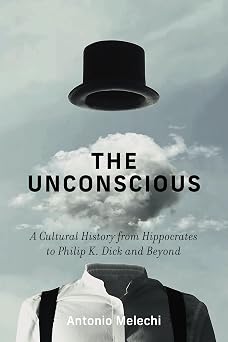
For centuries, human beings have sensed another mind beyond their awareness in dreams, intuition, forgetfulness, and impulse. The unconscious has been regarded both as a psychological reality discovered by science and as an interpretive framework continually reshaped by philosophy, medicine, religion, literature, and popular culture. From Hippocrates and Freud to Philip K. Dick and modern neuroscience, the history of the invisible mind is also the history of humanity’s efforts to understand itself.
[Key Message]
* The unconscious was not first discovered by Freud; it has a long history of ideas about the human mind, extending from ancient reflections on dreams and the soul to hypnosis, sleepwalking, psychoanalysis, and neuroscience.
* The unconscious has been interpreted differently across history?as divine revelation, repressed desire, learned response, or automatic information processing?making it both a scientific discovery and a culturally constructed concept.
* Dreams, sleepwalking, implicit memory, blindsight, and split-brain research demonstrate that human behavior and judgment can occur without direct conscious control.
* Knowledge of the unconscious has contributed to healing and self-understanding, but it can also be used to manipulate behavior through political propaganda, conditioning, personalized advertising, and algorithms.
* Accepting that we cannot fully know our own minds does not mean abandoning free will; it provides a starting point for examining more carefully the habits, emotions, environments, and biases that shape our judgments.
***
The Unconscious Before Freud
“Know thyself.” This phrase, said to have been inscribed at the Temple of Apollo at Delphi in ancient Greece, is one of the oldest commands in the history of Western thought. Yet just as old as the belief that human beings can fully know themselves is the suspicion that they cannot. Why do we have dreams we do not want, find ourselves unsettled by memories we thought we had forgotten, and feel driven by impulses we cannot explain? What makes us swallow words that have risen to the tip of the tongue, walk familiar routes without thinking, and move instinctively before dangers we have yet to perceive consciously?
When we speak of the unconscious, the first name that comes to mind is Sigmund Freud. Concepts such as repressed desire, dream interpretation, slips of the tongue, the id, and the ego have become part of the basic vocabulary modern people use to explain the unconscious. It is therefore understandable that Freud is remembered as though he invented it. Yet speculation and inquiry into the invisible mind existed long before the birth of psychoanalysis.
Ancient peoples regarded dreams as a passage through which gods and humans could meet. Scenes in dreams were understood not as random images generated by an individual’s brain but as messages that foretold the future or revealed the causes of illness. Rituals were performed at temples in the hope of receiving healing revelations through dreams, while physicians and philosophers considered how images arising during sleep might reflect the condition of the body and soul.
Within the Hippocratic tradition, attempts emerged to connect dreams with internal bodily changes instead of viewing them solely as supernatural revelations. The idea was that while the senses were directed toward the external world during the day, the soul could perceive the subtle movements occurring inside the body after sleep began. Dreams became both mysterious messages and diagnostic information sent by the body. This marked an early transition in which invisible mental activity was moved from the realm of the divine into the human body.
Aristotle noted that sleepers could faintly perceive external sounds, recognize that they were dreaming, and sometimes behave much as they did while awake. Consciousness was not a light that went out completely with the onset of sleep. Numerous intermediate states existed between sleeping and waking. The body could be asleep while some of the senses remained awake, and a person could act without retaining any memory of the action.
Such observations led to the idea that there might be another being within the human individual, distinct from the daytime self. A person at night could walk, speak, and even perform complex actions, yet remember nothing the following morning. Who, then, had carried out those actions? Could someone be held responsible for conduct they could not remember? If different states of consciousness alternated within the same body, could a human being still be regarded as a single, consistent self?
Ancient and medieval languages did not contain a single concept that corresponded precisely to what we now call the unconscious. Instead, invisible mental activity was divided among concepts such as the soul, dreams, instinct, revelation, evil spirits, madness, habit, memory, and imagination. The unconscious was not discovered from the beginning as a fully formed object. It was closer to a collection of countless questions accumulated over centuries as human beings tried to explain actions and experiences they could not understand.
Dreams and Sleepwalking Reveal Another Self
Stories of sleeping people rising, walking, speaking, writing, and sometimes even performing dangerous acts have long fascinated humanity. Early encyclopedias and medical records include accounts of individuals composing sermons or music while asleep. For a time, actual sleepwalking was grouped together with phenomena involving breaks in consciousness and memory, including epilepsy, dissociative fugue, and hysterical automatism.
Long before the concept of the unconscious became firmly established, the sleepwalker appeared to demonstrate the possible existence of a hidden agent within the human being. A sleepwalker moves with open eyes but does not know what they are doing. The behavior appears purposeful, yet the person cannot consciously explain that purpose. Such conduct undermined the belief that the agent directing behavior was always the conscious self.
Sleepwalking was not only a medical issue but also a legal and moral dilemma. If someone committed a crime while asleep, who should be held responsible? Should the consequences of an action be attributed to a person even when there was no conscious intent? If continuity of memory was broken, could the individual still be considered the same person? Law and ethics, which had traditionally linked responsibility to conscious choice, faced troubling questions in the figure of the sleeping actor.
Animal magnetism and hypnosis, which swept across Europe during the eighteenth and nineteenth centuries, made the issue even more complicated. Hypnotized people sometimes spoke in voices different from their usual ones, recalled forgotten memories, and later had no recollection of what they had done under hypnosis. Some observers saw mysterious mental abilities at work, while others dismissed the phenomena as deception or the effects of suggestion. Either way, hypnosis left a powerful impression that human memory and behavior could be accessed by circumventing conscious control.
Public demonstrations and commercial exaggerations surrounding hypnosis blurred the boundary between science and entertainment. Onstage subjects who laughed, cried, or stiffened their bodies in response to commands offered audiences a visual performance of the unconscious. The belief spread that a hidden layer existed deep within the human mind and that a skilled hypnotist could open the door to it. The unconscious became part of popular culture through theaters, newspapers, advertisements, and urban legends, as well as through laboratories and clinics.
Attitudes toward reverie and daydreaming also changed over time. Medieval monks sometimes used thoughts arising in the intermediate state between sleep and wakefulness as resources for spiritual insight and creative reflection. Stories of Thomas Aquinas praying in the hazy state immediately after waking from a short sleep and conceiving what he would write or dictate the next day suggest that a half-asleep condition could be not merely a state of lethargy but also a source of thought.
As industrial society developed, however, daydreaming increasingly came to be treated as a form of mental absenteeism that obstructed productivity. In schools, it was regarded as a problem among inattentive students; in factories and offices, it was seen as a defect among workers who failed to concentrate on their tasks. The mind’s free wandering could be a source of creativity, but in a society that valued discipline and efficiency, it became a habit to be corrected.
Literature, by contrast, embraced the haziness of reverie as a new language for representing the human interior. From Montaigne, Rousseau, and Thomas De Quincey to Virginia Woolf, writers sought to capture the fact that consciousness was not a single voice unfolding logically but a stream in which memory, sensation, fantasy, and association continually intersected. While science attempted to classify and measure the mind, literature preserved within sentences the movements of the mind that resisted classification.
Advances in twentieth-century neuroscience transformed sleep from a simple cessation of mental activity into an active physiological phenomenon. Electroencephalography revealed that sleep contained distinct stages and cycles and that the sleeping brain responded to external stimuli. As rapid eye movement sleep, non-rapid eye movement sleep, and various parasomnias were differentiated, sleepwalking could be explained not as the supernatural activity of a second self but as an arousal disorder occurring during a particular stage of sleep.
Yet the mystery did not disappear completely. Giving a phenomenon a scientific name did not fully explain how sleeping people could perform complex actions, why some memories were stored while others vanished, or why creative insights arose at the boundary between sleep and wakefulness. Measuring devices revealed the phenomena more precisely, but the old question of how consciously human beings control their own behavior remained.
From Repressed Desire to Automatic Processing
By the late nineteenth century, the unconscious had moved from being a peripheral and ambiguous notion to a central concept in explanations of the human mind. Philosophers, physiologists, and psychiatrists described memories, habits, sensations, and neural activity operating beneath consciousness in different languages. Expressions such as Frances Power Cobbe’s “unconscious cerebration” reflected the idea that thought could proceed without the direct command of consciousness.
Freud reorganized concepts and observations already scattered across several fields into a powerful interpretive system. The unconscious became more than a collection of neural activities outside awareness. It became a dynamic realm in which unacceptable desires and memories remained after being repressed. Repressed material did not disappear but returned indirectly through dreams, symptoms, slips of the tongue, and repetitive behaviors.
From this perspective, human beings were not masters who exercised complete control over their own homes. Desires and defense mechanisms could lie behind choices believed to be rational. An unexplained dislike of a particular person, repeated failures in similar relationships, and inexplicable anxiety or physical symptoms were interpreted as traces of conflicts unknown to consciousness. The habit spread of looking beneath the surface of a person’s words and behavior to uncover hidden meanings.
Psychoanalysis moved far beyond clinical treatment and entered deeply into art, politics, religion, advertising, education, and everyday language. Characters in novels and films were interpreted through childhood wounds and repressed desires, while consumer choices were explained as the outcome of impulses individuals themselves did not recognize. People began reading dreams as codes composed of personal symbols and treating slips of the tongue as disclosures of hidden truths.
Not every conception of the unconscious, however, was Freudian. Behaviorism emphasized observable stimuli and responses, learning, and conditioning rather than structures inside the mind that could not be observed. It proposed that human behavior could be explained and changed through repeated rewards and punishments without interpreting repressed desires. The unconscious became less a repository of hidden narratives and more a process through which learned responses operated automatically.
Concerns also grew that conditioning could be used as a technology for controlling human beings. Political propaganda, brainwashing, subliminal advertising, and psychological warfare intensified fears that attitudes and behavior could be changed without individuals realizing it. In a 1949 letter to George Orwell, Aldous Huxley discussed the possibility that psychological conditioning could become a powerful instrument of authoritarian rule. The episode illustrates how the study of the unconscious could be connected not only to individual healing but also to social control.
Cognitive science and neuroscience in the latter half of the twentieth century redrew the unconscious in yet another form. Implicit memory demonstrated that past experiences could affect performance and judgment even when they could not be consciously recalled. Skills that are difficult to describe verbally, such as riding a bicycle or playing a musical instrument, could be stored in systems different from conscious memory.
Blindsight offered an even more astonishing example. People who reported being unable to see because of damage to the visual cortex could, under certain conditions, identify the location or movement of an object with greater accuracy than chance would predict. They had no conscious visual experience, yet some neural pathways continued to process visual information. This suggested that seeing might not be a single, integrated experience but the result of several processing systems working together.
Split-brain research also challenged belief in a unified self. When different information was presented separately to patients whose communication between the left and right hemispheres was restricted, one side of the brain sometimes recognized what the other did not. Consciousness might not be a single central control room directing the entire brain but a temporary outcome produced by multiple systems performing different functions.
In modern science, the unconscious resembles vast information processing conducted outside awareness more than a dark basement in which desires are imprisoned. Much of sensory filtering, habitual behavior, language processing, facial recognition, risk assessment, and motor control takes place without conscious deliberation. The explanation that has gained influence is that consciousness does not directly perform every process but receives only some of the results after they have already been processed.
This change did not completely discard Freud. Instead, it revealed that the term “unconscious” refers to very different phenomena. It remains debatable whether repressed memories, automated skills, unnoticed sensations, conditioned responses, and creative intuition can all be grouped under a single concept. The unconscious is useful, but it also risks becoming an overly broad and indistinct umbrella term.
The Invisible Mind Invented by Culture
The unconscious was never the exclusive object of scientists and physicians. Religion explained certain experiences through the language of the soul and revelation, while philosophy reframed them as questions of reason and will. Medicine interpreted them as symptoms and neural processes. Literature and film turned divided selves, lost memories, and uncontrollable impulses into stories. Advertising and political propaganda claimed that they could move beneath conscious awareness and influence people’s choices.
The history of the unconscious, therefore, is difficult to explain simply as a process of gradually discovering a single entity. The form of the unconscious changed according to how each age understood the human being. In a religious world, an inexplicable voice might be interpreted as divine or demonic intervention. During the Romantic era, it could be regarded as a creative force that could not be suppressed by logic and reason. In the age of psychoanalysis, it became repressed desire; in the information age, it became a processing system operating outside awareness.
Discovery and invention are not mutually exclusive. Even if mental activities outside awareness genuinely exist, culture influences how they are categorized, named, and interpreted. In one age, a dream was a prophecy; in another, an expression of repressed desire; today, it may be explained as neural activity related to memory consolidation and emotional regulation. The same experience can become an entirely different fact within a different system of knowledge.
The fictional world of Philip K. Dick exposes this instability in its most extreme form. His characters continually question who they are, whether their memories are genuine, and whether reality has been manipulated. The boundaries between humans and artificial beings, actual experience and implanted memory, revelation and mental breakdown become blurred. The unconscious expands beyond a hidden location within the individual into anxiety that reality itself may be untrustworthy.
Psychedelics and the culture of expanded consciousness also gave the unconscious a new image. It was sometimes regarded not as a site of repressed pathology but as a broader mental world blocked by the ordinary self. Artists, thinkers, psychologists, and members of the public sought creative inspiration, transcendent insight, and sometimes the possibility of healing in psychedelic experiences. Commercial exaggeration, reckless use, and psychological risks followed as well.
Creativity has also often been cited as a representative domain demonstrating the power of the unconscious. When a problem that has resisted solution for a long time is suddenly resolved during a walk, a period of rest, or a dream, it creates the impression that thought has continued somewhere after conscious effort ceased. Yet attributing such insight solely to a mysterious inner genius can obscure the importance of preparation, training, and accumulated knowledge. A flash of inspiration may not emerge from nothing but from the recombination, outside awareness, of years of learning and experience.
Viewing the unconscious through cultural history also reveals how explanations of the human mind have always resembled the technologies and institutions of their time. The industrial-era mind was compared to a machine containing pressure and steam, while repressed desires were described as energy seeking an outlet. In the computer age, the mind was explained in terms of memory storage, programs, information processing, input, and output. Today, neural networks and algorithms serve as metaphors for understanding human judgment and learning.
These metaphors help us understand the mind’s complexity, but they also limit what we are able to see. When the mind is viewed as a machine, automatic processing and efficiency can be explained effectively, but the roles of emotion, meaning, the body, and social relationships may be overlooked. The unconscious is both an objectively existing domain and a mirror reflecting the preferred explanatory methods of each era.
In the Age of AI, How Much Do Humans Know About Their Own Minds?
The emergence of artificial intelligence has revived long-standing questions about the unconscious in a new form. Generative AI learns from vast amounts of data and responds to users’ questions, yet humans sometimes find it difficult to explain fully what computational processes produced a particular output. The “black box” of artificial intelligence can appear similar to the human unconscious. We can know the input and observe the output, but what happened between them remains opaque.
The two, however, should not be equated too readily. The human unconscious is formed through bodily sensations and emotions, the history of survival, relational experiences, memories, and desires. The internal processing of artificial intelligence is based on mathematical weights and computational structures. Even when AI appears to explain its own answer, we cannot assume that the explanation results from conscious reflection on its actual internal processing.
Even so, AI invites us to reconsider how often humans construct reasons for their judgments after the fact. People believe they have made choices after careful thought, but their decisions are influenced by habits, emotions, social atmosphere, and unconscious biases. After choosing, they attach plausible reasons to the decision and describe it as though it had been logical from the beginning. Being able to provide an explanation is not the same as knowing the actual cause.
Recommendation algorithms and personalized advertising ensure that the question of the unconscious no longer remains confined within the individual. Platforms infer desires from clicks, viewing time, purchasing history, and repetitive behavior more readily than from preferences users express in words. When a machine predicts someone’s next action more accurately than that person can, the belief that “I know myself best” begins to falter.
These technologies offer convenience, but predicting behavior is not the same as understanding a person. The fact that someone watched a particular video for a long time does not necessarily mean they genuinely wanted it. They may have repeatedly checked it out of anxiety or been unable to look away because of anger or disgust. Data records behavior, but it does not automatically explain what that behavior means.
The larger problem arises when prediction turns into intervention. If a platform identifies an individual’s vulnerable moments and patterns of response in order to encourage purchases, votes, or longer engagement, the unconscious once again becomes a field of social control. Past fears of subliminal advertising and brainwashing return today as concerns about hyper-personalized recommendations and behavioral design. The boundary between technology that assists choice and technology that invisibly manipulates choice becomes crucial.
Knowledge intended to improve understanding of human beings has always stood close to the desire to control them more effectively. Hypnosis moved between therapy and performance, while conditioning could be used for both education and brainwashing. Neuroscience opens paths toward treating illness, but it also creates possibilities for surveillance and manipulation using brain data. The unconscious behavior analyzed by AI can likewise be used in two opposing directions: care and exploitation.
Acknowledging the unconscious does not mean declaring that human beings possess no free will. Rather, it means examining more carefully the invisible conditions that influence choice. When people accept that their minds are not completely transparent to them, they can avoid treating impulses as destiny, adjust their habits and environments, and examine errors in judgment.
The command “Know thyself” need not be interpreted solely as an instruction to discover a single true self hidden somewhere inside. The human mind is not a fixed artifact waiting to be excavated but a process that continually changes through experience, relationships, culture, and technology. Knowing oneself is not a matter of finding a final answer concealed within but an attitude of continually asking what is shaping one’s thoughts and actions.
The cultural history of the unconscious is not a triumphant record of humanity completely illuminating the invisible mind. Explanations became more precise through dreams and sleepwalking, hypnosis and psychoanalysis, conditioning and brain-imaging technology, but the boundaries of the mind shifted again whenever new knowledge appeared. Whenever one mystery was solved, a more complicated question emerged behind it.
The way we view the unconscious reflects what kind of beings we want to believe humans are: spiritual beings who hear the voice of the divine, beings shaken by repressed desire, beings trained to respond to stimuli, biological systems that process information automatically, or beings capable of reflecting on their limitations and choosing a new direction in life. The unconscious remains unfixed within any single definition, reflecting all these images of humanity.
The fact that we cannot fully know our own minds is unsettling. Yet this incompleteness is also what drives us to investigate human beings more deeply. We need an attitude that does not immediately treat dreams, mistakes, habits, and intuitions as revelations of hidden truth, while never forgetting that consciousness is not the entirety of the human mind. The invisible mind is not a secret room opened by a single key. It is a map redrawn each time human beings attempt to explain themselves?and a territory whose exploration remains unfinished.

.jpg)
.jpg)
.jpg)