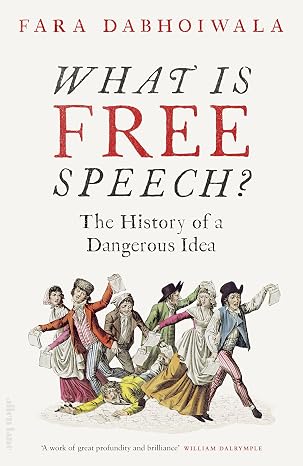
[What Is Free Speech? The History of a Dangerous Idea]
How Did Free Speech Become a Form of Power?
Free speech is remembered as a universal right won in opposition to censorship, but its actual history has been far more irregular and contradictory. Those who proclaimed liberty excluded the speech of women, enslaved people, and colonial subjects, while the oppressed later seized that same language of freedom and turned it against power. From the printing press to social media, the central question surrounding free speech extends beyond “Can people speak?” to “Whose voice is heard more loudly?”
[Key Message]
* Free speech was not born as a complete and universal right; it is a historical institution shaped by political conflict and unequal power relations.
* Those who proclaimed liberty excluded women, enslaved people, and colonial subjects, yet the oppressed later turned the same language of freedom into a weapon against power.
* Evaluating free speech requires examining not only who is allowed to speak, but also whose voice is amplified and who controls the rules of the public sphere.
* Digital platforms have expanded opportunities to speak, but algorithms and capital have created new forms of power that distribute attention unequally.
* A free society is not one that permits every form of expression without limits, but one in which diverse people can speak without fear and hold the megaphones of power accountable.
***
Freedom Was Never Absolute from the Beginning
Debates over free speech are often presented as a confrontation between freedom and censorship. One side argues that the state must not restrict citizens’ speech, while the other contends that some regulation is necessary to protect society from hatred, incitement, and disinformation. One side prioritizes freedom; the other emphasizes responsibility. In actual history, however, free speech has never been a simple matter of choosing between these two values.
No society has permitted every form of expression without conditions. Defamation, threats, fraud, perjury, the disclosure of military secrets, and market manipulation are not protected simply because they constitute speech. Courts require evidence and procedure, while academic journals demand verifiable grounds. Journalism carries responsibilities for fact-checking and correction, and even parliaments have rules governing the form and scope of speech.
The existence of rules does not make expression disappear. Appropriate rules can instead enable expression to serve its function of creating knowledge and judgment. Debate intended to discover truth, political speech intended to criticize power, artistic imagination, and commercial advertising all have different purposes. Because their purposes differ, the conditions governing freedom and responsibility must also differ.
Free speech is closer to an institution that societies have constructed for particular purposes than to a natural state that human beings have possessed in complete form since birth. It is a historical product that has been continuously adjusted through disputes over why speech should be protected, who should be allowed to speak and by what means, and who should be responsible for the harm caused by expression.
Yet modern society has developed a strong tendency to understand free speech as an absolute right that takes precedence over truth, justice, equality, and democracy. From this perspective, any restriction on speech is immediately treated as censorship. But when expression itself is elevated into the supreme objective, society loses sight of who is harmed by speech, what kind of power amplifies it, and whether socially marginalized people have a genuine ability to respond.
The assumption that free speech has always meant the same thing must therefore be reconsidered. The familiar contemporary concept was not a universal principle that remained unchanged through the ages. Different societies and historical periods constructed the meaning of freedom according to their own political needs, while later generations arranged these complex developments into a single heroic narrative of progress.
The Foundational Myth of Milton
John Milton’s Areopagitica occupies a special place in the history of free speech. Published in 1644, it is remembered as a classic that opposed the licensing of publications and defended the free competition of ideas. The belief that truth would prevail if truth and falsehood were allowed to confront one another openly has also been received as part of Milton’s legacy.
There is, however, considerable exaggeration in the interpretation of Milton as the founder of modern free speech. He opposed prepublication licensing, not every form of censorship. He did not reject punishment after publication, and he was not tolerant of religious claims that he considered dangerous or false. His arguments were far removed from the universal right to speak as it is understood today.
More important than Milton’s actual position is the way later generations remembered him. Once free speech became established as a central value of democracy, society needed a great pioneer who had advocated the same principle in the past. A complex and limited argument was reconstructed as a declaration of universal liberty, and Milton became a symbol legitimizing the historical lineage of modern liberalism.
History is often rearranged to reflect the values of the present. If a right that now appears self-evident is believed to have developed consistently from the distant past, the legitimacy of that institution becomes stronger. Such a narrative, however, obscures the fact that free speech emerged from accidental political conflicts, competing interests, and technological changes.
John Locke, Voltaire, James Madison, and George Orwell were similarly placed within a heroic genealogy of freedom. They certainly stressed the importance of free thought and criticism, but each understood the range and beneficiaries of freedom differently. Placing their arguments along a single line makes free speech appear to have been a completed principle that gradually expanded. In reality, reform and retreat, exclusion and appropriation, and unintended consequences repeatedly alternated.
The history of free speech was not a process in which philosophers discovered a principle and politicians translated it into institutions. It was a process in which the existing language of religious toleration was transformed into the language of political propaganda, the interests of publishers became intertwined with citizens’ rights, and arguments originally created for particular groups were turned into weapons that entirely different people could use.
The Printing Revolution and Cato’s Letters
Modern political free speech acquired a distinctive form in early eighteenth-century Britain. Following religious conflict and the Glorious Revolution, royal and ecclesiastical control of publication weakened, while newspapers, pamphlets, and political commentary proliferated rapidly. Printing houses, bookstores, and coffeehouses became new public forums in which political information, rumors, and arguments circulated.
Within this environment, the journalists John Trenchard and Thomas Gordon began publishing a series of essays known as Cato’s Letters in 1720. They presented the right to speak freely as a fundamental condition for protecting political liberty. Power would become corrupt unless it was criticized, they argued, and public freedom could be maintained only when citizens were able to evaluate the conduct of public officials without restraint.
The innovation of Cato’s Letters lay in transforming the language of religious conscience and toleration into a secular political right. Freedom had previously been discussed as a means of pursuing truth or avoiding religious persecution, but Trenchard and Gordon presented speaking about public affairs and criticizing rulers as rights of the citizen. They explained free expression not as a privilege reserved for a small number of scholars and clerics, but as an institution necessary for sustaining the political community.
Their arguments, however, cannot be understood solely as a pure philosophical discovery. Cato’s Letters emerged from contemporary partisan conflict, corruption scandals, and competition within the publishing market. The two journalists used the language of liberty to attack particular political forces and increase their own influence. Criticism of power was simultaneously a commitment to the public good, a political weapon, and a publishing commodity.
Even advocates of a free press did not imagine equal speaking rights for everyone. The citizen they assumed was largely a European man with property and education. Women were not recognized as independent speakers endowed with political reason, while the voices of workers and the poor were also excluded from the center of the public sphere. Cato’s Letters developed a vast philosophy of liberty, but women’s experiences and voices were almost entirely absent from it.
An even greater contradiction emerged across the Atlantic. At the same time that the language of freedom spread to the American colonies, the slave trade and slavery were also expanding. Political thinkers emphasized the rights of free citizens while maintaining a social order in which human beings could be owned and traded. Free speech was proclaimed as a universal right, but in practice race, gender, and property determined who was entitled to enjoy that right.
The printing revolution expanded opportunities to speak, but it did not make the influence of speech equal. Those who could access printing facilities, pay publication costs, and read and write dominated the public sphere. Even when legal censorship was relaxed, freedom of expression remained unequally distributed as long as education, property, and social credibility remained unequal.
Freedom Transformed Across the Atlantic
Cato’s Letters acquired even greater influence in the American colonies than in Britain. Colonial politicians and journalists used the language of freedom to criticize the British government and justify independence. The proposition that public criticism of power protected liberty combined with revolutionary political culture and became one of the intellectual foundations of the First Amendment to the United States Constitution.
Figures from the American founding era, including Benjamin Franklin, Thomas Jefferson, and James Madison, regarded the press and political speech as essential conditions of a republic. A republican government could not survive if citizens were unable to monitor their rulers and debate public affairs. The First Amendment, which prohibited Congress from making laws abridging freedom of speech and the press, institutionalized this distrust of power.
Yet the American founders did not escape the contradictions of freedom. They recognized the need for a critical press while resenting newspapers that attacked them, and they proclaimed universal rights while maintaining slavery. Those accepted as full members of the political community were primarily white men. The freedom proclaimed at the founding did not apply equally to women, Indigenous people, or enslaved people.
Free speech also emerged as a central civil right during the French Revolution. Printed publications, political clubs, and speeches in the streets became forces that helped destroy the old regime. As the revolution grew more radical and political violence intensified, however, the new authorities also suppressed the speech of their opponents. A revolutionary government founded in the name of liberty punished expressions that it believed threatened its survival, demonstrating how easily freedom and power can exchange positions.
Significant institutional experiments in press freedom were also conducted in eighteenth-century Scandinavia, including Sweden. Systems combining the freedom to publish with a right of access to government documents demonstrated a path of development distinct from the Anglo-American model. Yet whenever the political system changed, the range of freedom expanded or contracted in turn. Free speech was not an achievement that remained permanently secure once it had been obtained.
The concept of freedom that traveled across the Atlantic world was transformed according to each region’s political needs. In one place it served as a means of criticizing the monarchy and the church; in another, it became the language legitimizing a revolution for independence. Elsewhere, it became a symbol through which a newly established government displayed its civilization and legitimacy. The same words contained different institutions and interests.
These developments show that free speech did not begin with a single philosophy and then spread across the world. Reforms produced unexpected consequences, while rights created for particular groups were used by other groups in new ways. The history of free speech was not one of planned progress but of accumulated accidental change.
Imperial Freedom and Colonial Silence
Modern Europe presented free speech as evidence of civilization and progress. Yet its colonies were governed under entirely different rules. Criticism of government permitted to citizens in the imperial homeland was defined as incitement or rebellion when voiced by colonial subjects. Empires that spoke of universal freedom selectively controlled expression to preserve their rule.
British India reveals this dual structure with particular clarity. Britain promoted a free press and the rule of law as evidence of the superiority of its political system, but imposed strict restrictions on Indian newspapers and political publications. When colonial subjects criticized imperial rule and racial discrimination, their speech was treated as a threat to public order and security.
John Stuart Mill was among the most prominent thinkers to argue that open discussion enables the discovery of truth and the advancement of society. Even mistaken opinions had to be refuted openly, he believed, if correct claims were to remain living truths. If opposing opinions were excluded, even truth would harden into unexamined doctrine. This argument remains one of the strongest foundations of modern theories of free speech.
Mill’s theory of liberty nevertheless contained colonial limitations. He placed European societies at the forefront of civilizational development and regarded colonial subjects as people who had not yet reached the stage of free self-government. Freedom was presented as universal, but a society’s supposed level of civilization determined who was qualified to enjoy it fully.
This does not mean that free speech functioned only as an ideology of imperial rule. Indian intellectuals, journalists, and independence activists turned Britain’s own principles of liberty against the empire. If Britain regarded a free press as a central mark of civilization, they argued, it had to recognize the same right for Indians. Language used to justify imperial power became a weapon for exposing the hypocrisy of colonial rule.
This example reveals the dual character of free speech. The language of liberty can be used by the powerful to legitimize their authority, but the weak can also seize that same language and use it against power. The fact that freedom had unequal origins and the fact that it later became a tool of liberation can both be true.
Free speech therefore cannot be understood only as a slogan of the powerful. For journalists who exposed corruption under repressive governments, activists who condemned racism and sexism, and dissidents who resisted dictatorship, the freedom to speak was a matter of life and death. Exposing the historical hypocrisies of liberty must not become an argument for diminishing the importance of the right itself.
The Marketplace of Ideas and the Megaphone of Capital
During the nineteenth and twentieth centuries, the belief that open debate was the best means of discovering truth developed into the concept of the “marketplace of ideas.” Rather than allowing governments to decide which opinions were correct, different claims would compete openly and citizens would reach better judgments.
This principle played a powerful role in resisting authoritarianism and political repression. The belief that even ideas that appeared offensive or dangerous should be tested through open rebuttal rather than prohibited by the state protected minority opinions, dissident ideologies, journalism, and artistic expression.
The competition of ideas cannot be fair, however, when its participants do not possess equal resources and influence. Groups that own capital and media institutions can repeat their messages more frequently and distribute them more widely. Even when opponents possess a formal right to speak, free competition remains nominal if their views cannot actually reach an audience.
In the late twentieth century, the First Amendment developed into an exceptionally strong legal protection in the United States. The state was not supposed to interfere with the content of speech, and even hateful or offensive ideas were broadly protected unless they caused a direct and imminent danger. As a shield against state censorship, this doctrine carried profound importance.
Reducing government intervention alone, however, does not guarantee a free public sphere. In an environment where large media corporations, the advertising industry, and digital platforms control the circulation of information, private power can wield influence comparable to that of the state. The authority to determine what is reported, recommended, and repeatedly displayed has not disappeared; only the institution exercising it has changed.
Social media opened a space in which more people than ever before could speak. In the past, messages had to pass through the gates of newspapers, broadcasters, and publishers before they could reach a mass audience. Individuals can now distribute opinions and videos to the world. Marginalized groups have also gained greater opportunities to publicize issues ignored by established media and build solidarity.
The expansion of opportunities to speak is not the same as equality of influence. Not every post receives equal exposure on a platform. Recommendation algorithms prioritize content that increases users’ attention and reactions. Posts that generate anger, fear, or shock spread faster than careful explanations. Users produce the speech, but algorithms distribute attention.
Platform companies claim to be neutral channels, but in practice they function as the most powerful editors in the world. They decide not only what content to delete, but also what to recommend and what to make invisible. These decisions are made not through public editorial meetings, but through opaque algorithms and corporate commercial objectives.
A technology company owner who strongly advocates free speech while simultaneously controlling the platform’s rules and algorithms embodies a modern paradox. Even if that owner criticizes regulation in the name of freedom, the freedom involved is not neutral if the owner can increase or reduce the visibility of particular speech at will. It is necessary to distinguish whether the language of free speech is protecting citizens’ rights or legitimizing private power.
A Dangerous Idea and a Necessary Right
The argument that free speech has been exploited by power and capital invites a powerful counterargument. The hypocrisy of those who defended liberty does not prove that the principle of freedom itself is wrong. John Stuart Mill’s colonial prejudices do not invalidate the value of open discussion, while the American founders’ acceptance of slavery does not erase the later importance of the First Amendment in protecting minorities and dissidents.
Historically, free speech has been both a weapon of power and a weapon used by the weak against power. Empires used the language of liberty to present themselves as civilized rulers, while colonial subjects used the same language to demand independence. Large media corporations invoked freedom of the press to protect their commercial interests, while investigative journalists and whistleblowers relied on that freedom to expose government and corporate corruption.
Caution is also necessary when regulation is expanded on the grounds that free speech operates unequally. Measures introduced to prevent hatred and disinformation can become tools for suppressing criticism of governments and minority opinions. If the state monopolizes the authority to determine what is true and what is dangerous, freedom can rapidly contract. There is no guarantee that regulatory powers will be exercised only by well-intentioned governments.
At the same time, an absolutism that recognizes no restrictions cannot protect the public sphere. Organized disinformation, threats, and repeated incitement to hatred can silence other people and obstruct democratic judgment. Even when everyone is formally granted the same freedom, substantive liberty becomes unequal if groups possessing capital and technology monopolize overwhelmingly powerful megaphones.
What is needed is not a choice between freedom and regulation, but the creation of conditions under which freedom can function. Governments must be prevented from arbitrarily punishing critical views, while platforms must be required to provide transparency about algorithms and advertising systems. Regulatory standards must be clear, and both decision-making processes and appeals procedures must be open. The independence and diversity of the media, along with citizens’ media literacy, must also be strengthened.
To evaluate free speech properly, society must move one step beyond the question “Can people speak?” It must also ask who receives opportunities to speak, who is heard most loudly, who bears the cost of silence, and who controls media institutions and algorithms. At the same time, the value of the right must not be diminished simply because its history is imperfect and it can be misused.
Free speech is not a completed answer but a tension that society must continually adjust. A public sphere without rules can become a place where the influence of the powerful expands in the name of freedom. An excessively controlled public sphere can become a place where voices inconvenient to authority are removed. Democracy must continuously redefine the purposes and limits of freedom between these two dangers.
A free society is not one in which words pour out without limits. It is a society in which different people can speak without fear, dispute one another through evidence, and scrutinize the megaphones of power. Free speech should not be a principle that gives an even stronger megaphone to those who already possess the loudest voices. It should be a right that enables voices not yet heard to reach the public sphere.

.jpg)
.jpg)
.jpg)