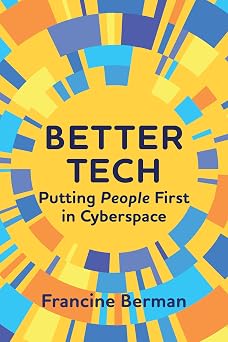
[Better Tech: Putting People First in Cyberspace]
An Algorithm Can Be More Dangerous Than a Crumbling Bridge
- The Conditions for Technology That Puts People First Rather Than Merely Becoming Smarter
When cracks appear in a bridge, a city closes it to traffic and investigates the cause. When cracks appear in an algorithm influencing the judgment of millions, however, the first response is often a notice describing the incident as a ?쐔emporary error.??Technology functions as more than a convenient tool. It has become an invisible infrastructure through which daily life, the economy, and democracy move. The time calls for prevention during design rather than apologies after accidents, and for innovation people can trust rather than innovation valued only for its speed.
[Key Message]
* Digital technology is critical social infrastructure. Social media, search engines, and AI chatbots shape people?셲 judgments and opportunities. They should meet the same standards of safety, reliability, and accountability expected of roads and power grids.
* More powerful technology is not necessarily better technology. Greater performance and convenience can still amplify privacy violations, bias, and misinformation. Technology should be evaluated by its impact on people and communities rather than by speed alone.
* Prevention during design matters more than apologies after harm. Risks should be examined throughout design and development, not only after a product is released. Companies need a standard for a ?쐌inimum safe product??as well as a minimum viable product.
* Technology ethics requires structures of accountability. Fairness, transparency, and safety must influence actual products and management decisions. Users should have the right to receive explanations and challenge automated decisions.
* Human-centered technology requires shared responsibility. Neither voluntary corporate action nor government regulation is sufficient on its own. Companies, governments, universities, civil society, and users must share authority and responsibility.
***
The Toll Collected by Free Services
People wake in the morning and check their smartphones before looking at the weather outside. Search boxes answer their questions, social media connects them with friends and the wider world, and AI chatbots respond to queries and draft documents. On the surface, all these actions appear to be matters of free personal choice. Behind the screen, however, recommendation algorithms decide what users will see next, advertising systems calculate which desires to stimulate, and data analytics tools continuously classify their interests and anxieties.
While people use online services, those services use people as well. Platforms provided free of charge collect users??time and behavioral data like a toll. The order of search results determines which knowledge appears important, while recommendation feeds test whether anger or curiosity will keep people engaged longer. AI chatbots respond in friendly, polished sentences, but they rarely reveal what information and reasoning processes produce those answers.
Technology companies explain that platforms merely show users content they are likely to enjoy, search engines merely organize information, and AI merely generates sentences based on learned patterns. Yet ?쐗e merely show it??is no longer an adequate defense. Choosing what appears first, what remains hidden, and whose voice receives greater amplification already constitutes an exercise of social power.
The problem begins not with technological performance itself but with the standards used to evaluate it. Faster chips and larger AI models process more tasks, but they do not automatically create a better society. As performance increases, errors and harm can also spread faster and more widely. The practice of measuring technological progress only by computing speed, user numbers, and time spent must change. Whether technology protects people and benefits communities must also become part of its performance report.
Platforms That Have Become Roads and Power Grids
Even a single bridge is built according to load calculations and safety standards. Automobiles must pass crash tests, and medicines must be evaluated not only for effectiveness but also for side effects. Food labels disclose ingredients and allergy information, while electricity providers are expected to prepare for the risk of outages. The more important a system is, the less likely it is to be operated under the principle of ?쐄ix it when something goes wrong.??The possibility of an accident is calculated in advance, and both the responsible party and the recovery procedure are established before an incident occurs.
The digital world follows a different practice. Services intended for hundreds of millions of users are released first, and their risks are discovered only after a vast experiment involving society as a whole has begun. Their effects on children and adolescents, the possibility of personal-data leaks, the spread of false information, and biased automated decisions are discussed only after products have penetrated deeply into everyday life. The burden of proving harm also falls on users. Companies celebrate the speed of innovation, while society belatedly clears away the debris left behind by that speed.
Social media, search engines, and AI chatbots are critical infrastructure comparable to roads and power grids. These services influence not only where people go but also what they believe, whom they form relationships with, and which opportunities they receive. When search stops working, access to information is disrupted. When a platform changes its policies, the livelihoods of countless creators and businesses are affected. Errors made by AI can extend beyond a wrong answer on a homework assignment and enter decisions involving hiring, finance, healthcare, education, and public administration.
Even so, digital services are not subject to public obligations as strong as those imposed on conventional infrastructure. When a platform company changes its terms of service, citizens click ?쏛gree??without any opportunity to negotiate. When accounts are suspended or opportunities are blocked by an algorithmic decision, users find it difficult to obtain an explanation. Modern citizens travel digital roads every day, but the traffic signals and rules governing those roads are decided in the closed meetings of private companies.
Technological Beasts on the Loose
Technology is not inherently good or evil. The direction in which powerful technology moves depends on the incentives surrounding it. On platforms dependent on advertising revenue, behavior that keeps people engaged for longer periods is recorded as good performance. Shocking claims produce more clicks than calm explanations, conflict outperforms agreement, and anxiety proves more profitable than satisfaction. Algorithms do not attack human weaknesses because they hate people. They simply and faithfully increase the numbers they have been instructed to measure.
The harmful effects of technology are not accidental exceptions but structural by-products flowing from business models. Excessive collection of personal information produces more precisely targeted advertising, while provocative recommendations increase time spent on a service. Automated decisions lower costs, but they also reduce the number of channels through which people can challenge a wrong decision. There is no guarantee that technology efficient for a company will also be good for its users.
AI chatbots make the problem even more complicated. Search engines present multiple links, while generative AI produces a single, polished answer. Even incorrect information can be expressed in confident sentences. People can easily feel that a machine understands their question and reaches a judgment, but fluency is not the same as truthfulness. As conversational interfaces become friendlier, the uncertainty behind them becomes harder to see and the level of trust placed in them increases.
Children and vulnerable users find it even more difficult to recognize the limitations of AI. When an AI system gives inaccurate or dangerous answers to questions involving emotional crises or health problems, the sentences on the screen become more than simple errors. They become interventions capable of changing real-world behavior. It is difficult to conclude that responsibility has been fulfilled merely by attaching a brief warning stating that the output is ?쐍ot professional advice.??An automobile manufacturer would not escape responsibility simply because it disclosed a defect in the braking system in small print.
Prevention Cheaper Than an Apology After an Accident
The digital industry has long treated the practice of launching first and fixing later as a virtue. A development culture has taken hold in which products are built quickly, users??reactions are observed, and problems are corrected when they appear. That approach can be effective for a small feature or an entertainment service. In a system affecting millions of lives, however, the meaning of an ?쐃xperiment??changes. Users become subjects in tests to which they have never consented, while the cost of failure is pushed outside the company.
What is needed is prevention during design, not an apology after an accident. Detecting and reducing risk while a product is being created is far less costly to society than repairing damage after harmful consequences occur. Avoiding the collection of unnecessary personal information, conducting advance testing with vulnerable groups, ensuring that a human reviews challenges to important automated decisions, and clearly explaining a system?셲 purpose and limitations are the starting points of prevention.
Prevention does not mean stopping innovation. Building codes have not eliminated buildings, and food-safety standards have not destroyed the food industry. In the same way, technological safety standards do not prevent innovation itself. Technology can receive lasting support from society only when people are able to use it with confidence. Framing safety and innovation as opposing forces merely provides a convenient way to turn corporate responsibility into a matter of consumer choice.
Technology companies need a standard for a ?쐌inimum safe product??alongside the minimum viable product. They must examine not merely whether a function works but also who might be harmed by it. A report showing high average accuracy is not sufficient. Companies must also measure whether errors are concentrated among particular groups, whether the damage caused by failure can be reversed, and whether users can challenge an automated decision.
Structures of Accountability Beyond Ethical Declarations
Words such as fairness, transparency, safety, and human-centered design appear in nearly every corporate ethics report. Yet such principles remain decorative if they lack the authority to delay a product launch or modify a revenue target. Technology ethics is not merely a matter of hiring good people and publishing an impressive declaration. It is a matter of changing the decision-making structure so that a person who discovers a risk can press the stop button.
Creating responsible technology requires participation from legal experts, social scientists, and affected communities from the earliest stages, alongside product managers, engineers, and designers. Conducting an ethical inspection only after a product has been completed is too late. Just as an emergency exit cannot simply be drawn onto a building after construction has finished, safety and rights must be built into the structure of technology from the beginning.
Performance indicators must also change. If companies measure only subscriber numbers, time spent, and click-through rates, their organizations naturally move toward capturing more human attention. Management metrics must include the speed at which safety reports are handled, the extent to which personal-data collection is reduced, whether harm to vulnerable users declines, and whether explanations and appeal procedures are properly provided.
Executives and boards of directors can no longer treat technological risk as a technical detail belonging to development teams. Large-scale personal-data leaks, discriminatory algorithms, and child-safety failures do more than damage corporate reputations. They are management risks capable of triggering regulation, lawsuits, customer departures, and talent loss at the same time. Human-centered technology is closer to a long-term corporate survival strategy than to a charitable activity or publicity campaign.
Change That Regulation Alone Cannot Complete
Waiting for voluntary improvements from companies is not enough. Markets do not automatically incorporate social harm into prices. The cost of false information to democracy and the burden that addictive design places on adolescent mental health remain outside corporate financial statements. Public intervention is necessary when companies collect the profits while society carries the costs.
Yet passing a single law does not solve the problem. Technology changes rapidly, and rules that are excessively specific can become outdated by the time they take effect. Even a law that appears powerful cannot be enforced if regulators lack technical expertise and investigative authority. Oversight can easily become a formal exercise if authorities are forced to judge safety solely on the basis of information submitted by companies.
Effective policy must require both accountability for outcomes and procedural obligations. High-risk systems need advance assessments and independent audits, serious incidents must be reported, and harmed individuals must be able to demand explanations and remedies. Regulators need the capacity to update standards as technology evolves. Incentives must also be designed so that companies benefit more from discovering and disclosing risks early than from concealing them.
Laws and regulations are necessary, but they are not sufficient. Universities must teach engineers not only how to code but also how technology affects society. Investors must examine risk-management capabilities alongside growth rates, and public agencies must not purchase opaque systems merely because they are inexpensive. Citizens must also participate as stakeholders capable of demanding the conditions under which technology operates, rather than remaining passive consumers of convenience.
Public Interest Technology That No One Can Build Alone
Public interest technology does not refer only to technology created by governments. It encompasses every approach that combines technological expertise with social responsibility to expand the public good. Even a service developed by a private company can serve the public interest if it places people?셲 rights and safety at its center. Conversely, a system adopted by a public agency can hardly be called public interest technology if it remains opaque and discriminatory.
Drawing on mathematics and computer science, Francine Berman has led the construction of national-scale cyberinfrastructure and has researched digital data preservation and the social effects of the Internet of Things. She is both a scientist who understands the inner workings of technology and a policy expert who explores the institutions and responsibilities that technology requires in society. The argument carries particular weight because it emerges not from an outside rejection of technology but from direct experience in building and operating large-scale technological systems.
Public interest technology cannot be completed by a single heroic developer. Governments, companies, universities, civil-society organizations, and users must divide the responsibilities among themselves. Companies must disclose the risks of their designs and operations, governments must establish minimum safety boundaries, and researchers must verify their effects independently. Users must possess a meaningful right to report harm and challenge decisions.
The most important element in this collaboration is a balance of power. If companies monopolize information, governments and citizens cannot evaluate risk. If governments use surveillance technologies without limits, citizens??rights can be violated in the name of the public interest. Nor can all responsibility be shifted onto citizens who lack technical expertise. Technology that puts people first emerges from structures in which oversight and checks, explanations, and remedies are possible?not from goodwill alone.
The Questions That Must Follow Convenience
When encountering new technology, people usually ask first what it can do. Attention focuses on how fast it is, how much work it can automate, and how much money it can save. The order of the questions must now change. People must first ask who receives the benefits, who carries the risks, who takes responsibility when a system fails, and whether users can refuse or challenge its decisions.
These questions are not intended to make people afraid of technology. They raise the standard for technology rather than lowering expectations for it. People expect automobiles not only to be fast but also to be safe, and they demand that medicines be both effective and thoroughly tested. The same expectations can be applied to digital technology. This is necessary not because internet companies are uniquely evil, but because they have become important enough to operate society?셲 core infrastructure.
In an era when technological success is calculated only by the number of users, services that hold people?셲 attention for longer periods become the winners. In the future, higher value must be placed on technology that delivers necessary functions without damaging people?셲 lives. The freedom to leave a service, the freedom not to surrender personal information, and the freedom to refuse an automated decision must also be regarded as aspects of product quality.
Better technology is not a perfect invention that will arrive on some future day. It is the result of institutions that identify risks before release, measure problems during operation, and explain and correct the harm that occurs. The direction of technology is not determined by code alone. Corporate business models, government rules, independent research, and citizens??demands all move the code together.
When a bridge collapses, no one blames only the walking habits of the people who crossed it. When a power grid fails, residents are not told that they should have trusted electricity less. If society uses digital technology as infrastructure, it must also demand a corresponding level of safety and responsibility. The necessary change is not about making technology appear more human. It is about making the institutions and organizations that create and operate technology accept responsibility toward human beings.

.jpg)
.jpg)
.jpg)