Who Does Economics Speak For?
- The radical economists of 1968 tried to turn the language of numbers into a language of power and democracy
[Key Message]
* Change in economics does not begin only with new theories. The map of the discipline changes the moment economists change what they study and whose experiences they recognize as economic problems.
* The radical economists of 1968 did not see economics as neutral expertise separated from society. They tried to connect research, education, and civic participation into a single flow.
* The experiences of women, Black people, workers, and the urban poor began to move from the margins of economics toward the center. Labor markets and discrimination, education, and corporate power were no longer secondary concerns.
* As the doors of academia narrowed, radical economics expanded into labor unions, civic organizations, popular publishing, and policy research. Outside the academy became, in many ways, a laboratory for producing new economic knowledge.
* The most enduring legacy was not a single economic theory but a new imagination of what an economist could be. It was the idea that economics could define problems together with citizens rather than simply handing down answers from experts.
When 1968 Burst into the Economics Classroom
American university campuses were anything but quiet in 1968. Antiwar protests over the Vietnam War swept across campuses, and students began asking how deeply universities were connected to government, military policy, and corporate power. History and sociology were not the only disciplines shaken by the turmoil. The noise of the times also pushed its way through the doors of economics classrooms, just as economics was rising to the center of the social sciences with its cold numbers and increasingly sophisticated models.
Around that time, young economists and graduate students in Ann Arbor, home to the University of Michigan, organized the Union for Radical Political Economics. The name sounded grand, but their starting point was surprisingly simple. Economics could calculate growth rates well, measure inflation and unemployment with precision, and yet it seemed much less capable of explaining why Black workers were systematically placed at a disadvantage, why women’s unpaid household labor remained largely invisible in economic activity, or why some poor communities remained trapped in poverty for decades. The economy shaped people’s entire lives, yet economics seemed to leave people standing behind the numbers.
The questions they asked were more direct than any complex equation. When the economy grows, who receives the gains? When a market is said to be efficient, efficient for whom? When the labor market is said to have reached equilibrium, are there people who remain disadvantaged beneath that equilibrium? They were not arguing that economics should abandon calculation. They were asking economists to reconsider what should be calculated and what should count as an economic problem.
That difference may sound small, but it could shake the whole discipline. Change what is measured and the shape of the problem changes; define the problem differently and policy changes with it. By shifting the lens of economics only slightly, the experiences of workers, women, minorities, and local communities?previously blurred into the background?could suddenly move into the center of the frame. The story of radical economics begins with precisely this movement of the lens.
Are Numbers Really Neutral?
Economics has long tried to distinguish value judgments from factual analysis. The idea is that explaining how an economy actually works is different from arguing about what kind of society is desirable, and that economists should focus, as much as possible, on the former. For a discipline aspiring to scientific rigor, this is a natural principle. But radical economists pushed the argument one step further and asked whether choosing what to study could ever really be free of value judgments.
What if unemployment is calculated in detail every month, while almost no attention is paid to who has the power to give orders inside the workplace? What if corporate productivity and profit margins are examined meticulously, while child care and household care work are pushed outside the boundaries of economic activity? What if wage differences are explained in terms of education and skill while structural discrimination by gender and race is treated as a peripheral variable? The statistics may be accurate, but important parts of reality can still disappear from view.
Radical economists did not reject numbers. They tried to expand the world those numbers could reveal. In labor markets, they argued that economists should examine not only wages and employment but also differences in power between workers and firms. In education, the question was not only how much more income a person could earn after schooling, but also who had access to good education in the first place. Firms, too, needed to be seen not merely as machines that efficiently combine inputs, but as organizations in which some people give orders and others are expected to follow them.
Once the lens moved slightly to the side, the landscape of economics changed dramatically. Power, discrimination, and organizational hierarchy?issues that had often been pushed toward sociology or political science?began entering economic analysis. The major challenge of radical economics was not the invention of one new formula. It was the act of pointing toward places conventional economics rarely looked and saying, “That, too, is economics.”
Trying to Change the Profession?and Discovering Its Power
Young radical economists did not confine themselves to writing papers in their offices. They believed that changing the content of economics also required changing the institutions that governed the discipline. Who gets hired as a professor, which papers are published in prestigious journals, who is given the chance to speak at academic conferences, and which research topics are recognized as important?these, they believed, revealed another kind of power shaping the direction of economic knowledge.
By the late 1960s, conflict was also emerging inside the American Economic Association. Radical economists demanded broader perspectives in the association’s governance, faculty hiring, and journal editing. Women economists raised especially sharp questions. If economics studied discrimination against women in labor markets while accepting the low status of women within its own departments and professional community as normal, then what exactly did the discipline’s claims to objectivity and fairness mean?
The subjects economists studied and the realities economists themselves lived began to collide. Could a discipline analyze discrimination in labor markets while ignoring discrimination in its own hiring practices? Could economists study power in society while refusing to examine power inside their own profession? Changing a discipline no longer meant simply writing one more good paper. It meant asking who could become an economist and what kinds of questions would be recognized as legitimate economics.
Mainstream economics did not simply applaud and make room. Many influential economists questioned whether radical economics had produced enough distinctive theory and empirical work to justify calling itself a new academic paradigm. Others argued that issues such as inequality, labor, and discrimination could already be studied using existing economic tools and that there was no need to divide the discipline into opposing camps.
The core of the disagreement gradually became clearer. The mainstream position was that recognizing the need for new questions was not the same as needing a new economics. Radical economists responded that even if the same analytical tools were used, a discipline could become fundamentally different depending on which problems it chose to treat as important. The conflict over economics was moving beyond the correctness of equations toward a struggle over which reality economists should choose to see.
Becoming a Professor Was Harder Than Starting a Revolution
Young economists determined to change the world soon encountered a surprisingly practical problem: getting a job. Wanting to transform economics and obtaining a faculty position and tenure at an American university were very different matters. Some radical economists argued that their political views were hurting them in hiring and promotion, and the profession began debating whether political discrimination actually existed inside academia.
The problem was difficult to prove. It was not easy to determine whether a scholar had failed to get a job because of weak academic performance or because of political beliefs, and faculty selection involved many layers of judgment. Even so, the experience was powerful for radical economists. People who studied markets and power found themselves directly confronting inequalities of opportunity and power within the academic world they inhabited.
Some scholars who failed to secure positions at elite universities moved elsewhere. Places such as the University of Massachusetts Amherst and the New School became important centers where economists could study and teach approaches outside the mainstream. They had been pushed away from the center, but they did not disappear. In relatively freer environments, they could pursue research on labor, class, gender, and institutions more aggressively.
The history of a discipline is often written around famous universities and prestigious journals. Yet genuinely new ideas sometimes grow in places slightly removed from the center. In spaces where scholars do not have to smooth every sharp edge to satisfy mainstream gatekeepers, new courses, textbooks, research topics, and intellectual communities can emerge. The history of radical economics also shows that being on the academic periphery does not necessarily mean being on the intellectual periphery.
Putting Power into the Labor Market
In economics textbooks, labor markets look relatively neat. Firms hire workers, workers offer their labor, and wages are determined where labor supply and demand meet. But the picture becomes much more complicated when we think about an actual job interview. Are the interviewer and the applicant really negotiating from equal positions?
The applicant needs a paycheck. Rent has to be paid and living expenses covered. The firm, meanwhile, may choose from several applicants and can sometimes delay hiring altogether. If a company announces that it will move a factory to another region, workers cannot simply leave their homes and families behind and follow. The bargaining position of a worker in a unionized workplace may also differ dramatically from that of a worker without union representation.
This was the kind of power radical economists tried to put explicitly into labor-market analysis. Wages, they argued, were shaped not only by individual productivity and education, but also by bargaining strength, race, gender, union presence, and hierarchy within firms. If market outcomes are understood only as the equilibrium generated by free individual choices, economists may miss the question of who possessed more choice on the way to that outcome.
They also challenged the idea that there was only one labor market. Stable jobs with high wages and opportunities for advancement could form one track, while low-wage and insecure jobs formed another. Some workers could accumulate experience and move steadily into better positions, while others might spend years cycling through similarly low-paid work. If those differences could not be explained by effort and ability alone, then economists had to examine the structure of the labor market itself.
Education faced the same kind of scrutiny. The argument that more schooling increases productivity and income remained important, but radical economists also asked who had access to good schools and how evenly educational opportunities were distributed. While economics calculated how much more income education could generate, radical economists added another question: Why do people begin the race from different starting lines?
The Moment Women’s Work Disappeared from the Numbers
When the women’s movement met radical economics, the boundaries of economics expanded once again. Caring for children at home, cooking for a family, doing laundry, and cleaning clearly require time and labor. Yet if the same person performs those tasks in another household for pay, the activity is recorded as economic work, while much of the same work disappears from the statistics when it takes place inside one’s own home. The economic visibility of identical activity changes depending on whether money changes hands.
That creates an uncomfortable question. Does economic value exist only when the market assigns a price to something? Paid work outside the home could hardly function without the household labor and care work that sustain daily life, so why had economics treated these activities as marginal for so long? Women economists and the women’s movement pushed into this gap, bringing not only wage inequality but also care work, household labor, occupational segregation, and unequal promotion opportunities into economic analysis.
The significance of this change went far beyond adding one more research topic. Basic definitions of what counted as labor and production were being challenged. If activities outside the market strongly shaped people’s economic opportunities, income, and participation in paid work, then those activities also belonged inside economic analysis.
Today, gender wage gaps, the care economy, career interruptions, and women’s participation in labor markets are major topics for governments and international organizations. Yet questions that now appear obvious were not always at the center of economics. To find the traces of radical economics, it is more revealing to look not at how often the name of a particular school appears in textbooks, but at how many issues once dismissed as not economics have since become ordinary objects of economic research.
When the University Doors Closed, Economics Went into the Streets
As change within academia proved slower than expected, some radical economists turned outward. Once they did, they discovered that many people outside the university badly needed economic knowledge. Labor unions had to read corporate financial statements when management claimed that business conditions were too difficult to allow higher wages. Local residents needed to understand how large development projects would affect jobs, rents, and municipal finances. Women’s organizations needed data and analysis to support campaigns for equal pay and against employment discrimination.
The relationship between economists and citizens also began to change. In the conventional model, experts defined the problem, conducted the research, and then explained the results to the public. In the new experiments, workers and activists often posed the question first, and economists helped analyze it. They investigated together whether a company was really losing money, whether there was a genuine economic reason to close a factory, and who would actually benefit from urban redevelopment.
This also changed the meaning of economic education. Simply translating difficult economics into easier language was no longer enough. It was not sufficient for citizens merely to understand what experts were saying; they needed to be able to ask economic questions themselves, read evidence, and test claims. Economics was not supposed to exist only for solving exam problems. It could become a tool for interpreting the economic decisions that shaped everyday life.
In 1974, radical economists in Boston launched the economic current-affairs publication Dollars and Sense. It covered inflation, wages, corporate power, labor disputes, and the international economy while translating specialized economic questions into language ordinary readers could use. When economic news said that prices were rising, the publication asked why. When companies demanded wage cuts, it examined their financial condition. When governments argued that a policy was necessary for growth, it asked who would receive the gains.
The role of the economist changed with it. Economists became less like authorities who possessed the correct answer and more like translators who helped people understand and evaluate complex economic events. They had to explain why an issue mattered without hiding behind equations or technical jargon. If economics was to meet the public, economists themselves had to change how they wrote and spoke. The world outside the university was not simply a refuge; it became another laboratory for testing new ways of using economic knowledge.
Economic Democracy Can Democracy Exist Inside the Company
From the 1970s onward, radical economists increasingly moved into policy institutes and civic organizations. New groups emerged to study government budgets, labor policy, women’s economic status, and regional development, and some economists began combining research with activism and policy work. Within this movement, the idea of economic democracy took on a more concrete form.
The question was not difficult to understand. Is democracy necessary only in the voting booth? People can elect presidents and legislators, yet they may have almost no voice in the major decisions made by the company where they spend most of their waking hours. If a factory closes or moves to another region, workers and local communities can see their lives transformed, even though the decision may be made by a small group of executives and investors.
Local development raises a similar issue. Large projects can change housing prices, rents, transportation, and employment, but residents may not learn the details until most of the plan has already been decided. The idea of economic democracy began from the belief that, just as political democracy gives citizens a voice in public decisions, more people should also have a voice in decisions that shape workplaces, firms, and local economies.
The economist again occupies a different position in this model. Rather than designing a finished policy and then explaining it to citizens, the economist provides data and analytical tools so that citizens and workers can develop policy alternatives of their own. Expertise does not disappear. Its purpose changes. Instead of saying you cannot understand this without me, the expert says I will give you the knowledge you need so that you can make your own judgment.
This was not an attempt to eliminate the authority of economists. The ability to read and analyze complex economic data remained important. But that ability did not have to serve as a credential for standing above citizens. It could instead help citizens understand economic problems for themselves. Democratizing economics, in this sense, did not mean getting rid of economists. It meant widening the circle of people able to use economic knowledge.
They Did Not Defeat the Mainstream but Their Questions Survived
If the history of radical economics is judged only by who won, the result does not look especially triumphant. It did not overthrow mainstream economics, and economics textbooks were not rewritten entirely around radical economics. The world’s leading economics departments were not reorganized around a new ideology, and the label radical economics itself gradually lost much of the prominence it had enjoyed in the 1960s and 1970s.
Does that make it a failed movement? The story changes at this point. The name of the school faded, but many of its questions moved toward the center of economics. Gender wage gaps and labor-market discrimination are now major research topics. So are educational inequality and intergenerational mobility, corporate market power, workers’ bargaining power, and disparities in income and wealth.
It would be wrong to say that all these changes happened because of radical economics. Economics contained many research traditions, and new data and analytical methods also developed rapidly. Yet it is striking that issues once treated as peripheral moved into the center of the discipline. Radical economists mattered less because they supplied final answers than because they expanded the set of questions economics was willing to ask.
That raises an interesting way of judging intellectual success. Is success having the name of your school placed on the first page of a textbook? Or is it having your questions absorbed into the research of rivals and later generations until those questions no longer seem radical at all? By the second measure, the history of radical economics looks very different. Perhaps the most successful radical questions are precisely the ones that become so ordinary that no one remembers how radical they once seemed.
Why Radical Expectations Feels Relevant Again Today
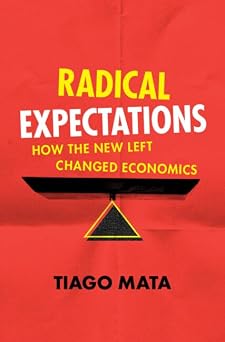
The word radical in the title Radical Expectations can sound like a declaration in favor of an extreme society. But the more important word may actually be expectations. It refers to the belief that existing economic institutions, academic disciplines, and relationships between experts and citizens do not have to remain forever as they are.
Universities can change, and the research agenda of economics can change. Workers can have more voice in corporate decision-making, and structures that make it harder for women and minorities to become economists can also change. The relationship in which experts decide everything on behalf of citizens can give way to one in which experts and citizens define problems together. The very belief that reality could take a different form was, at the time, itself a radical expectation.
Half a century later, these questions feel remarkably familiar. Society is once again asking economists how artificial intelligence will transform jobs, whether platform workers should be treated as employees or independent contractors, who benefits and who bears the burden when housing prices rise, and who should pay more of the cost of responding to climate change. The amount of data available for analysis is incomparably greater than it was in 1968, and computational power is vastly stronger, but numbers alone still cannot determine which questions deserve to be asked first.
That is why the debates of 1968 do not end as faded scenes in an old photograph. Arguments continue over what should be measured, whose experiences should count as economic problems, who gets to define those problems, and whom expert knowledge is ultimately meant to serve. The technical capacity of economics has advanced enormously, but there is still no single answer to the question of whom economics should look toward.
The radical economists did not succeed in transforming the entire discipline into the world they imagined. But they knocked on the door of economics and left behind a question that has proved difficult to erase. Is it enough to calculate the numbers more accurately, or must economics also look at the people and power relations behind those numbers? What Radical Expectations revives is not merely the memory of an old school of thought, but an enduring expectation that economics can learn to see more of the lives it seeks to explain.