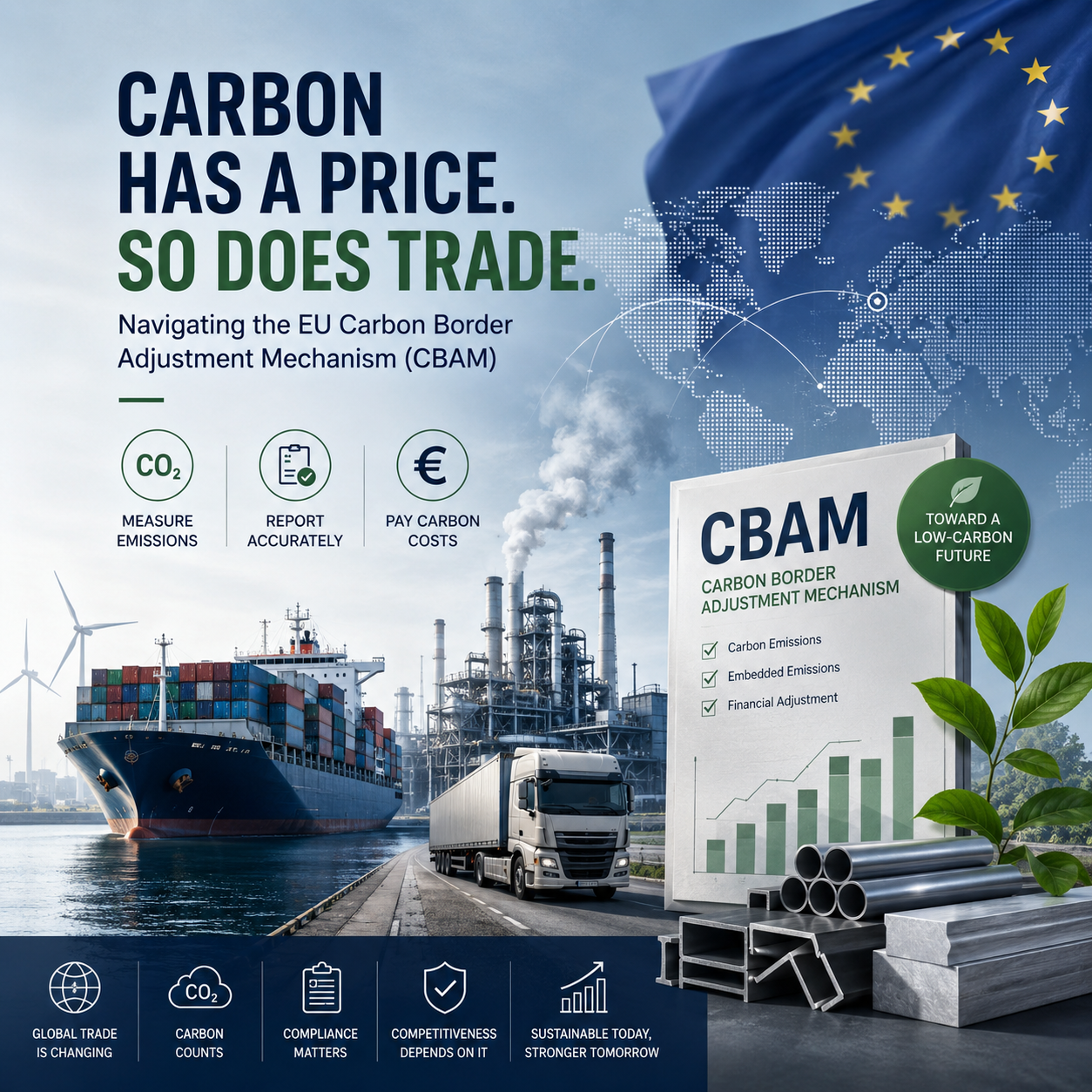
탄소는 더 이상 환경 보고서 속에 머무는 숫자가 아니다. 탄소국경조정이 본격 단계에 들어서면서 제품 안에 숨어 있던 배출량은 실제 비용이 되고, 수입기업의 조달·가격·공급망 전략을 흔드는 핵심 변수가 되고 있다. 이제 기업 경쟁력은 싸게 만들고 빨리 파는 능력만이 아니라, 얼마나 낮은 탄소로 생산하고 이를 정확히 증명할 수 있는가에 달려 있다.
[Key Message]
* 탄소는 더 이상 환경 보고서 속 숫자가 아니라 실제 무역 비용이 되고 있다. 탄소국경조정이 본격화되면서 제품 생산 과정에서 발생한 배출량은 가격, 계약, 조달 전략에 직접 반영되는 비용 항목으로 바뀌고 있다.
* 기업 경쟁력은 가격과 품질을 넘어 ‘탄소를 증명하는 능력’으로 확장되고 있다. 앞으로는 싸게 만들고 빨리 공급하는 것만으로 충분하지 않다. 제품의 탄소 배출량을 정확히 측정하고, 검증 가능한 데이터로 제시하는 능력이 거래 신뢰의 핵심이 된다.
* 탄소국경조정의 부담은 수입기업을 넘어 공급망 전체로 확산된다. 직접 의무는 수입기업에 부과되지만, 실제 대응은 해외 생산업체, 원료 공급업체, 중간재 기업까지 연결된다. 탄소 데이터 제공과 저탄소 생산 능력이 새로운 거래 조건이 된다.
* 한국 수출기업은 탄소를 새로운 무역 장벽이자 산업 전환의 신호로 받아들여야 한다. 철강, 알루미늄, 배터리 소재, 기계·부품 산업은 탄소 비용과 배출량 검증 요구의 영향을 받을 수 있다. 저탄소 공정과 재생에너지 조달은 선택이 아니라 수출 경쟁력의 조건이 되고 있다.
* 탄소 대응은 규제 회피가 아니라 미래 시장을 지키는 경쟁 전략이다. 탄소를 줄이고 데이터를 관리하는 기업은 비용 부담을 낮추고 고객 신뢰를 확보할 수 있다. 앞으로의 무역에서는 가장 싼 제품보다 가장 설명 가능하고 검증 가능한 저탄소 제품이 더 강한 경쟁력을 갖게 된다.
***
탄소가 무역의 언어로 바뀌고 있다
세계 무역의 규칙이 조용하지만 근본적으로 바뀌고 있다. 과거의 무역은 가격, 품질, 납기, 관세, 환율을 중심으로 움직였다. 어떤 제품을 얼마나 싸게 만들 수 있는가, 얼마나 빠르게 공급할 수 있는가, 어떤 국가와 자유무역협정을 맺고 있는가가 경쟁력의 핵심이었다. 그러나 탄소국경조정이 본격화되면서 제품의 경쟁력은 더 이상 공장 출고가나 물류비만으로 설명되지 않는다. 제품이 만들어지는 과정에서 얼마나 많은 탄소가 배출되었는지, 그 배출량을 얼마나 정확히 계산할 수 있는지, 해당 탄소 비용을 누가 부담할 것인지가 새로운 거래 조건으로 떠오르고 있다.
탄소국경조정은 단순히 환경 규제가 아니다. 그것은 탄소를 가격으로 환산해 국경에서 조정하는 새로운 무역 장치다. 제품이 국경을 넘을 때 원산지와 품목 코드만 보는 것이 아니라, 제품 속에 포함된 탄소의 이력까지 따지는 방식이다. 철강 한 장, 알루미늄 한 덩어리, 시멘트 한 포대, 비료 한 단위가 단순한 물건으로만 취급되지 않는다. 그 안에는 전력 사용, 연료 연소, 원료 채굴, 공정 효율, 에너지 믹스의 흔적이 들어 있다. 이제 그 흔적이 비용으로 바뀌고 있다.
이 변화의 배경에는 탄소 누출에 대한 문제의식이 있다. 어떤 지역에서 강한 탄소 규제를 시행하면 기업은 생산비 부담을 피하기 위해 규제가 약한 지역으로 생산기지를 옮길 수 있다. 그렇게 되면 규제를 시행한 지역의 산업은 경쟁력을 잃고, 전 세계 탄소 배출은 줄지 않을 수 있다. 공장만 이동하고 배출은 그대로 남는다면 기후정책의 효과는 약해진다. 탄소국경조정은 바로 이 문제를 막기 위한 장치다. 국내 기업이 부담하는 탄소 비용과 수입품이 부담하는 탄소 비용을 일정하게 맞추겠다는 논리다.
하지만 기업 입장에서 보면 이것은 매우 현실적인 비용의 문제다. 탄소국경조정은 환경 윤리의 언어로 시작되지만, 기업의 장부에서는 구매원가, 판매가격, 계약 조건, 공급망 리스크로 나타난다. 같은 제품이라도 탄소 배출량이 높은 방식으로 생산되었다면 더 비싼 제품이 될 수 있다. 반대로 저탄소 전력과 효율적인 공정으로 만들어진 제품은 가격 협상에서 우위를 가질 수 있다. 탄소가 눈에 보이지 않는 규범에서 눈에 보이는 비용으로 바뀌는 순간, 기업의 전략은 달라질 수밖에 없다.
특히 수입기업의 부담이 커진다. 탄소국경조정의 직접 의무는 보통 수입자에게 부과된다. 수입자는 제품의 내재배출량을 파악하고, 필요한 자료를 제출하며, 일정한 방식으로 탄소 비용을 반영해야 한다. 그러나 수입자는 제품을 직접 생산하지 않는 경우가 많다. 배출량 자료는 해외 생산업체가 가지고 있고, 원료와 중간재의 정보는 다시 그 앞단의 공급업체가 가지고 있다. 결국 수입기업은 공급망 전체에 탄소 데이터를 요구해야 한다. 탄소 규제는 국경에서 시작되지만, 실제 부담은 공급망의 깊은 곳까지 파고든다.
이 점에서 탄소국경조정은 무역의 언어를 바꾸는 사건이다. 과거에는 가격표가 거래의 중심 문서였다면, 앞으로는 탄소 배출명세서가 그 옆에 붙는다. 과거에는 납기와 품질 인증이 거래의 기본 조건이었다면, 앞으로는 배출량 산정 방식과 검증 가능성이 함께 요구된다. 탄소를 모르는 기업은 환경 대응에 뒤처지는 수준을 넘어, 거래에서 밀려날 수 있다. 탄소 데이터가 없는 제품은 가격이 불리해지고, 탄소 이력이 불명확한 공급망은 고객사의 신뢰를 잃을 수 있다.
2026년, 보고의 시대에서 비용의 시대로
탄소국경조정의 전환기간은 기업들에게 일종의 예고편이었다. 이 시기에는 주로 배출량을 보고하고 제도를 익히는 데 초점이 맞춰졌다. 기업은 어떤 품목이 대상인지, 어떤 데이터를 모아야 하는지, 어떤 방식으로 보고해야 하는지 경험했다. 그러나 본격 단계로 들어서면 성격이 달라진다. 단순 보고를 넘어 탄소 비용이 실제 거래와 회계에 반영되는 단계로 이동한다. 이제 문제는 “보고서를 낼 수 있는가”가 아니라 “그 비용을 감당하고, 가격과 계약에 반영할 수 있는가”가 된다.
탄소 비용이 실제로 붙는다는 것은 기업의 의사결정 구조가 바뀐다는 뜻이다. 구매부서는 더 이상 단가만 비교할 수 없다. 같은 철강재라도 생산 공정의 배출량이 다르다면 총비용이 달라질 수 있다. 재무부서는 탄소 비용을 예측하고 예산에 반영해야 한다. 영업부서는 고객과 가격 전가 문제를 협의해야 한다. 법무부서는 계약서에 배출량 자료 제공, 검증 책임, 비용 부담, 규제 변경 시 가격 조정 조항을 넣어야 한다. 탄소는 환경부서만의 일이 아니라 기업 전체의 운영 문제가 된다.
이 변화는 특히 수입기업에게 복합적인 부담을 만든다.
첫째, 데이터 부담이다. 수입기업은 해외 공급업체로부터 제품별 배출량 정보를 받아야 한다. 하지만 공급업체가 배출량을 산정할 역량이 없거나, 자료 제공을 꺼리거나, 산정 방식이 서로 다르면 보고의 신뢰성이 흔들린다.
둘째, 비용 부담이다. 탄소 가격이 올라가면 수입 원가가 상승할 수 있다.
셋째, 계약 부담이다. 이미 체결된 장기계약에서 새로 발생하는 탄소 비용을 누가 부담할 것인지가 분쟁이 될 수 있다.
넷째, 평판 부담이다. 고탄소 제품을 계속 수입하는 기업은 고객사와 투자자, 규제기관의 압박을 받을 수 있다.
탄소국경조정의 본격화는 기업에게 시간의 압박도 준다. 탄소 배출량은 하루아침에 줄어들지 않는다. 에너지원을 바꾸고, 공정을 개선하고, 원료를 대체하고, 설비를 투자하는 데는 시간이 걸린다. 그러나 제도는 정해진 일정에 따라 움직인다. 준비가 늦은 기업은 당장 자료 제출과 비용 부담에서 어려움을 겪고, 장기적으로는 공급망 재편에서 뒤처질 수 있다. 탄소 대응은 규제 시행 직전에 서둘러 처리할 수 있는 행정 업무가 아니다. 제품 개발, 생산, 구매, 물류, 영업, 재무가 함께 움직여야 하는 중장기 전략이다.
비용의 시대가 열리면 기업은 탄소를 새로운 원가 항목으로 다루게 된다. 제품 원가에는 원재료비, 인건비, 물류비, 관세, 환율 리스크가 반영되어 왔다. 여기에 탄소 비용이 추가된다. 중요한 것은 탄소 비용이 고정된 숫자가 아니라는 점이다. 탄소 가격은 시장과 정책에 따라 변동할 수 있고, 배출량은 공정 개선과 에너지 조달 방식에 따라 달라질 수 있다. 즉 탄소 비용은 관리 가능한 비용이면서도, 관리하지 않으면 빠르게 커지는 비용이다.
이 때문에 기업은 탄소를 단순한 규제 비용이 아니라 전략 비용으로 바라봐야 한다. 비용이 발생한다고 해서 모두 손실은 아니다. 저탄소 공정을 선제적으로 갖춘 기업은 경쟁사보다 낮은 탄소 비용으로 제품을 공급할 수 있다. 배출량 데이터를 정확히 관리하는 기업은 고객사의 신뢰를 얻을 수 있다. 재생에너지 조달과 공정 효율화에 투자한 기업은 장기적으로 규제 리스크를 낮출 수 있다. 탄소 비용의 시대는 준비되지 않은 기업에는 부담이지만, 준비된 기업에는 차별화의 기회가 된다.
수입기업의 대응은 공급망 전체의 문제다
탄소국경조정에서 수입기업이 가장 먼저 마주하는 질문은 단순하다.
“이 제품의 탄소 배출량을 정확히 알고 있는가.”
그러나 이 질문에 답하는 일은 생각보다 어렵다. 제품 하나가 만들어지기까지는 여러 단계의 공급망이 얽혀 있다. 철광석을 캐고, 석탄이나 전기를 쓰고, 고로 또는 전기로에서 쇳물을 만들고, 압연과 가공을 거쳐 최종 제품이 된다. 알루미늄은 전력 사용량이 크고, 비료는 원료와 화학 공정의 배출이 중요하다. 시멘트는 석회석을 굽는 과정 자체에서 탄소가 나온다. 제품별로 배출량 산정의 핵심 지점이 다르다.
수입기업은 이 복잡한 공정 정보를 직접 통제하기 어렵다. 해외 공급업체가 자료를 제공해야 하고, 그 자료가 신뢰할 수 있어야 한다. 그런데 공급업체마다 데이터 관리 수준이 다르다. 대기업은 자체 탄소회계 시스템을 갖추고 있을 수 있지만, 중소 협력업체는 에너지 사용량과 공정 배출량을 제품 단위로 나누어 계산한 경험이 없을 수 있다. 어떤 기업은 영업비밀을 이유로 공정 정보를 공개하기 꺼릴 수 있다. 어떤 기업은 국가별 산정 기준 차이 때문에 자료를 맞추는 데 어려움을 겪을 수 있다.
따라서 수입기업의 대응은 단순히 서류를 모으는 일이 아니다. 공급망을 재설계하는 일에 가깝다. 어떤 공급업체가 정확한 배출량 데이터를 제공할 수 있는지 확인해야 한다. 고탄소 원료에 의존하는 업체와 계속 거래할 것인지 판단해야 한다. 계약서에는 배출량 자료 제출 의무, 제3자 검증, 허위 자료 제공 시 책임, 탄소 비용 분담 방식이 들어가야 한다. 장기 공급계약에서는 탄소 가격 변동에 따른 조정 조항도 필요하다. 탄소는 구매 조건의 일부가 된다.
이 과정에서 기업 간 힘의 관계도 달라질 수 있다. 과거에는 가격 경쟁력이 강한 공급업체가 우위를 가졌다. 앞으로는 탄소 데이터와 저탄소 생산 능력을 갖춘 공급업체가 더 좋은 조건을 얻을 수 있다. 탄소 배출량이 낮고 검증 자료가 정확한 공급업체는 고객사에게 안정적인 파트너로 평가받는다. 반대로 가격은 싸지만 배출량이 높거나 자료가 불투명한 공급업체는 거래 리스크가 커진다. 탄소국경조정은 공급망의 선택 기준을 바꾸고 있다.
수입기업은 내부 조직도 바꿔야 한다. 탄소 대응을 환경 담당자 몇 명에게 맡기는 방식으로는 부족하다. 구매팀은 공급업체의 배출량 데이터를 확인해야 하고, 품질팀은 제품별 산정 기준과 검증 절차를 이해해야 하며, 재무팀은 탄소 비용을 원가와 예산에 반영해야 한다. 영업팀은 고객사와 탄소 정보 제공 범위를 협의해야 하고, 경영진은 저탄소 공급망 전환을 투자 의사결정으로 다뤄야 한다. 탄소국경조정은 조직의 경계선을 넘어선다.
특히 중견·중소 수입기업은 더 큰 압박을 받을 수 있다. 대기업은 전담 조직과 외부 컨설팅, 디지털 시스템을 활용할 여지가 크다. 하지만 규모가 작은 기업은 규제 정보를 파악하는 것부터 쉽지 않다. 공급업체에 자료를 요구할 협상력도 제한적일 수 있다. 그럼에도 제도는 규모와 무관하게 일정한 의무를 요구한다. 이 때문에 산업별 공동 대응, 표준화된 배출량 산정 도구, 정부와 협회의 지원, 공급망 교육이 중요해진다. 탄소 대응은 개별 기업의 숙제이면서 산업 생태계 전체의 과제가 된다.
한국 수출기업이 마주한 새로운 무역 장벽
한국 기업에게 탄소국경조정은 먼 유럽의 제도가 아니다. 한국은 제조업 중심 경제이고, 철강·알루미늄·석유화학·배터리 소재·자동차 부품·기계 산업이 글로벌 공급망과 깊게 연결되어 있다. 직접 적용 품목을 수출하는 기업은 물론이고, 탄소집약 소재를 사용하는 후방 산업도 영향을 받을 수 있다. 완제품이 당장 대상이 아니더라도, 고객사가 공급망 전체의 탄소 데이터를 요구하기 시작하면 부담은 빠르게 확산된다.
철강 산업은 대표적인 영향권에 있다. 철강은 자동차, 조선, 건설, 기계, 가전, 에너지 설비에 들어가는 산업의 쌀이다. 철강 생산 방식에 따라 배출량 차이가 크고, 고로 중심 생산은 탄소 부담이 상대적으로 높다. 전기로 확대, 수소환원제철, 저탄소 연료, 재생에너지 전력 사용 같은 전환이 필요하지만, 이는 막대한 투자와 시간이 필요한 과제다. 단기적으로는 제품별 배출량 측정과 고객사 대응이 중요하고, 장기적으로는 생산 구조 자체를 바꿔야 한다.
알루미늄과 배터리 소재도 중요하다. 알루미늄은 생산 과정에서 많은 전력을 사용한다. 따라서 어느 나라에서 어떤 전력으로 생산했는지가 탄소 경쟁력을 좌우한다. 배터리 산업은 전기차 전환의 핵심이지만, 배터리 소재 생산과 가공 과정에서도 상당한 에너지와 탄소가 발생한다. 전기차가 친환경 제품으로 인정받기 위해서는 차량 운행 중 배출뿐 아니라 배터리와 소재의 생산 단계 배출까지 관리해야 한다. 앞으로 탄소국경조정과 배터리 규제가 결합하면, 소재 단계의 탄소 데이터는 더 중요해질 수 있다.
한국 기업의 고민은 가격 경쟁력과 탄소 경쟁력을 동시에 확보해야 한다는 데 있다. 한국 제조업은 오랫동안 품질, 납기, 기술력, 규모의 경제로 경쟁해 왔다. 그러나 탄소 비용이 거래 조건에 반영되면 기존 경쟁력만으로는 충분하지 않다. 탄소 배출량이 높은 제품은 가격이 낮아도 최종 비용에서 불리해질 수 있다. 반대로 저탄소 제품은 초기 생산비가 높더라도 규제 비용과 고객사 요구를 고려하면 더 경쟁력 있는 선택이 될 수 있다. 기업은 이제 제품 가격과 탄소 가격을 함께 계산해야 한다.
또 하나의 문제는 전력이다. 제조업의 탄소 배출은 공정 자체에서 나오는 직접 배출뿐 아니라 전력 사용에서 발생하는 간접 배출과도 연결된다. 재생에너지 전력 조달이 어려운 기업은 저탄소 제품을 만들고 싶어도 한계에 부딪힐 수 있다. 한국처럼 제조업 전력 수요가 크고 재생에너지 입지 갈등이 있는 국가에서는 기업 단위 노력만으로 충분하지 않다. 전력시장 제도, 재생에너지 공급, 전력망 확충, 전기요금 체계, 산업단지 에너지 인프라가 함께 바뀌어야 한다.
탄소국경조정은 무역 장벽이면서 동시에 산업 전환의 신호다. 과거의 무역 장벽은 관세율이나 수입 쿼터처럼 눈에 보였다. 이제는 제품 속 탄소가 장벽이 된다. 더 낮은 탄소로 생산하지 못하면 시장 접근 비용이 올라가고, 탄소 데이터를 제때 제공하지 못하면 거래 기회를 잃을 수 있다. 이것은 보호무역의 새로운 얼굴이기도 하고, 기후정책이 무역질서와 결합하는 새로운 현실이기도 하다.
한국 기업은 이 변화를 방어적으로만 볼 수 없다. 한국은 배터리, 철강, 전력기기, 정보기술, 제조 공정 관리에서 강점을 갖고 있다. 탄소 데이터를 정교하게 관리하고, 저탄소 소재와 공정 기술을 확보하며, 공급망 전체의 배출량을 낮추는 능력을 키운다면 새로운 시장에서 우위를 가질 수 있다. 탄소국경조정은 부담이지만, 저탄소 제조 역량을 증명할 수 있는 기업에는 새로운 프리미엄의 근거가 된다.
탄소 데이터가 기업의 신용이 된다
앞으로 기업의 신뢰는 재무제표만으로 평가되지 않는다. 제품의 탄소 데이터도 신뢰의 일부가 된다. 고객사는 공급업체에게 제품별 배출량을 요구하고, 투자자는 기업의 전환 리스크를 확인하며, 규제기관은 보고의 정확성을 점검한다. 탄소 데이터가 부정확하거나 뒤늦게 제출되거나 검증되지 않으면 거래와 투자, 규제 대응에서 불이익이 생길 수 있다. 탄소 데이터는 새로운 기업 신용이다.
탄소 데이터의 핵심은 정확성, 일관성, 검증 가능성이다. 단순히 “친환경 제품”이라고 주장하는 것만으로는 부족하다. 어떤 공정에서 얼마만큼의 배출이 발생했는지, 어떤 전력을 사용했는지, 원료는 어디서 왔는지, 산정 기준은 무엇인지, 제3자가 확인할 수 있는지가 중요하다. 탄소 데이터는 숫자 하나가 아니라 산정 체계 전체를 의미한다. 숫자는 결과이고, 신뢰는 과정에서 나온다.
이 때문에 디지털 탄소 관리 시스템의 중요성이 커진다. 기업은 에너지 사용량, 원료 투입량, 생산량, 공정별 배출계수, 물류 정보, 공급업체 자료를 연결해야 한다. 엑셀 파일과 수작업 보고만으로는 복잡한 공급망 데이터를 안정적으로 관리하기 어렵다. 제품별 탄소 배출량을 계산하려면 생산관리 시스템, 구매 시스템, 회계 시스템, 에너지 관리 시스템이 연결되어야 한다. 탄소 회계는 회계의 언어와 공정의 언어, 데이터의 언어가 만나는 영역이다.
하지만 데이터 관리는 기술만의 문제가 아니다. 조직 문화의 문제이기도 하다. 생산 현장의 에너지 사용 기록이 정확해야 하고, 구매팀이 공급업체 자료를 정기적으로 확인해야 하며, 경영진이 탄소 데이터를 의사결정에 활용해야 한다. 탄소 정보를 단순 보고용으로만 관리하면 실제 경쟁력으로 이어지기 어렵다. 탄소 데이터는 가격 협상, 제품 설계, 공급업체 평가, 투자 우선순위 결정에 쓰일 때 전략 자산이 된다.
탄소 데이터가 신용이 된다는 것은 거짓 정보의 위험도 커진다는 뜻이다. 친환경이라고 과장하거나, 배출량을 낮게 계산하거나, 검증되지 않은 자료를 제출하는 기업은 법적·상업적 리스크를 안게 된다. 앞으로는 그린워싱 문제가 더 정교하게 다뤄질 가능성이 크다. 단순한 홍보 문구보다 제품 단위의 수치와 증빙이 중요해지기 때문이다. 탄소 데이터의 오류는 단순한 행정 실수가 아니라 거래 신뢰를 흔드는 문제가 될 수 있다.
기업은 이제 탄소 데이터 관리 역량을 품질관리처럼 다뤄야 한다. 과거 제조업은 불량률을 낮추고 품질 인증을 확보하며 글로벌 시장의 신뢰를 얻었다. 앞으로는 탄소 데이터의 불량률을 낮추고, 배출량 산정의 품질을 높이며, 검증 가능한 저탄소 제품을 공급해야 한다. 품질 경쟁이 제품의 물리적 성능을 둘러싼 경쟁이었다면, 탄소 경쟁은 제품의 보이지 않는 이력을 둘러싼 경쟁이다.
가격표 옆에 탄소표가 붙는 시대
탄소국경조정이 본격화되면 기업의 가격 전략도 달라진다. 과거에는 원재료비와 인건비, 물류비, 환율, 관세를 반영해 가격을 정했다. 앞으로는 탄소 비용을 포함한 총비용을 계산해야 한다. 이때 중요한 것은 탄소 비용을 누가 부담하느냐다. 수입기업이 부담할 수도 있고, 해외 공급업체와 나눌 수도 있으며, 최종 고객에게 전가할 수도 있다. 그러나 어느 방식이든 계약과 협상, 시장 상황에 따라 결과가 달라진다.
탄소 비용을 제품 가격에 전가하기 쉬운 기업도 있고 어려운 기업도 있다. 기술력이 높고 대체 공급처가 적은 기업은 가격 협상력이 있다. 반면 범용 제품을 공급하는 기업은 탄소 비용을 가격에 반영하기 어렵다. 고객이 여러 공급업체를 비교할 수 있다면, 탄소 비용이 낮은 공급업체가 선택될 가능성이 커진다. 결국 저탄소 제품은 단순한 환경 가치가 아니라 가격 경쟁력의 일부가 된다.
또한 기업은 제품 포트폴리오를 다시 검토해야 한다. 탄소 배출량이 높고 마진이 낮은 제품은 규제 비용이 붙을수록 수익성이 악화될 수 있다. 반대로 탄소 배출량을 낮출 수 있고 고객 수요가 안정적인 제품은 전략적으로 키울 가치가 있다. 탄소 비용이 반영되면 어떤 제품은 계속 팔수록 부담이 커지고, 어떤 제품은 저탄소 전환을 통해 프리미엄을 얻을 수 있다. 탄소는 제품 포트폴리오의 재편 기준이 된다.
수입기업은 조달 지역도 다시 볼 필요가 있다. 같은 품목이라도 생산 국가의 전력 믹스와 공정 방식에 따라 배출량이 달라진다. 석탄 전력 의존도가 높은 지역에서 생산한 제품과 재생에너지 비중이 높은 지역에서 생산한 제품의 탄소 비용은 다를 수 있다. 가격이 낮다는 이유만으로 공급처를 선택하면 나중에 탄소 비용이 붙어 총비용이 높아질 수 있다. 앞으로의 조달 전략은 구매 단가가 아니라 탄소 조정 후 총비용을 기준으로 해야 한다.
이 변화는 회계와 금융에도 영향을 준다. 탄소 비용이 커지면 기업의 수익성 전망이 달라진다. 금융기관은 기업의 탄소 리스크를 신용평가와 대출 조건에 반영할 수 있다. 투자자는 탄소 비용을 감당할 수 있는 기업과 그렇지 않은 기업을 구분하려 한다. 보험사는 공급망 리스크와 규제 리스크를 고려할 수 있다. 탄소국경조정은 무역 규제이지만, 그 파장은 금융과 투자로 확산된다.
결국 가격표 옆에 탄소표가 붙는 시대가 오고 있다. 소비자에게 보이는 최종 가격에는 아직 탄소 비용이 명확히 표시되지 않을 수 있다. 그러나 기업 간 거래에서는 이미 탄소표가 중요해지고 있다. 배출량이 낮은 제품, 검증 자료가 명확한 제품, 저탄소 전력으로 생산된 제품은 더 나은 협상력을 가질 수 있다. 제품의 가치는 물리적 성능과 가격뿐 아니라 탄소 이력으로도 평가된다.
대응은 규제 회피가 아니라 경쟁 전략이다
탄소국경조정에 대한 첫 반응은 부담일 수밖에 없다. 기업은 새로운 보고 의무를 감당해야 하고, 데이터를 모아야 하며, 비용을 예측해야 한다. 해외 공급업체와의 협상도 복잡해진다. 그러나 이 제도를 단순한 규제 회피의 대상으로만 보면 대응은 늦어진다. 중요한 것은 탄소국경조정이 앞으로의 무역 질서를 보여주는 신호라는 점이다. 탄소 비용은 한 번 등장하고 사라질 임시 규제가 아니라, 글로벌 산업 경쟁의 새로운 기준으로 자리 잡을 가능성이 크다.
기업의 대응은 네 단계로 나눌 수 있다.
첫째, 노출도 파악이다. 어떤 제품이 적용 대상인지, 어떤 거래처가 영향을 받는지, 수출입 규모가 어느 정도인지 확인해야 한다.
둘째, 데이터 확보다. 공급업체별·제품별 배출량 자료를 모으고, 산정 기준을 정리하며, 검증 가능성을 높여야 한다.
셋째, 비용 시뮬레이션이다. 탄소 가격이 변할 때 제품별 원가와 마진이 어떻게 바뀌는지 계산해야 한다.
넷째, 저탄소 전환이다. 공급처 변경, 공정 개선, 재생에너지 조달, 원료 대체, 제품 설계 변경을 통해 배출량 자체를 낮춰야 한다.
이 가운데 가장 중요한 것은 배출량 자체를 줄이는 일이다. 보고와 인증은 필요하지만, 숫자를 잘 정리하는 것만으로는 한계가 있다. 탄소국경조정은 결국 고탄소 제품에 비용을 붙이는 제도다. 장기적으로 경쟁력을 확보하려면 생산 방식의 탄소집약도를 낮춰야 한다. 에너지 효율을 높이고, 전력 사용을 최적화하고, 재생에너지 사용을 확대하고, 저탄소 원료를 확보해야 한다. 탄소 데이터 관리는 출발점이고, 저탄소 생산은 목적지다.
정부의 역할도 중요하다. 개별 기업이 모든 문제를 해결할 수는 없다. 재생에너지 공급 확대, 전력망 확충, 산업단지 에너지 인프라, 탄소 배출량 산정 표준, 중소기업 지원, 국제 협상, 인증 체계 구축이 필요하다. 특히 수출 비중이 높은 산업에서는 정부와 기업, 협회, 연구기관이 함께 움직여야 한다. 탄소국경조정은 기업의 통관 문제가 아니라 국가 산업정책의 문제다.
산업계는 공동 대응 체계를 갖춰야 한다. 같은 산업 안에서 산정 기준이 제각각이면 고객사와 규제기관의 신뢰를 얻기 어렵다. 표준화된 데이터 체계와 교육 프로그램, 검증 인프라가 필요하다. 대기업은 협력업체의 탄소 데이터 역량을 끌어올려야 한다. 협력업체가 준비되지 않으면 대기업의 공급망도 흔들린다. 탄소 경쟁력은 한 기업만의 성적표가 아니라 공급망 전체의 성적표다.
탄소국경조정의 본게임은 이제 시작됐다. 이 변화는 일부 탄소집약 품목에만 머물지 않을 가능성이 크다. 시간이 지날수록 적용 범위는 넓어지고, 고객사의 탄소 정보 요구는 더 촘촘해질 수 있다. 직접 규제 대상이 아니더라도 글로벌 공급망 안에 있는 기업이라면 영향을 피하기 어렵다. 탄소는 무역, 금융, 조달, 기술, 브랜드를 연결하는 공통 언어가 되고 있다.
탄소를 줄이는 기업이 시장을 지킨다
탄소국경조정의 본질은 단순한 벌금이나 관세가 아니다. 제품의 탄소 이력이 가격과 거래 조건으로 바뀌는 사건이다. 이제 국경을 넘는 것은 물건만이 아니다. 그 물건을 만들 때 사용한 에너지, 배출된 탄소, 관리된 데이터, 검증된 이력이 함께 국경을 넘는다. 탄소를 관리하지 못한 기업은 비용을 더 부담하고, 탄소를 줄인 기업은 시장 접근성을 지킨다.
앞으로 기업은 세 가지 질문에 답해야 한다.
첫째, 제품의 탄소 배출량을 알고 있는가.
둘째, 그 숫자를 고객과 규제기관 앞에서 증명할 수 있는가.
셋째, 그 숫자를 줄일 계획과 실행 능력이 있는가.
이 세 질문에 답하지 못하면 탄소국경조정의 시대에 기업은 수동적으로 끌려갈 수밖에 없다. 반대로 이 질문에 먼저 답하는 기업은 규제를 전략으로 바꿀 수 있다.
탄소 대응은 더 이상 착한 기업의 선택이 아니다. 그것은 수출기업의 시장 접근 전략이고, 수입기업의 비용 관리 전략이며, 제조업의 생존 전략이다. 저탄소 전환은 비용을 늘리는 부담으로만 보일 수 있지만, 장기적으로는 거래를 유지하고 고객을 확보하며 규제 리스크를 낮추는 투자다. 탄소를 줄이는 기업은 단순히 환경을 보호하는 것이 아니라 자신의 시장을 지킨다.
세계 경제는 지금 탄소를 가격에 반영하는 방향으로 움직이고 있다. 그 속도와 방식은 국가마다 다르지만, 큰 흐름은 분명하다. 제품의 품질과 가격만큼 생산 과정의 탄소 이력이 중요해진다. 수입기업은 공급망의 탄소를 관리해야 하고, 수출기업은 저탄소 생산을 증명해야 하며, 정부는 산업 전환을 뒷받침해야 한다. 탄소국경조정은 그 변화를 가장 선명하게 보여주는 제도다.
결국 탄소국경조정의 본게임은 기업에게 하나의 메시지를 던진다. 탄소는 더 이상 보이지 않는 외부비용이 아니다. 탄소는 계약서에 들어오고, 가격표에 반영되며, 공급망을 재편하고, 기업의 신용을 평가하는 기준이 된다. 싸게 만드는 기업보다 낮은 탄소로 증명 가능하게 만드는 기업이 더 오래 살아남을 수 있다. 미래의 무역은 제품만 사고파는 시장이 아니라, 탄소 이력까지 함께 거래하는 시장으로 바뀌고 있다.
탄소가 국경을 넘는 순간, 비용이 된다. 그리고 그 비용을 줄이는 능력이 곧 기업의 전략이 된다. 탄소국경조정의 시대에는 가장 싼 제품이 아니라 가장 설명 가능한 제품, 가장 검증 가능한 제품, 가장 낮은 탄소로 만들어진 제품이 더 강한 경쟁력을 갖는다. 무역의 본게임은 이미 시작되었고, 이제 기업은 탄소를 비용이 아니라 미래 시장을 지키는 언어로 읽어야 한다.
Reference
European Commission, 2026, Carbon Border Adjustment Mechanism
European Commission, 2025, CBAM Legislation and Guidance
OECD Publishing, 2025, Carbon Border Adjustments
OECD, 2025, EU Carbon Border Adjustment Mechanism: What Is It, How Does It Work and What Are the Effects?
World Trade Organization, 2024, Joint Report Explores Scope for Coordinated Approaches on Carbon Pricing and Climate Mitigation Policies
KPMG, 2024, CBAM Transitional Period
Reuters Legal, 2025, EU’s Carbon Cost Rules Are Changing: How Companies Can Prepare for CBAM
Reuters, 2025, EU Drafting Plans to Prevent Circumvention of Carbon Border Tariff
arXiv, 2025, Evaluating the EU Carbon Border Adjustment Mechanism with a Quantitative Trade Model

When Carbon Crosses the Border, It Becomes a Cost
- The Full-Scale Arrival of Carbon Border Adjustment and the New Survival Strategy for Importing Companies
Carbon is no longer a number that remains inside environmental reports. As carbon border adjustment enters its full-scale phase, the emissions hidden inside products are becoming real costs and a core variable shaking the procurement, pricing, and supply chain strategies of importing companies. Corporate competitiveness now depends not only on the ability to make products cheaply and sell them quickly, but also on how low-carbon the production process is and how accurately that can be proven.
[Key Message]
Carbon is no longer just a number in environmental reports; it is becoming a real trade cost. As carbon border adjustment enters its full-scale phase, emissions generated during production are being transformed into cost factors directly reflected in pricing, contracts, and procurement strategies.
Corporate competitiveness is expanding beyond price and quality to the ability to prove carbon performance. Making products cheaply and supplying them quickly is no longer enough. The ability to measure product-level carbon emissions accurately and present verifiable data is becoming central to transaction trust.
The burden of carbon border adjustment spreads beyond importers to the entire supply chain. Although the direct obligation is placed on importing companies, the actual response reaches overseas manufacturers, raw material suppliers, and intermediate goods producers. Carbon data and low-carbon production capability are becoming new transaction conditions.
Korean exporters must view carbon as both a new trade barrier and a signal for industrial transformation. Industries such as steel, aluminum, battery materials, machinery, and components may be affected by carbon costs and emissions verification requirements. Low-carbon processes and renewable energy procurement are becoming conditions for export competitiveness.
Carbon response is not regulatory evasion, but a competitive strategy to protect future markets. Companies that reduce emissions and manage carbon data can lower cost burdens and strengthen customer trust. In future trade, the strongest competitiveness will belong not to the cheapest products, but to the most explainable, verifiable, and low-carbon products.
***
Carbon Is Becoming the Language of Trade
The rules of global trade are changing quietly but fundamentally. In the past, trade revolved around price, quality, delivery, tariffs, and exchange rates. The key to competitiveness was how cheaply a product could be made, how quickly it could be supplied, and what kind of free trade agreements a country had signed. But as carbon border adjustment enters its full-scale phase, the competitiveness of a product can no longer be explained only by factory price or logistics costs. How much carbon was emitted in the process of making the product, how accurately those emissions can be calculated, and who will bear the carbon cost are emerging as new transaction conditions.
Carbon border adjustment is not simply an environmental regulation. It is a new trade mechanism that converts carbon into a price and adjusts it at the border. When a product crosses a border, the system looks not only at its country of origin and product code, but also at the carbon history embedded in the product. A sheet of steel, a lump of aluminum, a bag of cement, and a unit of fertilizer are no longer treated merely as physical goods. Inside them are traces of electricity use, fuel combustion, raw material extraction, process efficiency, and the energy mix. Now those traces are being turned into costs.
Behind this change lies concern over carbon leakage. If one region introduces strong carbon regulations, companies may relocate production to regions with weaker regulations in order to avoid higher production costs. In that case, industries in the regulated region may lose competitiveness, while global carbon emissions may not decrease. If only factories move and emissions remain the same, the effect of climate policy weakens. Carbon border adjustment is a mechanism designed to prevent precisely this problem. Its logic is to align, to a certain extent, the carbon costs borne by domestic companies with the carbon costs borne by imported goods.
From a corporate perspective, however, this is a very real cost issue. Carbon border adjustment begins in the language of environmental ethics, but in corporate ledgers it appears as procurement cost, sales price, contract terms, and supply chain risk. Even if two products are the same, a product produced through a high-emission process may become more expensive. Conversely, a product made with low-carbon electricity and efficient processes may gain an advantage in price negotiations. The moment carbon changes from an invisible norm into a visible cost, corporate strategy has no choice but to change.
The burden on importing companies, in particular, increases. The direct obligation under carbon border adjustment is usually imposed on the importer. The importer must identify the embedded emissions of a product, submit the necessary data, and reflect carbon costs in a certain way. But in many cases, the importer does not produce the product directly. Emissions data is held by the overseas producer, while information on raw materials and intermediate goods is held by suppliers further upstream. In the end, importing companies must demand carbon data across the entire supply chain. Carbon regulation begins at the border, but its actual burden reaches deep into the supply chain.
In this sense, carbon border adjustment is an event that changes the language of trade. In the past, the price list was the central document of a transaction. In the future, a carbon emissions statement will be attached beside it. In the past, delivery schedules and quality certifications were basic transaction conditions. In the future, emissions calculation methods and verifiability will also be required. A company that does not understand carbon may not merely fall behind in environmental response; it may be pushed out of transactions. Products without carbon data will be disadvantaged in price, and supply chains with unclear carbon histories may lose customer trust.
2026, From the Era of Reporting to the Era of Cost
The transitional period of carbon border adjustment was a kind of preview for companies. During this period, the focus was mainly on reporting emissions and learning the system. Companies experienced which products were covered, what data had to be collected, and how reports had to be submitted. But once the full-scale phase begins, the nature of the system changes. It moves beyond simple reporting and enters a stage in which carbon costs are reflected in actual transactions and accounting. The question is no longer “Can we submit a report?” but “Can we bear this cost and reflect it in prices and contracts?”
The fact that carbon costs are actually attached means that the structure of corporate decision-making changes. Procurement departments can no longer compare only unit prices. Even for the same steel product, total cost may differ if the emissions of the production process differ. Finance departments must forecast carbon costs and reflect them in budgets. Sales departments must negotiate with customers over the pass-through of costs. Legal departments must insert clauses into contracts concerning the provision of emissions data, verification responsibility, cost burden, and price adjustments in the event of regulatory changes. Carbon is no longer a matter only for environmental departments; it becomes an issue of overall corporate operations.
This change creates a complex burden, especially for importing companies. First is the data burden. Importing companies must obtain product-specific emissions information from overseas suppliers. But if suppliers lack the capacity to calculate emissions, are reluctant to provide data, or use different calculation methods, the reliability of reporting is undermined. Second is the cost burden. If carbon prices rise, import costs may increase. Third is the contractual burden. In long-term contracts that have already been signed, disputes may arise over who should bear newly generated carbon costs. Fourth is the reputational burden. Companies that continue importing high-carbon products may face pressure from customers, investors, and regulators.
The full-scale implementation of carbon border adjustment also places time pressure on companies. Carbon emissions do not decrease overnight. Changing energy sources, improving processes, replacing raw materials, and investing in facilities all take time. But the system moves according to a fixed schedule. Companies that prepare late may struggle immediately with data submission and cost burdens, and in the long run may fall behind in supply chain restructuring. Carbon response is not an administrative task that can be rushed just before regulation begins. It is a mid- to long-term strategy that must involve product development, production, procurement, logistics, sales, and finance together.
When the era of cost opens, companies will treat carbon as a new cost item. Product costs have traditionally reflected raw material costs, labor costs, logistics costs, tariffs, and exchange rate risks. Carbon costs are now added to that list. What matters is that carbon cost is not a fixed number. Carbon prices can fluctuate depending on markets and policies, and emissions can change depending on process improvements and energy procurement methods. In other words, carbon cost is a manageable cost, but also a cost that can quickly grow if it is not managed.
For this reason, companies must view carbon not simply as a regulatory cost but as a strategic cost. The fact that a cost arises does not automatically mean it is a loss. Companies that have proactively built low-carbon processes can supply products with lower carbon costs than their competitors. Companies that accurately manage emissions data can gain customer trust. Companies that invest in renewable energy procurement and process efficiency can reduce regulatory risks over the long term. The era of carbon costs is a burden for unprepared companies, but it becomes an opportunity for differentiation for prepared companies.
Importing Companies’ Response Is a Supply Chain-Wide Issue
The first question an importing company faces under carbon border adjustment is simple: “Do we know the exact carbon emissions of this product?” But answering this question is more difficult than it may seem. Until a single product is made, multiple layers of supply chains are intertwined. Iron ore is mined, coal or electricity is used, molten iron is produced in a blast furnace or electric arc furnace, and the final product emerges through rolling and processing. Aluminum requires a large amount of electricity, while fertilizer involves emissions from raw materials and chemical processes. Cement emits carbon from the process of heating limestone itself. The key points of emissions calculation differ by product.
It is difficult for importing companies to directly control this complex process information. Overseas suppliers must provide the data, and that data must be reliable. Yet suppliers differ in their level of data management. Large companies may have their own carbon accounting systems, but small and medium-sized partners may have no experience allocating energy use and process emissions on a product-by-product basis. Some companies may be reluctant to disclose process information on the grounds of trade secrets. Others may have difficulty aligning data because calculation standards differ from country to country.
Therefore, the response of importing companies is not simply a matter of collecting documents. It is closer to redesigning the supply chain. Companies must identify which suppliers can provide accurate emissions data. They must decide whether to continue doing business with suppliers that depend on high-carbon raw materials. Contracts must include obligations to submit emissions data, third-party verification, liability for false data, and methods for sharing carbon costs. Long-term supply contracts also need adjustment clauses tied to changes in carbon prices. Carbon becomes part of procurement conditions.
In this process, the power relationship between companies may also change. In the past, suppliers with strong price competitiveness had an advantage. In the future, suppliers with carbon data and low-carbon production capabilities may secure better conditions. Suppliers with low carbon emissions and accurate verification documents will be regarded by customers as stable partners. Conversely, suppliers that are cheap but have high emissions or opaque data will carry greater transaction risk. Carbon border adjustment is changing the criteria for selecting supply chains.
Importing companies must also change their internal organizations. It is not enough to leave carbon response to a few environmental officers. Procurement teams must check suppliers’ emissions data, quality teams must understand product-specific calculation standards and verification procedures, and finance teams must reflect carbon costs in product costs and budgets. Sales teams must negotiate the scope of carbon information provision with customers, and management must treat the shift to low-carbon supply chains as an investment decision. Carbon border adjustment crosses organizational boundaries.
Mid-sized and small importing companies may face even greater pressure. Large companies have more room to use dedicated teams, external consulting, and digital systems. But smaller companies may find it difficult even to understand regulatory information. Their bargaining power to demand data from suppliers may also be limited. Nevertheless, the system demands certain obligations regardless of company size. For this reason, industry-level joint response, standardized emissions calculation tools, support from governments and associations, and supply chain training become important. Carbon response is a task for individual companies and, at the same time, a task for the entire industrial ecosystem.
The New Trade Barrier Facing Korean Exporters
For Korean companies, carbon border adjustment is not a distant European system. Korea has a manufacturing-centered economy, and its steel, aluminum, petrochemical, battery materials, automotive parts, and machinery industries are deeply connected to global supply chains. Companies exporting directly covered products may be affected, but so too may downstream industries that use carbon-intensive materials. Even if finished products are not immediately covered, the burden can spread quickly once customers begin demanding carbon data across the entire supply chain.
The steel industry is a representative sector within the zone of impact. Steel is the rice of industry, used in automobiles, shipbuilding, construction, machinery, home appliances, and energy equipment. Emissions differ greatly depending on steelmaking methods, and blast furnace-based production tends to carry a relatively high carbon burden. A transition is needed toward expanded electric arc furnace use, hydrogen-based direct reduction, low-carbon fuels, and renewable electricity use, but this requires enormous investment and time. In the short term, product-specific emissions measurement and customer response are important, while in the long term the production structure itself must change.
Aluminum and battery materials are also important. Aluminum production uses large amounts of electricity. Therefore, the country in which it is produced and the kind of electricity used determine its carbon competitiveness. The battery industry is central to the electric vehicle transition, but the production and processing of battery materials also involve considerable energy use and carbon emissions. For electric vehicles to be recognized as environmentally friendly products, not only emissions during vehicle operation but also emissions from the battery and materials production stages must be managed. If carbon border adjustment and battery regulations become linked in the future, carbon data at the materials stage may become even more important.
The challenge for Korean companies is that they must secure price competitiveness and carbon competitiveness at the same time. Korean manufacturing has long competed through quality, delivery, technological capability, and economies of scale. But once carbon costs are reflected in transaction conditions, existing competitiveness alone is not enough. Products with high carbon emissions may be disadvantaged in final cost even if their prices are low. Conversely, low-carbon products may become more competitive choices, even if their initial production costs are higher, when regulatory costs and customer requirements are considered. Companies now have to calculate product price and carbon price together.
Another issue is electricity. Manufacturing emissions are linked not only to direct emissions from the production process itself, but also to indirect emissions from electricity use. Companies that have difficulty procuring renewable electricity may hit limits even if they want to make low-carbon products. In a country like Korea, where manufacturing power demand is high and there are conflicts over renewable energy siting, company-level efforts alone are not enough. Power market systems, renewable energy supply, power grid expansion, electricity pricing structures, and industrial complex energy infrastructure must all change together.
Carbon border adjustment is a trade barrier and, at the same time, a signal for industrial transformation. In the past, trade barriers were visible in the form of tariff rates or import quotas. Now carbon embedded in products becomes a barrier. If companies cannot produce with lower carbon, the cost of market access increases. If they cannot provide carbon data on time, they may lose transaction opportunities. This is both a new face of protectionism and a new reality in which climate policy is combined with trade order.
Korean companies cannot view this change only defensively. Korea has strengths in batteries, steel, power equipment, information technology, and manufacturing process management. If companies manage carbon data precisely, secure low-carbon materials and process technologies, and develop the ability to reduce emissions across the entire supply chain, they can gain an advantage in new markets. Carbon border adjustment is a burden, but for companies that can prove their low-carbon manufacturing capabilities, it becomes a basis for a new premium.
Carbon Data Becomes Corporate Credit
In the future, corporate trust will not be evaluated only through financial statements. Product carbon data will also become part of trust. Customers will demand product-specific emissions from suppliers, investors will check companies’ transition risks, and regulators will examine the accuracy of reports. If carbon data is inaccurate, submitted late, or not verified, disadvantages may arise in transactions, investment, and regulatory response. Carbon data is a new form of corporate credit.
The core of carbon data is accuracy, consistency, and verifiability. It is not enough to simply claim that a product is “eco-friendly.” What matters is how much emissions occurred in which process, what electricity was used, where raw materials came from, what calculation standard was applied, and whether a third party can verify it. Carbon data does not mean one number alone; it means the entire calculation system. The number is the result, and trust comes from the process.
For this reason, the importance of digital carbon management systems is growing. Companies must connect energy use, raw material inputs, production volume, process-specific emission factors, logistics information, and supplier data. It is difficult to manage complex supply chain data reliably with Excel files and manual reporting alone. To calculate product-specific carbon emissions, production management systems, procurement systems, accounting systems, and energy management systems must be connected. Carbon accounting is an area where the language of accounting, the language of process, and the language of data meet.
But data management is not only a technological issue. It is also an issue of organizational culture. Energy use records from production sites must be accurate, procurement teams must regularly check supplier data, and management must use carbon data in decision-making. If carbon information is managed only for reporting purposes, it is difficult for it to translate into real competitiveness. Carbon data becomes a strategic asset when it is used in price negotiations, product design, supplier evaluation, and decisions on investment priorities.
The fact that carbon data becomes credit also means that the risk of false information grows. Companies that exaggerate environmental friendliness, calculate emissions too low, or submit unverified data face legal and commercial risks. Greenwashing is likely to be treated more precisely in the future. Product-level figures and evidence will matter more than simple promotional phrases. Errors in carbon data may become not just administrative mistakes, but problems that shake transaction trust.
Companies must now treat carbon data management like quality control. In the past, manufacturers lowered defect rates, secured quality certifications, and earned trust in global markets. In the future, they must lower the defect rate of carbon data, improve the quality of emissions calculation, and supply verifiable low-carbon products. If quality competition was competition over the physical performance of products, carbon competition is competition over the invisible history of products.
The Era When a Carbon Label Is Attached Beside the Price Tag
As carbon border adjustment enters its full-scale phase, corporate pricing strategies will also change. In the past, prices were set by reflecting raw material costs, labor costs, logistics costs, exchange rates, and tariffs. In the future, companies must calculate total cost including carbon costs. What matters here is who bears the carbon cost. The importing company may bear it, the cost may be shared with the overseas supplier, or it may be passed on to the final customer. In any case, however, the outcome will differ depending on contracts, negotiations, and market conditions.
Some companies will find it easier to pass carbon costs into product prices, while others will find it difficult. Companies with strong technological capabilities and few alternative suppliers have pricing power. By contrast, companies supplying commodity products may struggle to reflect carbon costs in prices. If customers can compare multiple suppliers, suppliers with lower carbon costs are more likely to be selected. In the end, low-carbon products become not simply an environmental value, but part of price competitiveness.
Companies must also review their product portfolios. Products with high carbon emissions and low margins may become less profitable as regulatory costs are added. Conversely, products whose emissions can be reduced and whose customer demand is stable are worth strategically expanding. Once carbon costs are reflected, some products become more burdensome the more they are sold, while others can gain premiums through low-carbon transition. Carbon becomes a criterion for restructuring product portfolios.
Importing companies also need to reconsider procurement regions. Even for the same product, emissions vary depending on the electricity mix and process method of the producing country. The carbon cost of a product made in a region highly dependent on coal-fired electricity may differ from that of a product made in a region with a high share of renewable energy. If a supplier is chosen only because the price is low, total cost may become higher later once carbon costs are added. Future procurement strategies must be based not on purchase unit price, but on total cost after carbon adjustment.
This change also affects accounting and finance. If carbon costs grow, the outlook for corporate profitability changes. Financial institutions may reflect a company’s carbon risk in credit evaluation and loan conditions. Investors will try to distinguish companies that can bear carbon costs from those that cannot. Insurers may consider supply chain risks and regulatory risks. Carbon border adjustment is a trade regulation, but its ripple effects spread to finance and investment.
Ultimately, an era is coming in which a carbon label is attached beside the price tag. The final price visible to consumers may not yet clearly show carbon costs. But in business-to-business transactions, the carbon label is already becoming important. Products with low emissions, products with clear verification documents, and products made with low-carbon electricity may have stronger negotiating power. The value of a product is assessed not only by physical performance and price, but also by its carbon history.
The Response Is Not Regulatory Evasion, but Competitive Strategy
The first reaction to carbon border adjustment is inevitably a sense of burden. Companies must handle new reporting obligations, gather data, and forecast costs. Negotiations with overseas suppliers also become more complicated. But if this system is seen only as something to evade, the response will be delayed. What matters is that carbon border adjustment is a signal showing the future order of trade. Carbon costs are not likely to be a temporary regulation that appears once and disappears; they are likely to become a new standard of global industrial competition.
Corporate response can be divided into four stages. First is identifying exposure. Companies must determine which products are covered, which customers are affected, and the scale of imports and exports involved. Second is securing data. Companies must collect supplier-specific and product-specific emissions data, organize calculation standards, and improve verifiability. Third is cost simulation. Companies must calculate how product costs and margins change when carbon prices fluctuate. Fourth is low-carbon transition. Companies must reduce emissions themselves through supplier changes, process improvements, renewable energy procurement, raw material substitution, and product design changes.
Among these, the most important task is reducing emissions themselves. Reporting and certification are necessary, but simply organizing the numbers well has limits. Carbon border adjustment is ultimately a system that attaches costs to high-carbon products. To secure long-term competitiveness, companies must lower the carbon intensity of their production methods. They must improve energy efficiency, optimize electricity use, expand renewable energy use, and secure low-carbon raw materials. Carbon data management is the starting point, while low-carbon production is the destination.
The role of government is also important. Individual companies cannot solve every problem on their own. Expansion of renewable energy supply, power grid expansion, industrial complex energy infrastructure, carbon emissions calculation standards, support for small and medium-sized companies, international negotiations, and certification systems are needed. Especially in industries with a high export share, governments, companies, industry associations, and research institutions must move together. Carbon border adjustment is not merely a customs issue for companies; it is an issue of national industrial policy.
Industry must establish a joint response system. If calculation standards differ from company to company within the same industry, it will be difficult to gain the trust of customers and regulators. Standardized data systems, training programs, and verification infrastructure are needed. Large companies must help improve the carbon data capabilities of their suppliers. If suppliers are not prepared, the supply chains of large companies will also become unstable. Carbon competitiveness is not the report card of one company alone, but the report card of the entire supply chain.
The full-scale game of carbon border adjustment has now begun. This change is unlikely to remain limited to a few carbon-intensive products. Over time, the scope of application may expand, and customers’ demands for carbon information may become more detailed. Even companies that are not directly regulated will find it difficult to avoid the impact if they are inside global supply chains. Carbon is becoming a common language that connects trade, finance, procurement, technology, and brands.
Companies That Reduce Carbon Protect Their Markets
The essence of carbon border adjustment is not a simple fine or tariff. It is an event in which the carbon history of a product becomes a price and a transaction condition. What crosses the border now is not only goods. The energy used to make those goods, the carbon emitted, the data managed, and the verified history all cross the border together. Companies that fail to manage carbon will bear higher costs, while companies that reduce carbon will protect market access.
In the future, companies must answer three questions. First, do they know the carbon emissions of their products? Second, can they prove those numbers to customers and regulators? Third, do they have a plan and execution capability to reduce those numbers? Companies that cannot answer these three questions will inevitably be dragged along passively in the era of carbon border adjustment. Conversely, companies that answer these questions first can turn regulation into strategy.
Carbon response is no longer the choice of a good company. It is a market access strategy for exporters, a cost management strategy for importers, and a survival strategy for manufacturers. Low-carbon transition may appear only as a burden that increases costs, but over the long term it is an investment that maintains transactions, secures customers, and reduces regulatory risk. Companies that reduce carbon do not simply protect the environment; they protect their own markets.
The global economy is now moving toward reflecting carbon in prices. The speed and method differ from country to country, but the broad direction is clear. The carbon history of the production process is becoming as important as product quality and price. Importing companies must manage the carbon in their supply chains, exporting companies must prove low-carbon production, and governments must support industrial transition. Carbon border adjustment is the system that most clearly reveals this change.
Ultimately, the full-scale game of carbon border adjustment sends one message to companies. Carbon is no longer an invisible external cost. Carbon enters contracts, is reflected in price tags, restructures supply chains, and becomes a criterion for evaluating corporate credit. Companies that make products cheaply may not survive as long as companies that make products with lower carbon and can prove it. Future trade is changing into a market that trades not only products, but also carbon histories.
When carbon crosses the border, it becomes a cost. And the ability to reduce that cost becomes corporate strategy. In the era of carbon border adjustment, the strongest competitiveness belongs not to the cheapest product, but to the product that is most explainable, most verifiable, and made with the lowest carbon. The full-scale game of trade has already begun, and companies must now read carbon not as a cost, but as the language that protects future markets.
Reference
European Commission, 2026, Carbon Border Adjustment Mechanism
European Commission, 2025, CBAM Legislation and Guidance
OECD Publishing, 2025, Carbon Border Adjustments
OECD, 2025, EU Carbon Border Adjustment Mechanism: What Is It, How Does It Work and What Are the Effects?
World Trade Organization, 2024, Joint Report Explores Scope for Coordinated Approaches on Carbon Pricing and Climate Mitigation Policies
KPMG, 2024, CBAM Transitional Period
Reuters Legal, 2025, EU’s Carbon Cost Rules Are Changing: How Companies Can Prepare for CBAM
Reuters, 2025, EU Drafting Plans to Prevent Circumvention of Carbon Border Tariff
arXiv, 2025, Evaluating the EU Carbon Border Adjustment Mechanism with a Quantitative Trade Model