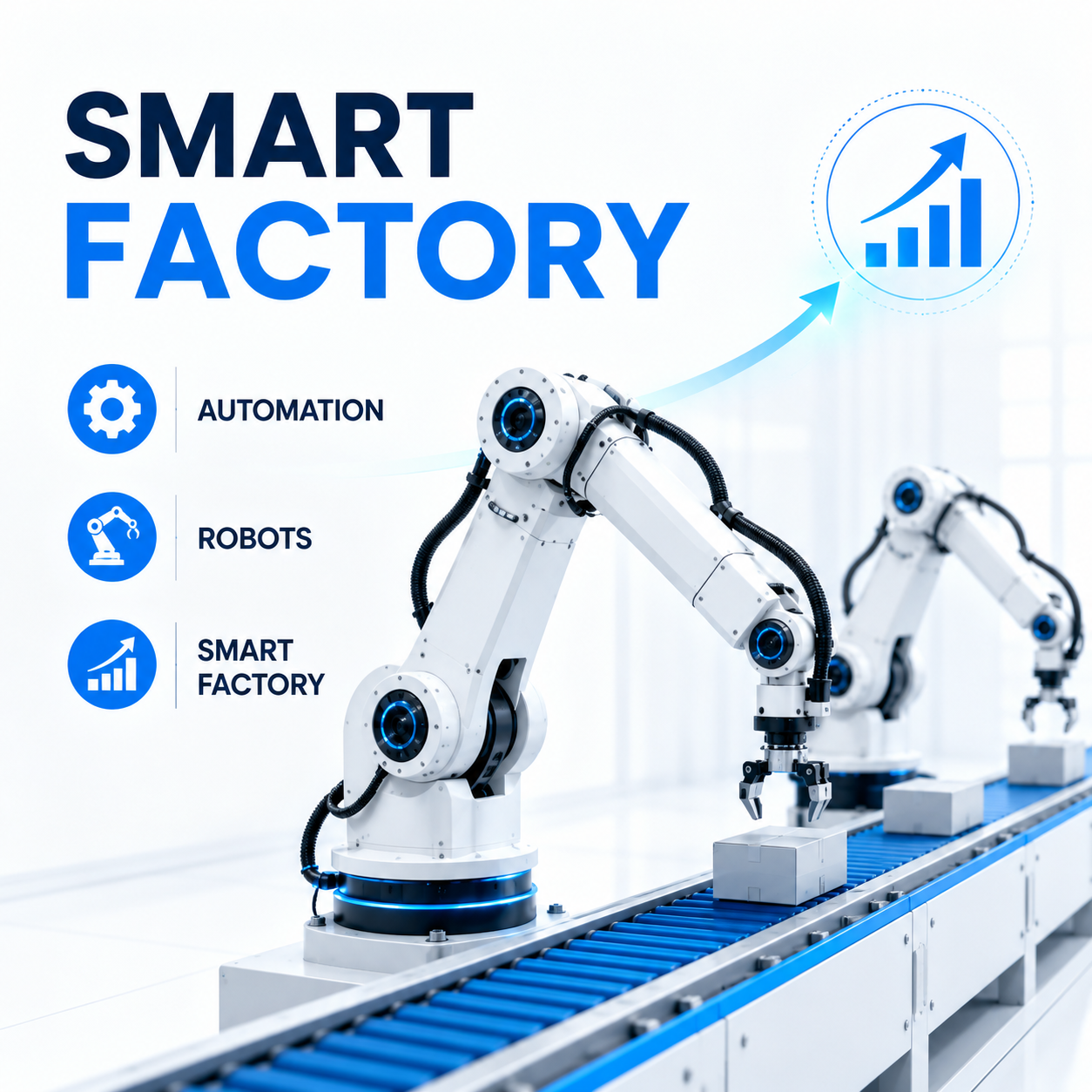
한때 자동화는 생산성을 높이기 위한 선택이었다. 그러나 인력난과 인건비 상승이 겹치면서, 자동화는 이제 생산을 유지하기 위한 조건이 되고 있다. 로봇과 자동화 설비는 사람을 밀어내는 기술이 아니라, 흔들리는 산업 현장을 다시 안정시키는 새로운 기반으로 떠오르고 있다.
[Key Message]
* 산업 자동화는 더 이상 미래의 선택지가 아니라, 인력난 시대에 생산을 유지하기 위한 현실적 대응이 되고 있다.
* 인건비 상승은 자동화 투자의 경제성을 바꾸고 있으며, 로봇과 자동화 설비의 투자 회수 논리를 더 강하게 만들고 있다.
* 숙련 인력 부족은 생산량 문제를 넘어 품질 리스크로 이어지고 있으며, 자동화와 데이터화는 현장의 경험을 시스템으로 전환하는 역할을 한다.
* 로봇 도입의 핵심은 사람을 단순히 대체하는 것이 아니라, 반복적이고 위험한 공정을 안정화하고 사람이 더 중요한 판단 업무에 집중하도록 만드는 데 있다.
* 산업 자동화의 최종 방향은 무인화가 아니라, 사람과 기계가 각자의 강점을 나누는 새로운 분업 구조를 만드는 것이다.
***
인력난과 생산 공백
산업 자동화가 다시 속도를 내고 있다. 자동화라는 말은 오래전부터 제조업의 미래를 설명하는 대표적인 단어였다. 공장에 로봇이 들어오고, 생산라인이 디지털화되고, 사람의 손이 하던 일을 기계가 대신한다는 이야기는 낯설지 않다. 그러나 최근의 흐름은 과거와 조금 다르다. 예전의 자동화가 더 빠르고 더 싸게 만들기 위한 생산성 경쟁의 언어였다면, 지금의 자동화는 사람을 구하기 어려운 시대에 생산을 멈추지 않기 위한 생존의 언어에 가까워지고 있다.
인력난은 더 이상 특정 업종이나 특정 지역만의 문제가 아니다. 제조업, 물류, 건설, 농업, 외식, 돌봄, 유통 현장까지 사람을 구하기 어렵다는 호소가 넓게 퍼지고 있다. 특히 제조업은 일정한 인력이 꾸준히 투입되어야 생산이 유지되는 산업이다. 한 사람이 빠지면 단순히 자리 하나가 비는 데서 끝나지 않는다. 공정의 속도가 달라지고, 앞뒤 작업의 연결이 흔들리며, 숙련자의 판단에 의존하던 미세한 품질 관리가 약해진다. 사람 한 명의 공백이 생산라인 전체의 흐름을 늦추는 일이 얼마든지 생긴다.
문제는 사람을 새로 뽑는 일이 예전만큼 쉽지 않다는 데 있다. 젊은 인구는 줄고, 생산직을 선호하는 사람은 많지 않으며, 교대근무나 반복작업, 위험한 작업 환경을 피하려는 경향도 강해지고 있다. 현장 기업은 채용 공고를 내도 지원자가 적고, 어렵게 채용해도 오래 머무르지 않는 문제를 겪는다. 새로 들어온 인력에게 일을 가르치고 숙련시키는 데 시간이 걸리지만, 그 시간이 끝나기도 전에 사람이 빠져나가면 기업은 같은 교육을 반복해야 한다. 이 과정에서 비용은 늘고, 생산성은 낮아지며, 기존 인력의 피로도도 커진다.
생산 공백은 기업에 매우 현실적인 압박으로 다가온다. 주문은 있는데 만들 사람이 없고, 설비는 있는데 돌릴 인력이 부족하며, 납기는 정해져 있는데 공정 속도를 유지하기 어렵다. 제조업에서 납기는 단순한 일정이 아니라 신뢰의 문제다. 한 번 납기가 흔들리면 거래처는 다른 공급처를 찾기 시작하고, 기업은 가격 경쟁력보다 더 중요한 신뢰 경쟁에서 밀릴 수 있다. 그래서 인력난은 단순한 채용 문제가 아니라 공급망의 안정성과 기업 생존력에 영향을 미치는 문제로 커진다.
이런 상황에서 자동화는 선택지가 아니라 대안으로 떠오른다. 자동화는 사람을 완전히 없애기 위한 장치가 아니라, 사람의 공백으로 발생하는 생산의 불안정성을 줄이기 위한 장치가 된다. 로봇은 일정한 동작을 반복하고, 자동화 설비는 정해진 속도로 공정을 유지하며, 센서와 제어 시스템은 생산 상황을 실시간으로 확인한다. 사람의 손이 부족해도 일정 수준의 생산 흐름을 유지할 수 있다는 점에서 자동화는 인력난 시대의 안전판 역할을 한다.
특히 반복적이고 예측 가능한 작업일수록 자동화의 필요성은 커진다. 부품을 옮기고, 조립하고, 포장하고, 검사하고, 적재하는 일은 사람의 손에 의존해 왔지만, 동시에 인력 부족이 가장 쉽게 생산 차질로 이어지는 영역이기도 하다. 이런 작업을 자동화하면 사람은 더 복잡한 판단과 관리 업무에 집중할 수 있다. 자동화는 사람을 단순히 대체하는 것이 아니라, 사람이 해야 할 일과 기계가 맡아야 할 일을 다시 나누는 과정이 된다.
인력난이 심해질수록 기업은 사람을 더 많이 뽑는 방식만으로 문제를 해결하기 어렵다. 인구 구조의 변화는 단기간에 바뀌지 않는다. 숙련 인력 부족도 하루아침에 해결되지 않는다. 그렇다면 기업은 같은 인력으로 더 안정적으로 생산하는 방법을 찾아야 한다. 자동화는 그 해답 중 하나다. 사람의 수를 무한히 늘릴 수 없는 시대에, 생산 시스템 자체를 바꾸는 방식으로 대응하는 것이다. 이것이 산업 자동화가 다시 가속되는 첫 번째 이유다.
인건비 상승과 투자 회수
자동화 투자는 언제나 비용의 문제와 연결되어 있었다. 로봇을 들여놓고, 생산라인을 바꾸고, 설비를 설치하고, 소프트웨어를 연결하려면 적지 않은 돈이 들어간다. 과거에는 이 초기 비용이 자동화 확산의 큰 장벽이었다. 기업은 자동화가 좋다는 것을 알면서도 투자 회수 기간을 계산하며 망설였다. 특히 다품종 소량생산을 하는 기업이나 중소 제조업체는 자동화 설비를 도입했다가 생산 품목이 바뀌면 다시 조정해야 하는 부담을 크게 느꼈다.
하지만 인건비가 꾸준히 오르면서 자동화의 계산식이 달라지고 있다. 사람을 고용하는 비용은 단순히 월급만으로 끝나지 않는다. 채용 비용, 교육 비용, 관리 비용, 복리후생 비용, 안전관리 비용, 이직으로 인한 재교육 비용까지 모두 포함된다. 여기에 야간근무, 주말근무, 위험수당, 숙련 인력 확보를 위한 추가 임금까지 더하면 사람 중심 생산의 실제 비용은 더 커진다. 기업이 느끼는 부담은 임금 명세서에 적힌 숫자보다 훨씬 넓다.
인건비 상승은 자동화 설비의 투자 회수 기간을 앞당긴다. 예전에는 로봇 한 대를 도입하는 비용이 부담스러웠지만, 지금은 반복 작업을 담당할 인력을 계속 채용하고 유지하는 비용이 더 무겁게 느껴질 수 있다. 특히 노동집약적 공정에서는 인건비가 오를수록 자동화의 경제성이 높아진다. 로봇은 초기 투자비가 크지만, 일정 기간이 지나면 반복 비용이 낮아진다. 반면 사람 중심 방식은 시간이 지날수록 임금과 관리비가 계속 증가한다. 이 차이가 자동화 투자의 판단 기준을 바꾸고 있다.
물론 자동화가 모든 기업에 즉시 이익을 가져다주는 것은 아니다. 자동화 설비를 도입하려면 공정을 분석해야 하고, 생산 흐름을 표준화해야 하며, 설비를 관리할 인력도 필요하다. 단순히 로봇을 사서 공장에 세워둔다고 생산성이 오르지는 않는다. 자동화 투자는 기계를 사는 일이 아니라 일하는 방식을 다시 설계하는 일이다. 그럼에도 불구하고 기업들이 자동화에 더 적극적으로 나서는 이유는 사람을 계속 구하고 관리하는 방식만으로는 비용 부담을 감당하기 어려워졌기 때문이다.
인건비 상승은 서비스 산업에서도 자동화를 밀어 올리고 있다. 음식점의 키오스크, 카페의 무인 주문기, 매장의 셀프 계산대, 창고의 자동 분류 설비, 병원의 자동 접수 시스템은 모두 인건비와 인력난의 압력을 반영한다. 처음에는 고객 편의를 위한 기술처럼 보였지만, 실제로는 적은 인력으로 운영을 유지하기 위한 도구로 기능한다. 주문을 받는 사람을 줄이고, 계산 업무를 줄이며, 반복적인 안내 업무를 자동화하면 남은 인력은 조리, 응대, 품질 관리처럼 더 중요한 영역에 집중할 수 있다.
기업 입장에서 자동화는 단순한 비용 절감 수단이 아니다. 자동화는 비용의 예측 가능성을 높인다. 사람 중심 운영은 인력 수급 상황, 임금 상승, 이직률, 교육 수준에 따라 비용과 생산성이 크게 흔들릴 수 있다. 반면 자동화 설비는 관리와 유지보수가 필요하더라도 일정한 기준 안에서 운영된다. 기업은 생산량과 비용을 더 예측하기 쉬워지고, 장기 계획을 세우기 쉬워진다. 불확실성이 커진 시대에는 비용을 줄이는 것만큼 비용을 예측할 수 있는 능력이 중요해진다.
인건비 상승은 기업의 자동화 투자 판단을 더 현실적으로 만들고 있다. 예전에는 자동화가 미래 경쟁력을 위한 선제 투자였다면, 이제는 현재 비용 구조를 버티기 위한 대응이 되고 있다. 특히 경쟁사가 자동화를 통해 생산 단가를 낮추고 품질을 안정시키기 시작하면, 자동화를 미루는 기업은 가격과 납기 양쪽에서 압박을 받을 수밖에 없다. 자동화는 한 기업의 선택이 아니라 산업 전체의 경쟁 조건으로 변해간다.
숙련 인력 부족과 품질 리스크
산업 현장에서 가장 어려운 문제 중 하나는 숙련 인력의 부족이다. 단순히 사람이 부족한 것과 숙련자가 부족한 것은 다른 문제다. 사람을 채용하는 것만으로는 해결되지 않는 일이 있다. 오래 일한 사람만이 알 수 있는 공정의 감각, 기계 소리의 변화, 재료 상태의 미세한 차이, 불량이 나기 전의 징후, 작업 순서의 작은 조정은 쉽게 문서화되지 않는다. 제조 현장의 품질은 이런 숙련자의 경험 위에서 유지되는 경우가 많다.
숙련 인력이 줄어들면 품질 리스크가 커진다. 같은 설비를 사용해도 누가 다루느냐에 따라 결과가 달라질 수 있다. 같은 부품을 조립해도 힘을 주는 정도, 위치를 맞추는 감각, 작업 속도의 균형에 따라 불량률이 달라진다. 특히 정밀 제조, 전자부품, 자동차 부품, 배터리, 바이오, 식품 가공처럼 품질 기준이 엄격한 산업에서는 작은 오차가 큰 손실로 이어질 수 있다. 한 번의 불량이 리콜, 납품 지연, 브랜드 신뢰 하락으로 이어질 수 있기 때문이다.
숙련 인력 부족은 세대교체 문제와도 연결된다. 오랜 기간 현장을 지켜온 인력이 은퇴하면 그들이 갖고 있던 암묵지가 함께 사라진다. 기업은 매뉴얼을 만들고 교육 프로그램을 운영하지만, 모든 경험을 문서로 옮기는 것은 쉽지 않다. 현장에는 글로 설명하기 어려운 판단이 많다. 온도, 소리, 냄새, 진동, 재료의 촉감처럼 숙련자가 몸으로 익힌 정보는 데이터로 남기지 않으면 개인의 경험으로 사라진다. 자동화와 디지털화가 중요한 이유는 바로 여기에 있다.
자동화는 숙련자의 감각을 완전히 대체하지는 못한다. 그러나 그 감각의 일부를 시스템으로 옮기는 역할을 할 수 있다. 센서는 온도, 압력, 진동, 위치, 속도, 습도, 전류, 소음 같은 정보를 지속적으로 측정한다. 비전 시스템은 제품의 외관과 치수를 확인하고, 인공지능은 불량 패턴을 학습한다. 예지보전 시스템은 설비가 고장 나기 전의 이상 신호를 포착한다. 이렇게 데이터가 쌓이면 특정 개인의 경험에 의존하던 품질 관리가 조직의 시스템으로 전환될 수 있다.
품질 리스크를 줄이는 데 자동화가 중요한 이유는 반복성과 일관성 때문이다. 사람은 아무리 숙련되어도 피로, 집중력 저하, 작업 환경, 근무 시간에 영향을 받는다. 긴 시간 같은 작업을 반복하면 실수가 생길 수밖에 없다. 반면 자동화 설비는 정해진 조건에서 같은 동작을 반복한다. 물론 설비 오류나 프로그램 오류가 발생할 수 있지만, 관리가 잘 이루어지면 품질 편차를 크게 줄일 수 있다. 특히 검사 자동화는 사람이 놓치기 쉬운 미세한 결함을 일정한 기준으로 확인할 수 있게 해준다.
자동화는 숙련 인력을 필요 없게 만드는 것이 아니라, 숙련의 내용을 바꾼다. 과거의 숙련이 손끝의 감각과 현장의 경험에 집중되어 있었다면, 앞으로의 숙련은 장비를 이해하고 데이터를 읽고 공정을 개선하는 능력으로 확장된다. 현장 경험을 가진 사람이 자동화 시스템을 이해할 때 가장 강력한 생산성이 나온다. 로봇을 다룰 줄 아는 사람보다 더 중요한 것은 공정의 본질을 알고 로봇을 적절히 배치할 수 있는 사람이다. 자동화 시대에도 숙련은 사라지지 않는다. 다만 숙련의 형태가 바뀐다.
기업은 이 변화를 준비해야 한다. 숙련자가 은퇴하기 전에 그들의 경험을 데이터와 매뉴얼로 옮기고, 젊은 인력이 자동화 설비와 함께 성장할 수 있도록 교육해야 한다. 자동화는 기술 도입만으로 완성되지 않는다. 사람의 경험을 시스템에 녹이고, 시스템에서 나온 데이터를 다시 사람의 판단과 연결해야 한다. 숙련 인력 부족은 자동화를 밀어 올리는 요인이지만, 자동화의 성공 역시 새로운 숙련 인력에 달려 있다.
로봇 도입과 공정 안정화
로봇은 산업 자동화의 가장 눈에 보이는 상징이다. 사람 팔처럼 움직이는 다관절 로봇, 사람과 함께 작업할 수 있는 협동로봇, 물류창고를 오가는 자율이동로봇, 제품을 분류하는 피킹 로봇, 검사 장비와 결합한 비전 로봇은 이제 여러 산업 현장에서 빠르게 확산되고 있다. 과거의 로봇은 주로 자동차 공장처럼 대량생산 환경에서 활용되었다. 용접, 도장, 조립처럼 반복성이 높고 위험한 작업에 강했다. 그러나 최근 로봇은 더 작고 유연해지고, 다품종 생산 환경에도 들어갈 수 있는 방향으로 발전하고 있다.
공정 안정화는 로봇 도입의 중요한 목적이다. 기업은 로봇을 통해 생산 속도를 높일 수 있지만, 그보다 더 중요한 것은 흔들림 없는 공정 흐름을 확보하는 것이다. 사람이 작업할 때는 숙련도와 컨디션에 따라 작업 속도와 품질이 달라질 수 있다. 반면 로봇은 정해진 조건에서 일정한 속도와 동작을 유지한다. 이 일관성은 전체 생산라인의 균형을 맞추는 데 큰 도움이 된다. 앞 공정과 뒤 공정의 속도를 예측할 수 있어야 재고, 물류, 검사, 포장까지 효율적으로 연결된다.
로봇은 위험한 작업에서도 중요한 역할을 한다. 무거운 물건을 반복해서 들어 올리는 작업, 고온이나 분진에 노출되는 작업, 화학물질을 다루는 작업, 날카로운 부품을 가공하는 작업은 사람의 안전에 부담을 준다. 이런 작업을 로봇이 맡으면 산업재해 위험을 줄일 수 있다. 자동화는 비용 절감뿐 아니라 안전 투자이기도 하다. 특히 고령 인력이 늘어나는 현장에서는 반복적인 신체 부담을 줄이는 일이 더 중요해진다. 로봇은 사람의 몸에 쌓이는 피로와 위험을 줄이는 도구가 될 수 있다.
협동로봇의 확산은 자동화의 문턱을 낮추고 있다. 기존 산업용 로봇은 안전 펜스 안에서 빠르고 강하게 움직이는 경우가 많았다. 설치 공간이 필요하고, 전문적인 프로그래밍과 공정 설계가 요구되었다. 반면 협동로봇은 사람 옆에서 비교적 안전하게 작업할 수 있도록 설계되어 중소기업이나 소규모 공정에도 적용하기 쉽다. 작업자를 보조하고, 반복 동작을 대신하며, 필요에 따라 다른 작업으로 이동할 수 있다는 점에서 유연성이 높다. 자동화가 대기업의 전유물에서 더 넓은 산업 현장으로 퍼지는 배경에는 이런 기술 변화가 있다.
공정 안정화를 위해서는 로봇 자체보다 로봇이 들어갈 공정을 제대로 이해하는 것이 중요하다. 자동화하기 어려운 공정을 억지로 로봇화하면 기대한 효과가 나오지 않을 수 있다. 제품 설계, 부품 공급 방식, 작업 순서, 검사 기준, 물류 흐름이 자동화에 맞게 정리되어야 한다. 자동화는 기존의 복잡한 현장을 그대로 기계로 옮기는 일이 아니다. 오히려 불필요한 동작을 줄이고, 작업 순서를 단순화하며, 표준화할 수 있는 부분을 찾아내는 과정이다. 좋은 자동화는 좋은 공정 설계에서 출발한다.
로봇 도입은 데이터 축적의 출발점이 되기도 한다. 로봇은 단순히 움직이는 기계가 아니라, 작업 시간, 동작 횟수, 오류 발생, 정지 시간, 생산량 같은 정보를 남긴다. 이 데이터가 쌓이면 기업은 생산라인의 병목을 찾고, 설비 효율을 개선하며, 유지보수 시점을 예측할 수 있다. 과거에는 현장 관리자의 경험에 의존하던 판단이 데이터 기반으로 바뀐다. 로봇은 자동화의 장비이면서 동시에 공장을 디지털화하는 센서가 된다.
제조업 경쟁력의 재편
제조업의 경쟁력은 오랫동안 낮은 인건비와 밀접하게 연결되어 있었다. 임금이 낮고 노동력이 풍부한 지역은 세계의 공장으로 성장했다. 기업은 생산비를 줄이기 위해 공장을 해외로 옮겼고, 글로벌 공급망은 값싼 노동력을 중심으로 재편되었다. 그러나 이 공식은 점점 약해지고 있다. 인구 구조가 바뀌고, 공급망 리스크가 커지며, 기술 수준이 높아지면서 단순히 임금이 낮은 곳에서 많이 만드는 방식만으로는 경쟁력을 유지하기 어려워지고 있다.
자동화는 제조업 경쟁력의 기준을 바꾼다. 앞으로 중요한 것은 얼마나 싼 인력을 확보했는가가 아니라, 얼마나 안정적이고 유연한 생산 시스템을 갖추었는가다. 자동화된 공장은 인건비 부담이 큰 지역에서도 일정한 생산성을 확보할 수 있다. 품질을 일정하게 유지하고, 납기를 예측 가능하게 만들며, 수요 변화에 빠르게 대응할 수 있다. 이런 능력은 글로벌 공급망이 불안정한 시대에 더욱 중요해진다.
최근 기업들은 생산거점을 다시 검토하고 있다. 과거에는 비용이 가장 낮은 곳을 찾아 생산기지를 옮기는 전략이 일반적이었다. 그러나 팬데믹, 지정학적 갈등, 물류 대란, 원자재 공급 불안, 무역 규제는 지나치게 길고 복잡한 공급망의 취약성을 드러냈다. 생산비가 조금 낮더라도 부품이 제때 오지 않거나 물류가 막히면 전체 사업이 흔들릴 수 있다. 그래서 기업은 소비지와 가까운 곳, 공급망을 통제하기 쉬운 곳, 정치적 리스크가 낮은 곳으로 생산을 옮기려 한다. 이때 자동화는 고임금 지역에서도 제조를 가능하게 만드는 핵심 조건이 된다.
제조업의 재편은 국가 경쟁력과도 연결된다. 자동화 역량을 갖춘 국가는 고부가가치 제조를 유지할 수 있다. 반도체, 배터리, 전기차, 바이오, 정밀기계, 항공우주 같은 산업은 단순 노동력보다 정교한 공정 관리와 품질 안정성이 중요하다. 이런 산업에서는 자동화와 디지털 제조 역량이 곧 경쟁력이다. 공장을 얼마나 많이 갖고 있는가보다, 그 공장이 얼마나 정밀하게 운영되는가가 더 중요해진다.
중소기업에도 변화가 필요하다. 대기업은 이미 로봇과 자동화 설비, 데이터 시스템에 투자할 여력이 있다. 그러나 공급망의 대부분을 이루는 중소기업이 자동화에서 뒤처지면 전체 산업 경쟁력도 약해진다. 부품을 공급하는 중소기업의 품질과 납기가 흔들리면 대기업의 생산도 영향을 받는다. 따라서 산업 자동화는 개별 기업의 문제가 아니라 생태계의 문제다. 중소기업이 자동화에 접근할 수 있도록 기술, 자금, 인력 교육, 표준화 지원이 함께 이루어져야 한다.
자동화가 경쟁력을 재편한다는 말은 단순히 로봇을 많이 가진 기업이 이긴다는 뜻이 아니다. 중요한 것은 자동화를 통해 어떤 운영 능력을 확보하느냐다. 같은 로봇을 도입해도 어떤 기업은 생산성을 높이고, 어떤 기업은 장비를 제대로 활용하지 못한다. 차이는 공정 이해, 데이터 활용, 현장 인력의 참여, 유지보수 체계, 경영 전략에서 나온다. 자동화는 장비 경쟁이 아니라 운영 역량 경쟁이다.
물류·서비스 자동화 확산
자동화의 재가속은 공장 안에서만 일어나지 않는다. 물류와 서비스 현장에서도 자동화는 빠르게 확산되고 있다. 온라인 쇼핑이 일상화되면서 물류센터의 업무량은 폭발적으로 늘었다. 고객은 더 빠른 배송을 원하고, 기업은 더 많은 주문을 더 짧은 시간 안에 처리해야 한다. 하지만 물류 현장 역시 인력난과 높은 노동 강도를 겪고 있다. 물건을 분류하고, 옮기고, 포장하고, 적재하는 일은 반복적이면서도 신체 부담이 크다. 이런 환경에서 자동화는 물류 효율을 높이는 핵심 수단이 된다.
물류 자동화는 다양한 형태로 나타난다. 컨베이어 시스템, 자동 분류기, 무인 운반차, 자율이동로봇, 자동창고, 피킹 보조 시스템, 포장 자동화 설비가 물류센터 곳곳에 들어가고 있다. 사람은 넓은 창고를 계속 걸어 다니며 물건을 찾는 대신, 로봇이 가져온 상품을 확인하고 포장하는 역할을 맡는다. 물류 흐름이 데이터로 관리되면 재고 위치, 주문량, 출고 속도, 작업 병목을 실시간으로 파악할 수 있다. 자동화는 빠른 배송을 가능하게 하는 보이지 않는 기반이다.
서비스 산업에서도 자동화는 일상적인 풍경이 되고 있다. 음식점의 키오스크, 카페의 무인 주문기, 호텔의 셀프 체크인, 병원의 자동 접수, 주차장의 무인 정산, 매장의 셀프 계산대는 이미 낯설지 않다. 이러한 자동화는 단순히 사람을 줄이기 위한 장치로만 볼 수 없다. 고객이 몰리는 시간대에 주문 대기 시간을 줄이고, 반복적인 결제 업무를 줄이며, 직원이 고객 응대나 품질 관리에 집중할 수 있게 한다. 인력이 부족한 상황에서 서비스 품질을 유지하기 위한 방식이기도 하다.
서빙 로봇과 청소 로봇의 확산도 같은 흐름에 있다. 외식업은 인력난이 심한 대표 업종이다. 홀 직원을 구하기 어렵고, 근무 시간이 길며, 업무 강도가 높다. 서빙 로봇은 음식을 테이블 가까이 운반하고, 직원은 최종 응대와 정리를 맡는다. 이것은 완전한 무인화라기보다 업무 부담을 나누는 방식이다. 청소 로봇 역시 넓은 공간을 반복적으로 관리해야 하는 호텔, 병원, 공항, 상업시설에서 활용도가 높아지고 있다. 반복적이고 체력 소모가 큰 업무를 로봇이 맡으면 사람은 더 섬세한 관리와 고객 대응에 집중할 수 있다.
서비스 자동화는 고객 경험을 바꾸기도 한다. 처음에는 키오스크나 무인 시스템을 불편하게 느끼는 사람도 있었지만, 시간이 지나면서 빠른 주문과 간편한 결제를 선호하는 고객도 늘었다. 다만 모든 고객이 자동화에 익숙한 것은 아니다. 고령층이나 디지털 기기에 익숙하지 않은 사람에게는 자동화가 장벽이 될 수 있다. 따라서 서비스 자동화는 편리함과 접근성 사이의 균형이 중요하다. 사람의 도움 없이 모든 것을 처리하도록 만드는 것보다, 필요한 순간에 사람의 지원을 받을 수 있도록 설계하는 것이 더 바람직하다.
물류와 서비스 자동화의 확산은 산업 자동화의 의미를 넓힌다. 자동화는 더 이상 공장 안의 로봇 팔만을 뜻하지 않는다. 주문, 결제, 이동, 분류, 배송, 청소, 안내, 재고 관리, 고객 응대까지 다양한 영역에서 반복 업무를 줄이고 운영 효율을 높이는 시스템으로 확장되고 있다. 인력난과 인건비 상승은 이 흐름을 더욱 빠르게 만들고 있다. 자동화는 제조업의 기술에서 사회 전체의 운영 방식으로 번지고 있다.
사람과 기계의 역할 재설계
자동화가 확산될 때마다 가장 크게 제기되는 질문은 일자리다. 로봇이 사람의 일을 빼앗는가. 자동화가 인간 노동을 불필요하게 만드는가. 이 질문은 쉽게 답할 수 없다. 분명 일부 반복 업무는 줄어들고, 과거에 사람이 하던 많은 작업이 기계로 옮겨갈 것이다. 특히 단순 반복, 고위험, 고강도, 표준화된 업무는 자동화의 영향을 크게 받을 수밖에 없다. 그러나 자동화의 현실은 단순히 사람이 사라지는 방향으로만 움직이지 않는다. 일이 없어지는 동시에 새로운 일이 생기고, 기존 업무의 성격이 바뀐다.
자동화 시대에 중요한 것은 사람과 기계의 역할을 어떻게 나누느냐다. 기계는 반복과 정밀, 속도와 일관성에 강하다. 사람은 예외 상황 판단, 관계 형성, 창의적 문제 해결, 복합적 의사결정에 강하다. 모든 일을 사람이 직접 하던 방식에서 벗어나, 기계가 잘하는 일은 기계에 맡기고 사람이 더 잘할 수 있는 일에 집중하는 구조를 만들어야 한다. 이것이 자동화의 본질적인 방향이다.
기업은 자동화를 도입하면서 일의 흐름을 다시 설계해야 한다. 기존의 업무를 그대로 둔 채 일부만 기계로 바꾸면 오히려 혼란이 생길 수 있다. 로봇이 들어오면 작업자의 동선이 바뀌고, 관리자의 역할이 바뀌며, 유지보수와 데이터 분석 업무가 새로 생긴다. 생산직은 단순 작업자에서 설비 운영자와 품질 감시자로 이동할 수 있고, 현장 관리자는 경험 중심의 지시자에서 데이터 기반의 운영자로 바뀔 수 있다. 자동화는 직무의 재편을 요구한다.
이 과정에서 교육과 재훈련이 중요하다. 자동화가 성공하려면 현장 인력이 기술을 두려워하지 않고 활용할 수 있어야 한다. 로봇을 조작하고, 오류를 확인하고, 간단한 문제를 해결하고, 데이터를 해석하는 능력이 필요하다. 모든 사람이 전문 엔지니어가 될 필요는 없지만, 자동화 설비와 함께 일하는 기본 역량은 갖추어야 한다. 기업이 자동화 설비에 투자하면서 사람 교육에는 투자하지 않는다면, 장비는 충분히 활용되지 못한다. 자동화의 성패는 기계보다 사람의 전환 능력에 달려 있다.
사람과 기계의 새로운 분업은 노동의 가치를 다시 생각하게 만든다. 반복적이고 위험한 일을 줄이는 것은 긍정적 변화가 될 수 있다. 그러나 그 과정에서 기존 일자리를 잃는 사람이 생긴다면 사회적 대응도 필요하다. 자동화로 생산성이 높아졌을 때 그 이익이 일부 기업이나 자본에만 집중된다면 불평등은 커질 수 있다. 반대로 자동화가 사람의 안전을 높이고, 더 나은 직무로 이동할 기회를 제공하며, 산업 전체의 경쟁력을 높이는 방향으로 설계된다면 긍정적 전환이 가능하다.
결국 자동화는 기술의 문제가 아니라 선택의 문제다. 로봇을 사람을 밀어내는 도구로만 사용할 수도 있고, 사람의 한계를 보완하는 도구로 사용할 수도 있다. 같은 기술이라도 어떤 조직 문화와 경영 전략 안에서 쓰이느냐에 따라 결과는 달라진다. 자동화 시대의 기업은 사람을 줄이는 데만 집중해서는 안 된다. 사람의 역할을 더 가치 있게 만드는 방향으로 자동화를 설계해야 한다. 기계가 반복을 맡고, 사람은 판단과 개선을 맡는 구조가 만들어질 때 자동화는 위협이 아니라 산업의 새로운 기반이 될 수 있다.
산업 자동화의 재가속은 피하기 어려운 흐름이다. 인력난은 쉽게 해결되지 않고, 인건비 상승은 계속 기업의 비용 구조를 압박할 것이다. 숙련 인력의 공백은 품질 리스크를 키우고, 공급망 불안은 생산 안정성의 중요성을 높일 것이다. 이런 조건에서 자동화는 더 이상 먼 미래의 기술이 아니다. 지금 산업 현장이 당면한 문제를 해결하기 위한 현실적 대응이다.
그러나 자동화의 방향은 아직 정해져 있지 않다. 자동화가 단순한 인력 감축의 언어가 될지, 생산 안정과 노동 전환의 언어가 될지는 기업과 사회의 선택에 달려 있다. 중요한 것은 로봇을 얼마나 빨리 도입하느냐만이 아니다. 어떤 일을 자동화하고, 어떤 일을 사람에게 남기며, 사람이 더 나은 역할로 이동할 수 있도록 어떤 준비를 하느냐가 더 중요하다.
앞으로의 산업 경쟁력은 사람과 기계의 대결에서 나오지 않는다. 사람과 기계가 어떻게 협력하느냐에서 나온다. 사람은 부족해지고, 비용은 오르며, 생산의 안정성은 더 중요해지는 시대다. 공장은 다시 로봇을 부르고 있지만, 그 로봇이 향하는 곳은 사람 없는 미래가 아니라 일의 구조가 달라지는 미래에 가깝다. 자동화는 사람을 지우는 기술이 아니라, 사람이 감당하기 어려워진 산업의 부담을 나누는 기술이 될 수 있다. 산업 자동화의 재가속은 바로 그 전환의 시작점에 서 있다.
Reference
International Federation of Robotics, September 2025, Global Robot Demand in Factories Doubles Over 10 Years
McKinsey & Company, July 2025, The Robotics Revolution: Scaling Beyond the Pilot Phase
McKinsey Global Institute, November 2025, Agents, Robots, and Us: Skill Partnerships in the Age of AI
World Economic Forum, January 2025, The Future of Jobs Report 2025
Deloitte, November 2024, 2025 Manufacturing Industry Outlook
McKinsey & Company, April 2025, Empowering the US Workforce
MIT, October 2020, The State of Industrial Robotics: Emerging Technologies, Challenges, and Key Research Directions
World Economic Forum, 2024, Reskilling Revolution: Preparing Workers for the Future of Automation
International Labour Organization, 2024, World Employment and Social Outlook: Trends 2024
OECD, 2023, OECD Employment Outlook 2023: Artificial Intelligence and the Labour Market

The Reacceleration of Industrial Automation
- In an Era of Labor Shortages, Factories Are Calling on Robots Again
Automation was once a choice made to increase productivity. However, as labor shortages and rising labor costs overlap, automation is now becoming a condition for maintaining production. Robots and automation systems are emerging not as technologies that push people out, but as a new foundation for stabilizing increasingly fragile industrial sites.
[Key Message]
* Industrial automation is no longer a future option, but a practical response to maintaining production in an era of labor shortages.
* Rising labor costs are changing the economics of automation investment and strengthening the case for payback from robots and automated systems.
* A shortage of skilled workers is becoming not only a production capacity issue but also a quality risk, while automation and data systems help turn field experience into organizational systems.
* The core purpose of robot adoption is not simply to replace people, but to stabilize repetitive and dangerous processes so that workers can focus on higher-value judgment and management tasks.
* The ultimate direction of industrial automation is not full unmanned operation, but a new division of labor in which people and machines each take on the roles they perform best.
***
Labor Shortages and Production Gaps
Industrial automation is gaining speed again. Automation has long been one of the representative terms used to describe the future of manufacturing. Stories about robots entering factories, production lines becoming digitalized, and machines taking over work once done by human hands are no longer unfamiliar. Yet the current trend is somewhat different from the past. If automation in earlier periods was the language of productivity competition, aimed at making things faster and cheaper, today’s automation is becoming closer to the language of survival, a way to keep production from stopping in an era when it is difficult to find workers.
Labor shortages are no longer a problem limited to specific industries or regions. Complaints about the difficulty of finding workers are spreading across manufacturing, logistics, construction, agriculture, food service, care work, and retail sites. Manufacturing, in particular, is an industry that requires a steady input of labor to maintain production. When one person is absent, it does not simply mean that one position is empty. The pace of the process changes, the connection between preceding and following tasks becomes unstable, and the subtle quality control that depended on the judgment of skilled workers weakens. The absence of a single worker can easily slow the flow of an entire production line.
The problem is that hiring new workers is no longer as easy as it once was. The younger population is shrinking, fewer people prefer production jobs, and there is a growing tendency to avoid shift work, repetitive labor, and hazardous working environments. Companies in the field post job openings, but applicants are scarce. Even when they manage to hire new workers, many do not stay for long. It takes time to teach and train new employees, but when workers leave before that time has passed, companies have to repeat the same training again and again. In that process, costs rise, productivity falls, and the fatigue of existing workers increases.
Production gaps place very real pressure on companies. There are orders, but not enough people to make the products. There are facilities, but not enough workers to run them. Deadlines are fixed, but it becomes difficult to maintain the pace of production. In manufacturing, delivery deadlines are not merely schedules; they are a matter of trust. Once delivery becomes unstable, customers begin looking for other suppliers, and a company can lose ground in a competition of trust that is even more important than price competitiveness. For this reason, labor shortages grow beyond a simple hiring problem and become an issue that affects supply chain stability and corporate survival.
In this situation, automation emerges not as an option but as an alternative. Automation is not a device for eliminating people altogether, but a device for reducing the production instability caused by human labor gaps. Robots repeat consistent motions, automation systems maintain processes at a fixed pace, and sensors and control systems monitor production conditions in real time. In the sense that a certain level of production flow can be maintained even when human hands are in short supply, automation serves as a safety valve in the age of labor shortages.
The need for automation grows especially stronger in tasks that are repetitive and predictable. Moving, assembling, packaging, inspecting, and loading parts have long depended on human hands, but they are also areas where labor shortages can most easily lead to production disruptions. When these tasks are automated, people can focus on more complex judgment and management work. Automation does not simply replace people; it becomes a process of redistributing work between what people should do and what machines should handle.
As labor shortages intensify, companies cannot solve the problem merely by hiring more people. Demographic change does not reverse in the short term. A lack of skilled labor also cannot be resolved overnight. If so, companies must find ways to produce more reliably with the same workforce. Automation is one such answer. In an era when the number of workers cannot be expanded endlessly, companies respond by changing the production system itself. This is the first reason industrial automation is accelerating again.
Rising Labor Costs and Return on Investment
Automation investment has always been tied to the question of cost. Introducing robots, changing production lines, installing equipment, and connecting software all require a significant amount of money. In the past, these initial costs were a major barrier to the spread of automation. Companies understood the benefits of automation but hesitated while calculating the payback period. In particular, companies engaged in high-mix, low-volume production, as well as small and medium-sized manufacturers, felt a heavy burden because automation systems would have to be adjusted again whenever production items changed.
However, as labor costs continue to rise, the calculation behind automation is changing. The cost of employing people does not end with wages alone. It includes recruitment costs, training costs, management costs, welfare costs, safety management costs, and retraining costs caused by turnover. When additional wages for night shifts, weekend work, hazardous duties, and securing skilled labor are added, the actual cost of human-centered production becomes even greater. The burden felt by companies is far broader than the numbers written on a wage statement.
Rising labor costs shorten the payback period for automation systems. In the past, the cost of introducing a single robot felt burdensome, but today the cost of continuously hiring and retaining workers for repetitive tasks can feel even heavier. Especially in labor-intensive processes, the economic value of automation increases as labor costs rise. Robots require high upfront investment, but after a certain period, recurring costs become lower. By contrast, human-centered methods continue to see increases in wages and management costs over time. This difference is changing the criteria by which companies judge automation investment.
Of course, automation does not immediately generate profits for every company. Introducing automation systems requires process analysis, standardization of production flows, and personnel capable of managing the equipment. Simply buying robots and placing them in a factory does not automatically increase productivity. Automation investment is not about buying machines; it is about redesigning the way work is done. Nevertheless, the reason companies are becoming more proactive about automation is that they can no longer bear the cost burden through the old method of continuously hiring and managing workers.
Rising labor costs are also pushing automation forward in the service sector. Kiosks in restaurants, unmanned ordering machines in cafes, self-checkout counters in stores, automated sorting systems in warehouses, and automated reception systems in hospitals all reflect the pressure of labor costs and labor shortages. At first, these technologies may look like tools for customer convenience, but in practice, they function as tools for maintaining operations with fewer workers. By reducing the need for workers to take orders, handle payments, and perform repetitive guidance tasks, the remaining staff can focus on more important areas such as cooking, customer service, and quality control.
For companies, automation is not simply a tool for reducing costs. Automation increases the predictability of costs. Human-centered operations can vary greatly in cost and productivity depending on labor supply conditions, wage increases, turnover rates, and training levels. By contrast, automation systems operate within a certain range, even though they require management and maintenance. Companies can predict production volume and costs more easily, and they can establish long-term plans with greater confidence. In an era of growing uncertainty, the ability to predict costs is as important as the ability to reduce them.
Rising labor costs are making companies’ decisions about automation investment more realistic. In the past, automation was a proactive investment for future competitiveness. Now it is becoming a response to withstand the current cost structure. In particular, once competitors begin lowering production costs and stabilizing quality through automation, companies that delay automation have no choice but to face pressure on both price and delivery. Automation is no longer just the choice of one company; it is becoming a competitive condition for entire industries.
A Shortage of Skilled Labor and Quality Risks
One of the most difficult problems in industrial sites is the shortage of skilled labor. A shortage of people and a shortage of skilled workers are different problems. Some problems cannot be solved simply by hiring people. The process intuition that only long-time workers possess, changes in machine sounds, subtle differences in material conditions, signs that appear before defects occur, and small adjustments in work sequence are not easily documented. Quality in manufacturing sites is often maintained on the basis of such experienced workers’ accumulated know-how.
When skilled workers become scarce, quality risks grow. Even when the same equipment is used, results can vary depending on who handles it. Even when the same parts are assembled, the defect rate can change depending on the amount of force applied, the sense of positioning, and the balance of work speed. Especially in industries with strict quality standards, such as precision manufacturing, electronic components, automotive parts, batteries, biotechnology, and food processing, small errors can lead to major losses. One defect can lead to recalls, delivery delays, and a decline in brand trust.
The shortage of skilled labor is also connected to generational transition. When workers who have protected the field for a long time retire, the tacit knowledge they possess disappears with them. Companies create manuals and run training programs, but it is not easy to transfer every experience into documents. There are many judgments in the field that are difficult to explain in writing. Information acquired physically by skilled workers, such as temperature, sound, smell, vibration, and the feel of materials, disappears as personal experience unless it is converted into data. This is precisely why automation and digitalization are important.
Automation cannot completely replace the intuition of skilled workers. However, it can transfer part of that intuition into systems. Sensors continuously measure information such as temperature, pressure, vibration, position, speed, humidity, current, and noise. Vision systems check the appearance and dimensions of products, and artificial intelligence learns defect patterns. Predictive maintenance systems detect abnormal signals before equipment fails. As this data accumulates, quality management that once depended on the experience of specific individuals can be transformed into an organizational system.
The reason automation is important in reducing quality risks lies in repeatability and consistency. No matter how skilled people are, they are affected by fatigue, loss of concentration, working conditions, and working hours. When the same work is repeated for a long time, mistakes inevitably occur. By contrast, automation systems repeat the same movements under fixed conditions. Of course, equipment errors or program errors can occur, but if management is carried out properly, quality variation can be greatly reduced. Inspection automation, in particular, makes it possible to check tiny defects that people may easily miss according to consistent standards.
Automation does not make skilled workers unnecessary; it changes the content of skill. If past skill was concentrated in the sense of the hands and field experience, future skill will expand into the ability to understand equipment, read data, and improve processes. The greatest productivity emerges when people with field experience understand automation systems. More important than a person who knows how to operate robots is a person who understands the essence of the process and can place robots appropriately. Even in the age of automation, skill does not disappear. Its form changes.
Companies must prepare for this change. Before skilled workers retire, their experience must be transferred into data and manuals, and younger workers must be trained so that they can grow together with automation systems. Automation is not completed by the introduction of technology alone. Human experience must be embedded into systems, and data produced by systems must be reconnected to human judgment. The shortage of skilled labor pushes automation forward, but the success of automation also depends on a new kind of skilled workforce.
Robot Adoption and Process Stabilization
Robots are the most visible symbol of industrial automation. Multi-joint robots that move like human arms, collaborative robots that can work alongside people, autonomous mobile robots that move through logistics warehouses, picking robots that sort products, and vision robots combined with inspection equipment are rapidly spreading across many industrial sites. In the past, robots were mainly used in mass-production environments such as automobile factories. They were strong in repetitive and dangerous tasks such as welding, painting, and assembly. Recently, however, robots have become smaller and more flexible, and they are evolving in a direction that allows them to enter high-mix production environments as well.
Process stabilization is an important purpose of robot adoption. Companies can increase production speed through robots, but more important than that is securing a stable process flow. When people perform tasks, work speed and quality can vary depending on skill level and condition. By contrast, robots maintain a constant speed and motion under fixed conditions. This consistency greatly helps balance the entire production line. The speed of preceding and following processes must be predictable in order to efficiently connect inventory, logistics, inspection, and packaging.
Robots also play an important role in dangerous tasks. Work that involves repeatedly lifting heavy objects, exposure to high temperatures or dust, handling chemicals, or processing sharp parts places a burden on worker safety. When robots handle such work, the risk of industrial accidents can be reduced. Automation is not only a cost-saving measure but also an investment in safety. In particular, in workplaces where the workforce is aging, reducing repetitive physical strain becomes even more important. Robots can serve as tools that reduce the fatigue and risk accumulated in the human body.
The spread of collaborative robots is lowering the threshold for automation. Conventional industrial robots often moved quickly and powerfully behind safety fences. They required installation space, specialized programming, and process design. By contrast, collaborative robots are designed to work relatively safely next to people, making them easier to apply in small and medium-sized companies or smaller processes. They have high flexibility because they can assist workers, take over repetitive movements, and move to other tasks when needed. Behind the spread of automation from the exclusive domain of large corporations into broader industrial sites lies this kind of technological change.
For process stabilization, understanding the process into which robots will be introduced is more important than the robots themselves. If a process that is difficult to automate is forced into robotization, the expected results may not appear. Product design, parts supply methods, work sequence, inspection standards, and logistics flows must be organized in a way that fits automation. Automation is not about transferring a complex existing site directly into machines. Rather, it is a process of reducing unnecessary movements, simplifying work sequences, and identifying areas that can be standardized. Good automation begins with good process design.
Robot adoption can also become the starting point for data accumulation. Robots are not simply machines that move; they leave behind information such as work time, number of movements, error occurrences, downtime, and production volume. When this data accumulates, companies can identify bottlenecks in production lines, improve equipment efficiency, and predict maintenance timing. Judgments that once depended on the experience of field managers are transformed into data-based decisions. Robots are automation equipment and, at the same time, sensors that digitalize factories.
The Reorganization of Manufacturing Competitiveness
Manufacturing competitiveness has long been closely tied to low labor costs. Regions with low wages and abundant labor grew into the factories of the world. Companies moved production overseas to reduce production costs, and global supply chains were reorganized around cheap labor. However, this formula is gradually weakening. As demographic structures change, supply chain risks grow, and technological sophistication rises, it is becoming difficult to maintain competitiveness simply by producing large quantities in places where wages are low.
Automation changes the criteria for manufacturing competitiveness. What matters in the future is not how cheaply a company secures labor, but how stable and flexible a production system it possesses. Automated factories can secure a certain level of productivity even in regions where labor costs are high. They can maintain consistent quality, make delivery predictable, and respond quickly to changes in demand. These capabilities become even more important in an era when global supply chains are unstable.
Recently, companies have been reassessing their production bases. In the past, the common strategy was to move production sites in search of the lowest cost. However, the pandemic, geopolitical conflict, logistics disruptions, raw material supply instability, and trade regulations exposed the vulnerabilities of supply chains that were too long and too complex. Even if production costs are slightly lower, if parts do not arrive on time or logistics are blocked, the entire business can be shaken. As a result, companies are trying to move production closer to consumer markets, to places where supply chains are easier to control, and to regions with lower political risk. In this context, automation becomes a key condition that makes manufacturing possible even in high-wage regions.
The reorganization of manufacturing is also connected to national competitiveness. Countries with automation capabilities can maintain high-value-added manufacturing. In industries such as semiconductors, batteries, electric vehicles, biotechnology, precision machinery, and aerospace, precise process control and quality stability are more important than simple labor power. In these industries, automation and digital manufacturing capabilities are competitiveness itself. More important than how many factories a country has is how precisely those factories are operated.
Small and medium-sized companies also need to change. Large corporations already have the capacity to invest in robots, automation systems, and data systems. However, if the small and medium-sized companies that make up most of the supply chain fall behind in automation, the competitiveness of the entire industry also weakens. If the quality and delivery schedules of small and medium-sized suppliers become unstable, the production of large corporations is also affected. Therefore, industrial automation is not a matter for individual companies alone but a matter for the entire ecosystem. Support for technology, financing, workforce training, and standardization must be provided so that small and medium-sized companies can access automation.
Saying that automation reorganizes competitiveness does not simply mean that companies with more robots win. What matters is what kind of operational capability is secured through automation. Even when the same robots are introduced, some companies increase productivity, while others fail to fully utilize the equipment. The difference comes from process understanding, data use, participation by field workers, maintenance systems, and management strategy. Automation is not a competition over equipment; it is a competition over operational capability.
The Spread of Logistics and Service Automation
The reacceleration of automation is not happening only inside factories. Automation is also rapidly spreading across logistics and service sites. As online shopping has become part of everyday life, the workload of logistics centers has increased explosively. Customers want faster delivery, and companies must process more orders in a shorter period of time. Yet logistics sites are also experiencing labor shortages and high labor intensity. Sorting, moving, packaging, and loading goods are repetitive tasks that also place heavy strain on the body. In this environment, automation becomes a core means of improving logistics efficiency.
Logistics automation appears in many forms. Conveyor systems, automatic sorters, unmanned transport vehicles, autonomous mobile robots, automated warehouses, picking support systems, and packaging automation systems are entering logistics centers. Instead of continuously walking around vast warehouses to find products, people check and package goods brought by robots. When logistics flows are managed with data, inventory locations, order volume, shipping speed, and work bottlenecks can be identified in real time. Automation is the invisible foundation that makes fast delivery possible.
Automation is also becoming an everyday scene in the service industry. Kiosks in restaurants, unmanned ordering machines in cafes, self-check-in systems in hotels, automated reception systems in hospitals, unmanned payment systems in parking lots, and self-checkout counters in stores are no longer unfamiliar. This type of automation cannot be viewed merely as a device for reducing the number of workers. It reduces order waiting times during peak hours, decreases repetitive payment work, and allows employees to focus on customer service and quality control. It is also a method for maintaining service quality when labor is scarce.
The spread of serving robots and cleaning robots belongs to the same trend. The food service industry is one of the representative sectors suffering from severe labor shortages. It is difficult to find hall staff, working hours are long, and the intensity of work is high. Serving robots carry food close to tables, while employees handle final customer interaction and cleanup. This is not complete unmanned operation, but a way of sharing the workload. Cleaning robots are also becoming more useful in hotels, hospitals, airports, and commercial facilities that require repeated management of large spaces. When robots take on repetitive and physically demanding tasks, people can focus on more detailed management and customer response.
Service automation also changes the customer experience. At first, some people found kiosks or unmanned systems inconvenient, but over time, more customers have come to prefer quick ordering and simple payment. However, not all customers are familiar with automation. For older people or those unfamiliar with digital devices, automation can become a barrier. Therefore, service automation requires a balance between convenience and accessibility. Rather than designing everything to be handled without human help, it is more desirable to create systems in which human support is available when needed.
The spread of logistics and service automation broadens the meaning of industrial automation. Automation no longer refers only to robot arms inside factories. It is expanding into systems that reduce repetitive work and improve operational efficiency across various areas, including ordering, payment, movement, sorting, delivery, cleaning, guidance, inventory management, and customer service. Labor shortages and rising labor costs are accelerating this trend even further. Automation is spreading from a manufacturing technology into a way of operating society as a whole.
Redesigning the Roles of People and Machines
Whenever automation spreads, the biggest question raised is jobs. Do robots take away human work? Does automation make human labor unnecessary? This question cannot be answered easily. Some repetitive tasks will clearly decrease, and many jobs once performed by people will move to machines. In particular, simple, repetitive, hazardous, physically demanding, and standardized tasks will inevitably be heavily affected by automation. However, the reality of automation does not move only in the direction of people disappearing. Jobs disappear, but new jobs are also created, and the nature of existing work changes.
What matters in the age of automation is how the roles of people and machines are divided. Machines are strong in repetition, precision, speed, and consistency. People are strong in judging exceptional situations, forming relationships, solving creative problems, and making complex decisions. Instead of maintaining a system in which people directly perform every task, it is necessary to create a structure in which machines handle what they do well and people focus on what they can do better. This is the essential direction of automation.
Companies must redesign the flow of work as they introduce automation. If existing tasks are left as they are and only some parts are replaced by machines, confusion may actually increase. When robots enter the workplace, workers’ movement paths change, managers’ roles change, and new tasks related to maintenance and data analysis emerge. Production workers can move from being simple task performers to equipment operators and quality monitors, while field managers can shift from experience-based supervisors to data-based operators. Automation requires the reorganization of jobs.
Education and retraining are important in this process. For automation to succeed, field workers must be able to use technology without fear. They need the ability to operate robots, check errors, solve simple problems, and interpret data. Not everyone needs to become a professional engineer, but they must have the basic capacity to work with automation systems. If companies invest in automation equipment but not in training people, the equipment cannot be fully utilized. The success or failure of automation depends more on people’s ability to transition than on machines themselves.
The new division of labor between people and machines also makes us rethink the value of labor. Reducing repetitive and dangerous work can be a positive change. However, if people lose existing jobs in the process, social responses are also needed. If the productivity gains from automation are concentrated only in a few companies or in capital, inequality can grow. Conversely, if automation is designed in a way that improves worker safety, provides opportunities to move into better jobs, and strengthens the competitiveness of industry as a whole, a positive transition is possible.
Ultimately, automation is not only a matter of technology but a matter of choice. Robots can be used merely as tools to push people out, or they can be used as tools to complement human limitations. Even the same technology produces different results depending on the organizational culture and management strategy in which it is used. Companies in the age of automation must not focus only on reducing people. They must design automation in a way that makes human roles more valuable. When a structure is created in which machines handle repetition and people handle judgment and improvement, automation can become not a threat but a new foundation for industry.
The reacceleration of industrial automation is a difficult trend to avoid. Labor shortages will not be resolved easily, and rising labor costs will continue to pressure corporate cost structures. Gaps in skilled labor will increase quality risks, and supply chain instability will heighten the importance of production stability. Under these conditions, automation is no longer a distant future technology. It is a practical response to the problems industrial sites are facing now.
However, the direction of automation has not yet been determined. Whether automation becomes merely the language of workforce reduction or the language of production stability and labor transition depends on the choices of companies and society. What matters is not only how quickly robots are introduced. More important is what work is automated, what work remains with people, and what preparations are made so that people can move into better roles.
Future industrial competitiveness will not come from a confrontation between people and machines. It will come from how people and machines cooperate. This is an era in which people are becoming scarce, costs are rising, and production stability is becoming more important. Factories are calling on robots again, but the destination of those robots is not a future without people. It is closer to a future in which the structure of work changes. Automation is not a technology that erases people, but a technology that can share the industrial burdens that people are finding increasingly difficult to bear. The reacceleration of industrial automation stands at the starting point of that transition.
Reference
International Federation of Robotics, September 2025, Global Robot Demand in Factories Doubles Over 10 Years
McKinsey & Company, July 2025, The Robotics Revolution: Scaling Beyond the Pilot Phase
McKinsey Global Institute, November 2025, Agents, Robots, and Us: Skill Partnerships in the Age of AI
World Economic Forum, January 2025, The Future of Jobs Report 2025
Deloitte, November 2024, 2025 Manufacturing Industry Outlook
McKinsey & Company, April 2025, Empowering the US Workforce
MIT, October 2020, The State of Industrial Robotics: Emerging Technologies, Challenges, and Key Research Directions
World Economic Forum, 2024, Reskilling Revolution: Preparing Workers for the Future of Automation
International Labour Organization, 2024, World Employment and Social Outlook: Trends 2024
OECD, 2023, OECD Employment Outlook 2023: Artificial Intelligence and the Labour Market