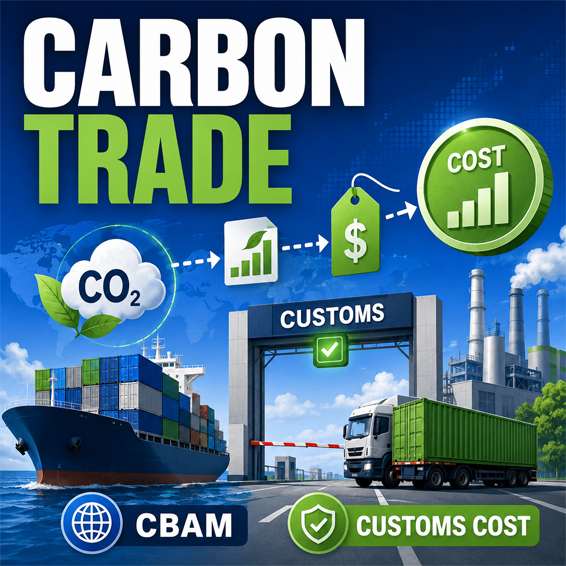
탄소는 더 이상 기업의 지속가능경영 보고서에만 머무는 숫자가 아니다. 수출품에 얼마나 많은 탄소가 들어 있는지가 통관 비용과 가격 경쟁력을 결정하는 기준이 되고 있다. 탄소 규제는 환경정책을 넘어, 글로벌 무역 질서를 다시 짜는 새로운 비용 언어가 되고 있다.
[Key Message]
* 탄소 규제는 더 이상 환경정책에 머물지 않고, 통관·관세·수출 가격을 좌우하는 무역 규칙으로 이동하고 있다. 제품에 포함된 탄소 배출량을 계산하고 증명하는 능력이 글로벌 시장 진입의 기본 조건이 되고 있다.
* CBAM은 탄소를 국경에서 비용화하는 대표적인 제도다. 철강, 알루미늄, 시멘트, 비료, 전력, 수소 등 탄소 집약 산업을 시작으로, 탄소 비용은 제조업 전반의 원가 구조에 영향을 미치고 있다.
* 앞으로 기업 경쟁력은 가격·품질·납기만으로 결정되지 않는다. 제품별 탄소 데이터, 검증 가능한 배출량, 저탄소 생산공정이 새로운 거래 조건이자 협상력이 된다.
* 탄소 규제의 부담은 최종 수출기업에만 머물지 않는다. 원재료, 부품, 협력사 데이터까지 연결되기 때문에 공급망 전체의 탄소 관리 역량이 중요해진다.
* 한국 수출기업의 대응은 단순한 규제 대응이 아니라 경쟁력 재설계가 되어야 한다. 탄소를 측정하고, 검증하고, 줄이고, 설명할 수 있는 기업이 새로운 무역질서에서 더 강한 위치를 차지할 수 있다.
***
환경 규제에서 무역 규칙으로 이동하는 탄소
탄소 규제는 오랫동안 환경정책의 영역에 머물러 있었다. 국가는 온실가스 감축 목표를 세우고, 기업은 배출량을 줄이기 위한 계획을 만들고, 투자자는 ESG 보고서를 통해 기업의 지속가능성을 평가했다. 탄소는 중요했지만, 많은 기업에게 그것은 아직 경영의 주변부에 있는 숫자였다. 배출량을 계산하고, 감축 목표를 발표하고, 친환경 이미지를 관리하는 일에 가까웠다.
그러나 지금의 흐름은 다르다. 탄소는 보고서 속의 선언이 아니라, 상품이 국경을 넘을 때 붙는 비용이 되고 있다. 제품이 어디서 만들어졌는지, 어떤 원료를 썼는지, 생산 과정에서 어떤 에너지를 사용했는지, 그 과정에서 얼마만큼의 탄소가 배출되었는지가 무역의 조건으로 들어오기 시작했다. 과거의 통관은 원산지, 품목분류, 관세율, 안전기준, 검역 요건을 중심으로 움직였다. 이제 여기에 탄소 배출량이라는 새로운 항목이 추가되고 있다.
이 변화는 단순히 환경 규제가 강해졌다는 말로는 설명하기 어렵다. 더 정확히 말하면, 탄소가 무역의 언어로 번역되고 있다. 국가가 자국 산업의 탄소 감축 비용을 보호하기 위해 수입품에도 비슷한 탄소 비용을 요구하기 시작했고, 그 결과 탄소 규제는 국경 안의 정책에서 국경을 넘는 거래 규칙으로 확장되고 있다.
이 흐름의 중심에는 탄소국경조정제도, 즉 CBAM이 있다. CBAM은 수입품에 포함된 탄소 배출량을 계산하고, 자국 기업이 부담하는 탄소 가격과 비교해 수입품에도 일정한 비용을 부과하는 방식이다. 취지는 명확하다. 탄소 규제가 강한 지역의 기업만 비용을 부담하면, 생산은 규제가 약한 지역으로 이동할 수 있다. 그러면 국내 배출량은 줄어드는 것처럼 보여도, 세계 전체 배출량은 줄지 않는다. 이를 탄소 누출이라고 부른다. CBAM은 바로 이 문제를 막기 위해 등장했다.
하지만 기업 입장에서 이 제도는 훨씬 현실적인 의미를 갖는다. 탄소를 많이 배출하는 방식으로 만든 제품은 앞으로 더 비싸질 수 있다. 탄소 배출량을 제대로 증명하지 못하는 제품은 통관 과정에서 불리해질 수 있다. 공급망 안에서 탄소 데이터를 확보하지 못한 기업은 글로벌 거래처의 요구를 충족하지 못할 수 있다. 탄소는 더 이상 좋은 기업 이미지를 위한 선택지가 아니라, 수출을 계속하기 위한 기본 조건이 되고 있다.
CBAM이 바꾸는 통관의 기준
통관은 그동안 상품이 국경을 넘는 행정 절차로 여겨졌다. 어떤 품목인지, 어디에서 만들어졌는지, 관세율은 얼마인지, 안전 기준을 충족하는지 확인하는 과정이었다. 기업이 통관을 준비한다는 것은 서류를 맞추고, HS코드를 확인하고, 원산지 증명서를 준비하는 일이었다. 그러나 탄소 규제가 무역화되면서 통관의 성격도 달라지고 있다.
앞으로 통관은 단순한 물류 절차가 아니라, 제품의 생산 이력과 탄소 이력을 확인하는 절차가 된다. 철강 제품 하나를 수출한다고 해도, 그 철강이 어떤 원료로 만들어졌는지, 고로 방식인지 전기로 방식인지, 생산 과정에서 사용한 전력의 탄소 집약도는 어느 정도인지, 직접 배출과 간접 배출은 어떻게 계산되었는지 확인해야 한다. 과거에는 공장 안에 머물던 정보가 이제는 국경 앞에서 요구되는 정보가 된다.
이 변화는 기업 내부의 업무 구조도 바꾼다. 이전에는 수출 업무가 영업, 물류, 통관, 재무 부서의 영역이었다면, 이제는 환경, 생산, 구매, 에너지 관리, 정보 시스템 부서까지 연결되어야 한다. 통관 서류 하나를 만들기 위해 제품별 탄소 배출량 데이터가 필요하고, 그 데이터를 만들기 위해서는 생산공정의 에너지 사용량, 원재료별 배출계수, 협력사의 공급 정보가 필요하다. 수출 서류의 뿌리가 공장과 공급망 전체로 깊어지는 것이다.
문제는 탄소 데이터가 일반적인 가격 데이터처럼 쉽게 정리되지 않는다는 데 있다. 제품 하나의 탄소 배출량을 계산하려면 원료, 중간재, 생산공정, 에너지, 운송, 폐기까지 여러 단계를 살펴야 한다. 특히 제조업은 한 제품 안에 수많은 부품과 소재가 들어가기 때문에 데이터 수집이 복잡하다. 대기업은 자체 시스템을 구축할 수 있지만, 중소 협력사는 계산 방식과 검증 기준을 갖추기 어렵다. 이때 공급망 전체의 약한 고리가 수출기업 전체의 부담으로 돌아올 수 있다.
CBAM의 본격 적용은 이런 변화를 더 빠르게 만들고 있다. 전환기간에는 보고 의무가 중심이었다면, 본격 적용 단계에서는 탄소 비용의 현실성이 커진다. 처음에는 철강, 알루미늄, 시멘트, 비료, 전력, 수소처럼 탄소 집약도가 높은 품목이 중심이지만, 시간이 지나면 적용 범위가 확대될 가능성이 크다. 제도의 핵심 논리가 탄소 누출 방지에 있다면, 다른 고탄소 제품이나 탄소 집약적 중간재를 포함한 제품으로 관심이 넓어지는 것은 자연스러운 흐름이다.
기업이 주목해야 할 점은 제도가 특정 품목에만 머물지 않는다는 사실이다. 직접 대상 품목을 수출하지 않더라도, 해당 소재를 사용하는 기업은 영향을 받을 수 있다. 예를 들어 철강이나 알루미늄은 자동차, 기계, 가전, 건설자재, 배터리 장비, 산업설비 등 다양한 산업의 기초 소재다. 소재 단계에서 발생한 탄소 비용은 부품과 완제품 가격으로 이동한다. 탄소 규제는 특정 업종의 문제가 아니라 제조업 전체의 원가 질서에 영향을 미친다.
탄소 비용이 원가 구조를 다시 쓴다
기업의 원가는 오랫동안 원재료비, 인건비, 에너지비, 물류비, 금융비용, 환율, 관세를 중심으로 계산되었다. 여기에 탄소 비용이라는 항목이 새롭게 들어오고 있다. 처음에는 작아 보일 수 있지만, 탄소 집약도가 높은 산업에서는 이 비용이 가격 경쟁력의 차이를 만들 수 있다.
탄소 비용의 특징은 눈에 잘 보이지 않는다는 데 있다. 철강 1톤의 가격은 시장에서 바로 확인할 수 있다. 전기요금이나 운송비도 계산서로 확인된다. 그러나 제품에 내재된 탄소 비용은 생산방식과 에너지 구조를 들여다보지 않으면 드러나지 않는다. 같은 제품이라도 어떤 공정으로 만들었는지에 따라 탄소 비용은 달라진다. 석탄 기반 전력으로 만든 제품과 재생에너지 기반 전력으로 만든 제품은 겉으로 보기에는 같아도, 탄소 규제의 눈으로 보면 서로 다른 제품이 된다.
이것은 원가 경쟁의 기준을 바꾼다. 과거에는 값싼 에너지와 낮은 인건비가 수출 경쟁력의 중요한 기반이었다. 하지만 탄소 비용이 본격화되면, 값싼 에너지가 반드시 싼 원가를 의미하지 않을 수 있다. 탄소 배출이 많은 에너지로 만든 제품은 통관 단계에서 추가 부담을 질 수 있고, 글로벌 고객사는 저탄소 제품을 더 선호할 수 있다. 생산비가 낮아도 탄소 비용까지 합치면 경쟁력이 약해질 수 있다.
특히 제조업 강국의 기업들은 이 변화를 민감하게 받아들여야 한다. 한국 기업은 철강, 화학, 자동차, 배터리, 조선, 기계, 전자 등 에너지와 소재 의존도가 높은 산업에서 강점을 갖고 있다. 이 산업들은 글로벌 공급망 안에서 높은 기술력과 납기 경쟁력을 바탕으로 성장했다. 그러나 탄소 비용이 원가 구조에 들어오면, 기존의 강점만으로는 충분하지 않을 수 있다. 품질이 좋고 납기가 정확해도, 제품의 탄소 배출량이 높거나 데이터를 제출하지 못하면 거래 조건이 불리해질 수 있다.
탄소 비용은 한 번에 크게 보이는 비용보다 서서히 스며드는 비용에 가깝다. 원재료 가격에 반영되고, 전력 조달 비용에 반영되고, 인증과 검증 비용에 반영되고, 시스템 구축 비용에 반영된다. 여기에 탄소 배출권 가격 변동과 각국 제도 변화까지 더해지면 기업의 원가 예측은 더 어려워진다. 과거에는 환율과 원자재 가격을 관리하는 것이 수출기업의 중요한 재무 역량이었다면, 앞으로는 탄소 가격과 탄소 데이터를 관리하는 능력이 새로운 원가 관리 역량이 된다.
이 변화는 기업의 투자 우선순위도 바꾼다. 에너지 효율 개선, 공정 전환, 재생에너지 조달, 저탄소 원료 사용, 탄소 포집 기술, 제품별 탄소발자국 산정 시스템이 더 이상 이미지 투자가 아니다. 비용을 줄이고, 통관 리스크를 낮추고, 글로벌 고객사와의 거래를 유지하기 위한 경쟁력 투자가 된다. 탄소 감축 투자는 비용처럼 보이지만, 탄소 규제가 무역화되는 시대에는 미래 원가를 선제적으로 낮추는 전략이 된다.
공급망 계약의 새로운 조건, 탄소 데이터
탄소 규제의 무역화가 기업에 가장 크게 요구하는 것은 데이터다. 탄소를 줄이는 것도 중요하지만, 그보다 먼저 해야 할 일은 탄소를 계산하고 설명할 수 있는 체계를 갖추는 것이다. 줄였다고 말하는 것만으로는 부족하다. 어떤 기준으로 계산했는지, 누가 검증했는지, 어떤 공정에서 얼마만큼 배출되었는지 보여줄 수 있어야 한다.
글로벌 공급망에서 데이터 요구는 빠르게 강화되고 있다. 완제품을 만드는 대기업은 자사 제품의 탄소 배출량을 계산하기 위해 부품과 소재 공급업체에 정보를 요구한다. 공급업체는 다시 하위 협력사에 데이터를 요청한다. 이렇게 탄소 데이터는 공급망을 따라 아래로 내려간다. 최종 수출기업만 준비한다고 해결되지 않는다. 원재료와 중간재를 공급하는 협력사까지 함께 준비해야 한다.
이 과정에서 거래의 기준도 달라진다. 과거의 납품 조건은 가격, 품질, 납기, 안정적 공급이 중심이었다. 앞으로는 여기에 탄소 데이터 제출 능력이 추가된다. 제품의 탄소 배출량을 계산할 수 있는가. 국제 기준에 맞는 산정 방식을 적용하고 있는가. 제3자 검증을 받을 수 있는가. 재생에너지 사용 비율을 증명할 수 있는가. 협력사의 배출 정보까지 추적할 수 있는가. 이 질문에 답하지 못하는 기업은 가격이 낮아도 선택받기 어려울 수 있다.
탄소 데이터는 단순한 서류가 아니다. 그것은 기업의 운영 투명성을 보여주는 신뢰 지표가 된다. 글로벌 기업은 공급망 리스크를 줄이기 위해 검증 가능한 데이터를 원한다. 규제기관은 통관 과정에서 신뢰할 수 있는 산정 정보를 요구한다. 투자자는 탄소 비용이 미래 수익성에 어떤 영향을 미칠지 알고 싶어 한다. 고객사는 친환경 제품을 구매한다는 명분을 넘어, 실제 배출량이 낮은 제품을 요구한다. 탄소 데이터는 이 모든 이해관계자를 연결하는 공통 언어가 된다.
문제는 많은 기업이 아직 제품 단위의 탄소 데이터를 충분히 갖추지 못했다는 점이다. 기업 전체의 배출량은 어느 정도 파악하더라도, 특정 제품 1개 또는 1톤을 만들 때 배출되는 탄소를 정확히 산정하는 것은 훨씬 어렵다. 공정별 에너지 사용량이 분리되어 있지 않거나, 협력사 데이터가 부족하거나, 원료별 배출계수를 적용하는 방식이 정리되지 않은 경우가 많다. 일부 기업은 엑셀 파일과 수작업으로 대응하지만, 제도가 본격화될수록 이런 방식은 한계에 부딪힌다.
탄소 데이터는 한 번 제출하고 끝나는 자료가 아니다. 제품이 바뀌고, 원료가 바뀌고, 생산지가 바뀌고, 전력 조달 방식이 바뀌면 데이터도 함께 바뀐다. 따라서 기업은 탄소 배출량을 주기적으로 측정하고, 변경 이력을 관리하고, 외부 검증에 대응할 수 있는 시스템을 갖춰야 한다. 이것은 환경팀 하나가 맡을 수 있는 일이 아니라, 구매, 생산, 품질, 물류, IT, 재무가 함께 움직여야 하는 일이다.
공급망 재편의 새로운 기준
탄소 규제의 무역화는 공급망 재편을 촉진한다. 그동안 글로벌 공급망은 낮은 비용, 대량 생산, 빠른 물류, 지정학적 안정성을 중심으로 구성되었다. 그러나 팬데믹, 미중 갈등, 러시아·우크라이나 전쟁, 에너지 위기, 산업정책 경쟁을 거치며 공급망의 기준은 이미 바뀌고 있었다. 여기에 탄소 규제가 더해지면서 기업은 새로운 질문을 던져야 한다. 가장 싼 곳에서 만드는 것이 정말 싼가. 탄소 비용까지 포함해도 경쟁력이 있는가. 그 공급망은 앞으로도 유지될 수 있는가.
탄소 규제가 강해질수록 기업은 생산 거점과 조달처를 다시 살펴보게 된다. 탄소 집약도가 높은 전력망을 사용하는 지역에서 생산한 제품은 불리해질 수 있다. 반대로 재생에너지 접근성이 높고, 탄소 배출량을 투명하게 관리할 수 있는 지역은 새로운 경쟁력을 갖게 된다. 과거에는 임금과 물류비가 생산지 선택의 핵심 기준이었다면, 앞으로는 전력의 탄소 집약도와 탄소 데이터 인프라가 중요한 기준이 된다.
이 변화는 국가 간 산업 경쟁에도 영향을 준다. 저탄소 전력 비중이 높은 국가는 제조업 유치에 유리해질 수 있다. 탄소 배출량 검증 체계가 잘 갖춰진 국가는 수출기업의 규제 대응 비용을 줄여줄 수 있다. 반대로 전력 구조가 고탄소에 머물고, 기업의 탄소 데이터 관리 역량이 부족한 국가는 수출 경쟁력에서 부담을 안게 된다. 탄소 규제는 기업 단위의 문제가 아니라 국가 산업 인프라의 문제로 확장된다.
한국 기업에는 이 지점이 특히 중요하다. 한국은 제조업 경쟁력이 높지만, 에너지 다소비 산업의 비중도 크다. 전력 사용량이 많고, 철강·석유화학·반도체·배터리·자동차 같은 핵심 산업이 서로 촘촘히 연결되어 있다. 한 산업의 탄소 비용은 다른 산업의 원가로 이어진다. 철강의 탄소 비용은 자동차와 조선, 기계로 이동하고, 화학 소재의 탄소 비용은 배터리와 전자제품으로 이동한다. 탄소 규제는 개별 기업의 비용을 넘어 산업 생태계 전체의 가격 구조를 흔들 수 있다.
공급망 재편은 반드시 생산지를 옮긴다는 뜻만은 아니다. 더 중요한 것은 공급망을 보이는 구조로 만드는 것이다. 어떤 원료가 어디서 왔는지, 그 원료의 탄소 배출량은 얼마인지, 어느 공정에서 배출이 많이 발생하는지, 어떤 협력사가 데이터 리스크를 갖고 있는지 파악해야 한다. 보이지 않는 공급망은 관리할 수 없고, 관리할 수 없는 공급망은 규제 앞에서 취약해진다.
탄소가 가격 협상의 언어가 되는 시대
탄소 규제의 무역화는 가격 협상 방식도 바꾼다. 앞으로 기업 간 거래에서 탄소는 별도의 협상 항목이 될 가능성이 크다. 납품 가격을 정할 때 원재료 가격과 환율뿐 아니라 탄소 비용을 어떻게 반영할 것인지 논의해야 한다. 탄소 배출량이 낮은 제품에는 프리미엄을 줄 것인지, 탄소 비용이 발생하면 공급자와 구매자 중 누가 부담할 것인지, 검증 비용은 어떻게 나눌 것인지가 계약 조건에 들어올 수 있다.
이때 탄소 데이터가 있는 기업과 없는 기업의 협상력은 달라진다. 탄소 배출량을 명확히 제시할 수 있는 기업은 자사 제품의 경쟁력을 설명할 수 있다. 저탄소 공정에 투자한 기업은 가격 프리미엄을 요구할 근거를 갖는다. 반대로 데이터를 제시하지 못하는 기업은 보수적 기본값을 적용받거나, 추가 검증 비용을 부담하거나, 거래처의 요구 조건을 따라가는 위치에 놓일 수 있다.
탄소는 새로운 가격표가 된다. 제품 가격 옆에 보이지 않는 탄소 가격표가 붙는다. 같은 품질, 같은 납기, 같은 기능을 가진 제품이라도 탄소 배출량이 낮으면 더 유리한 조건을 받을 수 있다. 반대로 탄소 배출량이 높거나 불확실하면 가격 경쟁력이 약해질 수 있다. 탄소는 브랜드 이미지가 아니라 실질적인 협상 자산이 된다.
이 변화는 특히 중소기업에 부담으로 다가올 수 있다. 대기업은 탄소 데이터 관리 시스템과 전문 인력을 갖출 수 있지만, 중소기업은 비용과 인력의 한계가 크다. 그러나 글로벌 공급망은 중소기업을 기다려주지 않는다. 대기업이 탄소 데이터를 요구하면 협력사는 대응해야 한다. 수출기업이 CBAM 보고를 위해 원재료 데이터를 요구하면 소재 공급업체도 정보를 제공해야 한다. 탄소 규제는 대기업의 문제처럼 시작되지만, 실제 부담은 공급망 아래까지 내려간다.
따라서 중소기업의 대응은 단순히 규제 정보를 아는 수준에 머물러서는 안 된다. 먼저 자사 제품과 공정의 에너지 사용량을 파악해야 한다. 주요 원재료와 협력사의 정보를 정리해야 한다. 고객사가 요구할 가능성이 높은 탄소 데이터 항목을 미리 확인해야 한다. 처음부터 완벽한 시스템을 갖추기는 어렵지만, 최소한 어떤 제품에서 탄소 배출이 많이 발생하는지, 어떤 데이터가 부족한지, 어떤 거래처가 먼저 요구할 것인지 파악하는 단계부터 시작해야 한다.
보호무역인가, 기후정책인가
탄소 규제의 무역화에는 논쟁도 따른다. 규제를 도입하는 국가는 이를 기후정책이라고 설명한다. 탄소 누출을 막고, 국내 기업과 수입 기업 사이의 공정한 경쟁 조건을 만들기 위한 제도라는 것이다. 국내 기업이 탄소 가격을 부담하며 생산하는데, 탄소 비용이 없는 해외 제품이 낮은 가격으로 들어오면 국내 산업의 탈탄소 전환이 어려워진다는 논리다.
반면 일부 국가는 이를 새로운 보호무역으로 본다. 선진국이 높은 환경 기준을 앞세워 개발도상국의 수출을 제한하고, 자국 산업을 보호하려 한다는 비판이다. 특히 탄소 감축 기술과 재생에너지 인프라가 부족한 국가는 같은 기준을 적용받기 어렵다. 역사적으로 더 많은 탄소를 배출하며 성장한 선진국이 이제 와서 탄소 비용을 무역 장벽으로 활용한다는 불만도 있다.
이 논쟁은 쉽게 끝나지 않을 것이다. 기후위기 대응이라는 명분은 강하지만, 무역 질서에 미치는 영향도 크기 때문이다. 탄소 규제는 환경정책이면서 산업정책이고, 동시에 통상정책이다. 한 국가의 탄소 가격 제도가 다른 국가의 수출기업에 영향을 미치기 때문에 국제 갈등의 여지도 크다. 탄소 규제가 확대될수록 세계무역기구 규범, 자유무역협정, 개발도상국 지원, 국제 탄소시장 연결 문제도 함께 논의될 수밖에 없다.
기업은 이 논쟁을 지켜보되, 논쟁이 끝나기를 기다릴 수는 없다. 제도의 정당성에 대한 국제적 토론과 별개로, 실제 시장은 이미 움직이고 있다. 글로벌 고객사는 탄소 데이터를 요구하고, 정부는 통관 제도를 바꾸고, 투자자는 탄소 비용을 기업가치 평가에 반영한다. 탄소 규제가 완벽하게 정리된 뒤 대응하겠다는 태도는 위험하다. 무역 규칙은 한 번 바뀌기 시작하면 기업의 준비 속도보다 빠르게 현장에 반영된다.
한국 수출기업의 대응은 비용 관리가 아니라 경쟁력 관리다
한국 수출기업이 이 변화를 바라보는 방식이 중요하다. 탄소 규제를 단순한 비용 부담으로만 보면 대응은 방어적으로 흐른다. 규제가 요구하는 최소한의 서류만 준비하고, 비용을 줄이는 데 집중하고, 문제가 생기면 그때그때 해결하려 한다. 그러나 탄소 규제의 무역화는 일시적 규제가 아니라 장기적인 시장 구조 변화다. 따라서 대응의 초점은 비용 회피가 아니라 경쟁력 관리에 있어야 한다.
첫 번째 과제는 측정이다. 탄소를 줄이려면 먼저 알아야 한다. 기업 전체의 배출량뿐 아니라 제품별, 공정별, 사업장별 배출량을 파악해야 한다. 특히 수출 비중이 높은 제품부터 우선순위를 정하고, 해당 제품의 원재료와 생산공정 데이터를 정리해야 한다. 데이터가 없으면 감축 전략도 없고, 고객사 대응도 어렵고, 통관 리스크도 커진다.
두 번째 과제는 검증이다. 탄소 데이터는 내부 계산만으로 충분하지 않다. 국제 기준에 맞게 산정하고, 필요하면 외부 검증을 받을 수 있어야 한다. 고객사와 규제기관이 신뢰할 수 있는 형식으로 데이터를 제시해야 한다. 앞으로 탄소 데이터의 신뢰성은 품질 인증만큼 중요한 조건이 될 수 있다.
세 번째 과제는 감축이다. 측정과 검증은 시작일 뿐이다. 장기적으로는 실제 배출량을 줄여야 한다. 에너지 효율을 높이고, 공정을 개선하고, 재생에너지 사용을 확대하고, 저탄소 원료를 도입해야 한다. 산업에 따라 전기로 전환, 수소 활용, 탄소 포집, 폐자원 재활용, 공정 열 회수 같은 기술적 선택지가 달라질 수 있다. 중요한 것은 감축을 홍보용 문구가 아니라 원가 절감과 시장 접근 전략으로 연결하는 것이다.
네 번째 과제는 공급망 관리다. 탄소 규제는 단일 기업의 경계 안에서 끝나지 않는다. 협력사의 데이터가 부족하면 최종 제품의 탄소 배출량 산정도 흔들린다. 대기업은 협력사 지원 체계를 만들어야 하고, 중소기업은 주요 고객사가 요구할 기준을 미리 파악해야 한다. 공급망 전체가 함께 움직이지 않으면 탄소 규제 대응은 부분적 대응에 머문다.
다섯 번째 과제는 전략적 커뮤니케이션이다. 탄소를 줄였다는 사실만으로는 충분하지 않다. 그것이 고객에게 어떤 가치를 주는지 설명해야 한다. 낮은 탄소 배출량이 통관 비용을 줄이고, 규제 리스크를 낮추고, 최종 제품의 지속가능성을 높인다는 점을 거래처에 전달해야 한다. 탄소 데이터는 단순 제출 자료가 아니라 영업과 마케팅의 새로운 근거가 될 수 있다.
탄소 비용을 계산하지 못하면 팔기 어려운 시대
탄소 규제의 무역화가 던지는 메시지는 분명하다. 이제 탄소는 보이지 않는 외부 비용이 아니다. 제품 가격 안으로 들어오고, 통관 서류 안으로 들어오고, 계약 조건 안으로 들어오고, 공급망 평가 안으로 들어오고 있다. 기업이 탄소를 계산하지 못하면, 자신의 원가를 제대로 알지 못하는 것과 같다. 탄소를 설명하지 못하면, 글로벌 시장에서 제품의 신뢰성을 충분히 증명하지 못하는 것과 같다.
이 변화는 부담스럽지만, 모든 기업에 똑같은 위협은 아니다. 준비한 기업에는 기회가 된다. 제품별 탄소 데이터를 갖춘 기업은 고객사의 요구에 빠르게 대응할 수 있다. 저탄소 공정으로 전환한 기업은 탄소 비용이 커질수록 상대적 경쟁력을 얻을 수 있다. 공급망 데이터를 투명하게 관리하는 기업은 글로벌 기업의 파트너로 선택될 가능성이 높아진다. 반대로 준비하지 못한 기업은 비용 부담보다 더 큰 문제, 즉 시장 접근성의 약화를 겪을 수 있다.
탄소 규제는 기업에게 새로운 질문을 던진다. 이 제품은 얼마인가. 이제 이 질문만으로는 충분하지 않다. 이 제품에는 탄소가 얼마나 들어 있는가. 그 탄소는 어떻게 계산되었는가. 그 데이터는 검증 가능한가. 탄소 비용이 붙어도 이 제품은 경쟁력이 있는가. 앞으로의 무역은 이 질문들에 답할 수 있는 기업을 중심으로 재편될 것이다.
한국 기업은 이미 품질, 납기, 기술, 제조 역량으로 글로벌 시장에서 경쟁해왔다. 이제 그 역량 위에 탄소 관리 능력을 더해야 한다. 탄소를 줄이는 일은 환경을 위한 선의에만 머물지 않는다. 수출을 지키고, 원가를 예측하고, 공급망에서 선택받고, 미래 시장의 신뢰를 얻는 일이다.
탄소 규제의 무역화는 먼 미래의 변화가 아니다. 이미 통관의 문턱에서 시작되었고, 원가표 안으로 들어오고 있으며, 거래 계약서의 조건으로 이동하고 있다. 앞으로 기업의 경쟁력은 더 싸게 만드는 능력만으로 결정되지 않는다. 더 낮은 탄소로 만들고, 그 사실을 정확한 데이터로 증명하며, 변화하는 무역 규칙에 맞춰 공급망을 재설계하는 능력이 함께 요구된다.
탄소가 비용이 되는 시대에는 탄소를 모르는 기업이 가장 큰 비용을 치르게 된다. 반대로 탄소를 읽고, 계산하고, 줄이고, 설명할 수 있는 기업은 새로운 무역질서 속에서 더 강한 위치를 차지할 수 있다. 탄소 규제의 무역화는 부담의 시작이지만, 동시에 산업 경쟁력을 다시 설계할 수 있는 전환점이기도 하다.
Reference
European Commission, 2026, Carbon Border Adjustment Mechanism
Council of the European Union, 2026, Carbon Border Adjustment Mechanism
UK Government, November 2025, Factsheet: Carbon Border Adjustment Mechanism
UK Government, November 2025, Carbon Border Adjustment Mechanism
KPMG, 2026, EU Carbon Border Adjustment Mechanism

The Trade-ization of Carbon Regulation
- The Age Has Begun in Which Carbon Costs Shape Customs Clearance and Cost Structures
Carbon is no longer just a number that stays inside a company’s sustainability report. How much carbon is embedded in an export product is becoming a standard that determines customs costs and price competitiveness. Carbon regulation is moving beyond environmental policy and becoming a new cost language that rewrites the rules of global trade.
[Key Message]
* Carbon regulation is no longer confined to environmental policy; it is becoming a trade rule that shapes customs clearance, tariffs, and export pricing. The ability to calculate and prove the carbon embedded in products is becoming a basic condition for entering global markets.
* CBAM is a leading system that turns carbon into a border cost. Starting with carbon-intensive sectors such as steel, aluminum, cement, fertilizers, electricity, and hydrogen, carbon costs are beginning to affect the cost structure of manufacturing as a whole.
* Corporate competitiveness will no longer be determined only by price, quality, and delivery. Product-level carbon data, verifiable emissions, and low-carbon production processes are becoming new transaction conditions and sources of negotiating power.
* The burden of carbon regulation does not remain only with final exporters. Because raw materials, parts, and supplier data are all connected, carbon management capability across the entire supply chain is becoming increasingly important.
* For Korean exporters, the response should not be simple regulatory compliance but a redesign of competitiveness. Companies that can measure, verify, reduce, and explain carbon will be able to secure stronger positions in the new trade order.
***
Carbon Moves from Environmental Regulation to Trade Rules
For a long time, carbon regulation remained within the realm of environmental policy. Governments set greenhouse gas reduction targets, companies made plans to reduce emissions, and investors evaluated corporate sustainability through ESG reports. Carbon was important, but for many companies, it was still a number located on the periphery of management. It was closer to calculating emissions, announcing reduction targets, and managing an eco-friendly image.
But the current trend is different. Carbon is no longer a declaration inside a report; it is becoming a cost attached to products when they cross borders. Where a product was made, what raw materials were used, what kind of energy was consumed during production, and how much carbon was emitted in that process are beginning to enter the conditions of trade. In the past, customs clearance revolved around country of origin, product classification, tariff rates, safety standards, and quarantine requirements. Now, a new item called carbon emissions is being added to that list.
This change cannot be explained simply by saying that environmental regulation has become stronger. More precisely, carbon is being translated into the language of trade. Countries have begun demanding comparable carbon costs from imported goods in order to protect domestic industries that bear the cost of carbon reduction. As a result, carbon regulation is expanding from a policy within national borders into a rule for cross-border transactions.
At the center of this trend is the Carbon Border Adjustment Mechanism, or CBAM. CBAM calculates the carbon emissions embedded in imported goods and imposes a certain cost on imports by comparing them with the carbon price borne by domestic companies. Its purpose is clear. If only companies in regions with strict carbon regulations bear the cost, production may shift to regions with weaker regulations. In that case, domestic emissions may appear to decline, but global emissions do not actually fall. This is called carbon leakage. CBAM emerged to prevent precisely this problem.
From a corporate perspective, however, this system has a far more practical meaning. Products made through carbon-intensive methods may become more expensive in the future. Products that cannot properly prove their carbon emissions may face disadvantages in the customs process. Companies that cannot secure carbon data within their supply chains may fail to meet the demands of global customers. Carbon is no longer an optional tool for creating a positive corporate image; it is becoming a basic condition for continuing exports.
How CBAM Changes the Standards of Customs Clearance
Customs clearance has long been regarded as an administrative process through which goods cross national borders. It was a process of confirming what kind of product it was, where it was made, what tariff rate applied, and whether it met safety standards. Preparing for customs clearance meant arranging documents, checking HS codes, and preparing certificates of origin. But as carbon regulation becomes trade-oriented, the nature of customs clearance is also changing.
In the future, customs clearance will not be a simple logistics procedure, but a process of verifying a product’s production history and carbon history. Even when exporting a single steel product, companies must confirm what raw materials were used to make that steel, whether it was produced through a blast furnace or an electric arc furnace, what the carbon intensity of the electricity used in production was, and how direct and indirect emissions were calculated. Information that once stayed inside the factory is now being demanded at the border.
This change also transforms the internal structure of corporate work. In the past, export operations belonged mainly to sales, logistics, customs, and finance departments. Now, environmental teams, production teams, purchasing teams, energy management teams, and information systems teams must also be connected. To prepare a single customs document, product-level carbon emissions data is needed. To generate that data, information on energy use in production processes, emission factors by raw material, and supply data from partner companies is required. The roots of export documentation are extending deep into factories and supply chains.
The problem is that carbon data is not as easy to organize as ordinary price data. To calculate the carbon emissions of a single product, companies must examine multiple stages, including raw materials, intermediate goods, production processes, energy, transportation, and disposal. Manufacturing is especially complex because a single product contains countless parts and materials. Large companies may be able to build their own systems, but small and medium-sized suppliers often struggle to establish calculation methods and verification standards. In such cases, the weakest link in the supply chain can become a burden for the entire exporting company.
The full implementation of CBAM is accelerating this change. During the transitional period, reporting obligations were the main focus. In the full implementation stage, the reality of carbon costs becomes greater. Initially, the focus is on carbon-intensive items such as steel, aluminum, cement, fertilizers, electricity, and hydrogen. But over time, the scope is likely to expand. If the core logic of the system is to prevent carbon leakage, it is natural that attention will broaden to other high-carbon products or products that contain carbon-intensive intermediate materials.
Companies must pay attention to the fact that this system will not remain limited to certain product categories. Even companies that do not directly export covered items may be affected if they use those materials. For example, steel and aluminum are basic materials used across automobiles, machinery, home appliances, construction materials, battery equipment, and industrial facilities. Carbon costs arising at the material stage move into the prices of parts and finished goods. Carbon regulation is not a problem for a specific industry alone; it affects the cost structure of manufacturing as a whole.
Carbon Costs Rewrite the Cost Structure
For a long time, corporate costs were calculated around raw material costs, labor costs, energy costs, logistics costs, financing costs, exchange rates, and tariffs. Now, a new item called carbon cost is being added. It may appear small at first, but in carbon-intensive industries, this cost can create differences in price competitiveness.
The distinctive feature of carbon cost is that it is not easily visible. The price of one ton of steel can be checked immediately in the market. Electricity bills and transportation costs can also be confirmed through invoices. But the carbon cost embedded in a product does not appear unless one looks into the production method and energy structure. Even if two products are the same, carbon costs vary depending on how they were made. A product made with coal-based electricity and a product made with renewable energy may look identical on the surface, but from the perspective of carbon regulation, they are different products.
This changes the standards of cost competition. In the past, cheap energy and low labor costs were important foundations of export competitiveness. But once carbon costs become fully established, cheap energy may not necessarily mean low cost. Products made with energy that emits a large amount of carbon may face additional burdens at the customs stage, and global customers may prefer low-carbon products. Even if production costs are low, competitiveness may weaken once carbon costs are included.
Manufacturing powerhouses in particular must respond sensitively to this change. Korean companies have strengths in industries such as steel, chemicals, automobiles, batteries, shipbuilding, machinery, and electronics, all of which depend heavily on energy and materials. These industries have grown within global supply chains based on high technological capabilities and delivery competitiveness. But once carbon costs enter the cost structure, existing strengths alone may not be enough. Even when product quality is high and delivery is reliable, companies may face unfavorable trade conditions if their products have high carbon emissions or if they cannot submit the required data.
Carbon cost is less like a cost that appears suddenly in a large amount and more like a cost that gradually seeps in. It is reflected in raw material prices, electricity procurement costs, certification and verification costs, and system construction costs. When fluctuations in carbon allowance prices and changes in national systems are added, cost forecasting becomes even more difficult. In the past, managing exchange rates and raw material prices was an important financial capability for exporters. In the future, the ability to manage carbon prices and carbon data will become a new cost management capability.
This change also alters corporate investment priorities. Improving energy efficiency, changing production processes, procuring renewable energy, using low-carbon raw materials, adopting carbon capture technologies, and building product-level carbon footprint calculation systems are no longer image-building investments. They are investments in competitiveness that reduce costs, lower customs risks, and maintain transactions with global customers. Carbon reduction investment may look like a cost, but in an age when carbon regulation becomes trade-oriented, it is a strategy for proactively lowering future costs.
Carbon Data Becomes a New Condition of Supply Chain Contracts
What the trade-ization of carbon regulation demands most strongly from companies is data. Reducing carbon is important, but the first task is to build a system that can calculate and explain carbon. It is not enough to say that emissions have been reduced. Companies must be able to show which standards were used for calculation, who verified the data, and how much was emitted in which process.
Data requirements are rapidly strengthening in global supply chains. Large companies that manufacture finished goods request information from parts and materials suppliers in order to calculate the carbon emissions of their own products. Suppliers then request data from their lower-tier suppliers. In this way, carbon data moves downward through the supply chain. The issue cannot be solved by the final exporting company alone. Suppliers of raw materials and intermediate goods must prepare together.
In this process, transaction standards are also changing. In the past, supply conditions centered on price, quality, delivery, and stable supply. In the future, the ability to submit carbon data will be added. Can the company calculate the carbon emissions of its products? Does it apply calculation methods that meet international standards? Can it receive third-party verification? Can it prove the share of renewable energy used? Can it track the emissions information of its suppliers? Companies that cannot answer these questions may find it difficult to be selected, even if their prices are low.
Carbon data is not a simple document. It becomes a trust indicator that shows the transparency of corporate operations. Global companies want verifiable data to reduce supply chain risks. Regulators demand reliable calculation information in the customs process. Investors want to know how carbon costs will affect future profitability. Customers want products with genuinely lower emissions, beyond the symbolic act of purchasing eco-friendly products. Carbon data becomes a common language that connects all these stakeholders.
The problem is that many companies still do not have sufficient product-level carbon data. Even if they understand company-wide emissions to some extent, accurately calculating the carbon emitted to produce one specific product or one ton of output is much more difficult. In many cases, energy use is not separated by process, supplier data is insufficient, or methods for applying emission factors by raw material are not organized. Some companies respond with Excel files and manual work, but as regulations become fully implemented, this approach will reach its limits.
Carbon data is not a document that can be submitted once and forgotten. When products change, raw materials change, production sites change, or electricity procurement methods change, the data also changes. Therefore, companies must establish systems that regularly measure carbon emissions, manage change histories, and respond to external verification. This is not a task that can be handled by an environmental team alone. Purchasing, production, quality, logistics, IT, and finance must move together.
A New Standard for Supply Chain Reorganization
The trade-ization of carbon regulation accelerates supply chain reorganization. Until now, global supply chains were built around low cost, mass production, fast logistics, and geopolitical stability. But through the pandemic, U.S.-China tensions, the Russia-Ukraine war, the energy crisis, and industrial policy competition, the standards of supply chains were already changing. As carbon regulation is added to these changes, companies must ask new questions. Is producing in the cheapest location really cheap? Does it remain competitive even after carbon costs are included? Can that supply chain continue to be maintained in the future?
As carbon regulation strengthens, companies are forced to reexamine production bases and procurement sources. Products made in regions that use carbon-intensive power grids may become disadvantaged. By contrast, regions with high access to renewable energy and the ability to manage carbon emissions transparently may gain new competitiveness. In the past, wages and logistics costs were the key criteria for choosing production locations. In the future, the carbon intensity of electricity and carbon data infrastructure will become important criteria.
This change also affects industrial competition among countries. Countries with a high share of low-carbon electricity may become more attractive for manufacturing investment. Countries with well-established carbon emissions verification systems can reduce regulatory response costs for exporters. By contrast, countries whose power structures remain highly carbon-intensive and whose companies lack carbon data management capabilities may face burdens in export competitiveness. Carbon regulation expands from a corporate issue into a matter of national industrial infrastructure.
This point is especially important for Korean companies. Korea has strong manufacturing competitiveness, but it also has a large share of energy-intensive industries. Electricity consumption is high, and key industries such as steel, petrochemicals, semiconductors, batteries, and automobiles are closely connected. The carbon cost of one industry leads to the costs of another. The carbon cost of steel moves into automobiles, shipbuilding, and machinery, while the carbon cost of chemical materials moves into batteries and electronics. Carbon regulation can shake not only the costs of individual companies but also the price structure of the entire industrial ecosystem.
Supply chain reorganization does not necessarily mean relocating production sites. What matters more is making supply chains visible. Companies must understand where raw materials come from, how much carbon is emitted from those materials, which processes generate the most emissions, and which suppliers carry data risks. A supply chain that cannot be seen cannot be managed, and a supply chain that cannot be managed becomes vulnerable in the face of regulation.
The Age When Carbon Becomes the Language of Price Negotiation
The trade-ization of carbon regulation also changes the way price negotiations are conducted. In the future, carbon is likely to become a separate negotiation item in business-to-business transactions. When setting supply prices, companies will have to discuss not only raw material prices and exchange rates, but also how carbon costs should be reflected. Whether low-carbon products should receive a premium, who should bear carbon costs when they arise, and how verification costs should be shared may enter contract terms.
At this point, the negotiating power of companies with carbon data and those without it will differ. Companies that can clearly present their carbon emissions can explain the competitiveness of their products. Companies that have invested in low-carbon processes gain the basis to demand a price premium. By contrast, companies that cannot present data may be subject to conservative default values, bear additional verification costs, or be forced to follow the conditions set by customers.
Carbon becomes a new price tag. An invisible carbon price tag is attached next to the product price. Even when products have the same quality, the same delivery schedule, and the same functions, products with lower carbon emissions can receive more favorable conditions. Conversely, if carbon emissions are high or uncertain, price competitiveness may weaken. Carbon becomes not a brand image but a practical negotiating asset.
This change may be especially burdensome for small and medium-sized enterprises. Large companies can build carbon data management systems and hire specialized personnel, but SMEs face major limitations in cost and manpower. However, global supply chains do not wait for SMEs. If large companies request carbon data, suppliers must respond. If exporters request raw material data for CBAM reporting, material suppliers must provide information. Carbon regulation begins as if it were a problem for large companies, but the actual burden moves down through the supply chain.
Therefore, the response of SMEs must not remain at the level of simply knowing about the regulation. First, they must identify the energy use of their own products and processes. They must organize information on key raw materials and suppliers. They must check in advance the carbon data items that customers are likely to request. It is difficult to build a perfect system from the beginning, but companies must start by identifying which products generate high emissions, which data is missing, and which customers are likely to make demands first.
Protectionism or Climate Policy
The trade-ization of carbon regulation is also accompanied by controversy. Countries introducing these regulations describe them as climate policy. They argue that the system is designed to prevent carbon leakage and create fair competitive conditions between domestic companies and importers. The logic is that if domestic companies produce while bearing carbon prices, but foreign products without carbon costs enter at lower prices, it becomes difficult for domestic industries to pursue decarbonization.
On the other hand, some countries view this as a new form of protectionism. They criticize advanced economies for using high environmental standards to restrict exports from developing countries and protect their own industries. Countries that lack carbon reduction technologies and renewable energy infrastructure find it difficult to apply the same standards. There is also dissatisfaction that advanced economies, which historically emitted far more carbon as they grew, are now using carbon costs as a trade barrier.
This debate will not end easily. The justification of responding to the climate crisis is strong, but the impact on trade order is also significant. Carbon regulation is environmental policy, industrial policy, and trade policy at the same time. Because one country’s carbon pricing system affects exporters in other countries, the possibility of international conflict is also significant. As carbon regulation expands, issues such as World Trade Organization rules, free trade agreements, support for developing countries, and the connection of international carbon markets will inevitably have to be discussed together.
Companies should watch this debate, but they cannot wait until it ends. Regardless of the international discussion over the legitimacy of the system, the actual market is already moving. Global customers are demanding carbon data, governments are changing customs systems, and investors are reflecting carbon costs in corporate valuation. Waiting to respond until carbon regulation is perfectly settled is dangerous. Once trade rules begin to change, they are reflected in the field faster than companies can prepare.
For Korean Exporters, the Response Is Not Cost Management but Competitiveness Management
The way Korean exporters view this change is important. If carbon regulation is seen only as a cost burden, the response becomes defensive. Companies prepare only the minimum documents required by regulation, focus on reducing costs, and try to solve problems case by case when they arise. But the trade-ization of carbon regulation is not a temporary regulation; it is a long-term structural change in the market. Therefore, the focus of response should be not cost avoidance but competitiveness management.
The first task is measurement. To reduce carbon, companies must first understand it. They must identify not only company-wide emissions but also emissions by product, process, and business site. In particular, they should prioritize products with high export shares and organize data on the raw materials and production processes of those products. Without data, there is no reduction strategy, customer response becomes difficult, and customs risks increase.
The second task is verification. Carbon data is not sufficient if it is calculated only internally. It must be calculated according to international standards, and when necessary, it must be verifiable by external parties. Data must be presented in a format that customers and regulators can trust. In the future, the reliability of carbon data may become as important as quality certification.
The third task is reduction. Measurement and verification are only the beginning. In the long term, actual emissions must be reduced. Companies must improve energy efficiency, upgrade processes, expand renewable energy use, and introduce low-carbon raw materials. Depending on the industry, technological options may include conversion to electric furnaces, the use of hydrogen, carbon capture, recycling of waste resources, and recovery of process heat. What matters is connecting reduction not to promotional language, but to cost reduction and market access strategy.
The fourth task is supply chain management. Carbon regulation does not end within the boundary of a single company. If supplier data is insufficient, the calculation of carbon emissions for final products becomes unstable. Large companies must create support systems for suppliers, and SMEs must identify in advance the standards their major customers are likely to demand. If the entire supply chain does not move together, carbon regulation response remains partial.
The fifth task is strategic communication. It is not enough to say that carbon has been reduced. Companies must explain what value that reduction provides to customers. They must communicate that low carbon emissions reduce customs costs, lower regulatory risks, and improve the sustainability of final products. Carbon data can become not just a submission document, but a new basis for sales and marketing.
The Age When Products Become Difficult to Sell Without Carbon Calculation
The message delivered by the trade-ization of carbon regulation is clear. Carbon is no longer an invisible external cost. It is entering product prices, customs documents, contract terms, and supply chain evaluations. If a company cannot calculate carbon, it is like not knowing its own costs properly. If a company cannot explain carbon, it cannot sufficiently prove the reliability of its products in the global market.
This change is burdensome, but it is not the same threat for every company. For prepared companies, it becomes an opportunity. Companies with product-level carbon data can respond quickly to customer demands. Companies that have converted to low-carbon processes can gain relative competitiveness as carbon costs grow. Companies that transparently manage supply chain data are more likely to be selected as partners by global companies. By contrast, companies that are not prepared may face a problem larger than cost burden: weakened market access.
Carbon regulation asks companies new questions. How much does this product cost? This question alone is no longer enough. How much carbon is embedded in this product? How was that carbon calculated? Is the data verifiable? Does this product remain competitive even when carbon costs are added? Future trade will be reorganized around companies that can answer these questions.
Korean companies have already competed in the global market through quality, delivery, technology, and manufacturing capabilities. Now they must add carbon management capability on top of those strengths. Reducing carbon does not remain a matter of goodwill for the environment. It is a matter of protecting exports, forecasting costs, being chosen within supply chains, and earning trust in future markets.
The trade-ization of carbon regulation is not a distant future change. It has already begun at the threshold of customs clearance, is entering cost tables, and is moving into the terms of trade contracts. In the future, corporate competitiveness will not be determined only by the ability to produce more cheaply. It will also require the ability to produce with lower carbon, prove that fact with accurate data, and redesign supply chains in line with changing trade rules.
In an age when carbon becomes a cost, companies that do not understand carbon will pay the highest price. By contrast, companies that can read, calculate, reduce, and explain carbon can secure a stronger position in the new trade order. The trade-ization of carbon regulation marks the beginning of a burden, but it is also a turning point for redesigning industrial competitiveness.
Reference
European Commission, 2026, Carbon Border Adjustment Mechanism
Council of the European Union, 2026, Carbon Border Adjustment Mechanism
UK Government, November 2025, Factsheet: Carbon Border Adjustment Mechanism
UK Government, November 2025, Carbon Border Adjustment Mechanism